
NEWS
Messi Ends 2026 Level With Maradona at One Cup
Lionel Messi returned to eclipse Diego Maradona with a second World Cup and instead replayed 1990: a 1-0 extra-time loss and one star each.

Lionel Messi left the 2026 World Cup with eight goals, a Silver Ball and the same single title Diego Maradona took home from Mexico. Spain beat Argentina 1-0 after extra time in the July 19 final at MetLife Stadium, and on August 31 Messi retired from international football.
He had come back, at 39, to win it twice. He left East Rutherford with records, a runners-up medal and one star, same as Maradona.
Spain Stops Argentina One Win Short of Maradona
Ferran Torres scored in the 106th minute after coming off the bench, lashing in from a Nico Williams knockdown. Enzo Fernández had already been sent off in the third minute of stoppage time, his second yellow for a foul on Pau Cubarsí. Argentina, down to 10, never recovered.
The holders did not manage a shot in the first 90 minutes, a first for any World Cup final. Their first attempt was a Messi volley in the 117th minute that hit Mikel Merino in the face. Giuliano Simeone then blazed over the only real chance of a penalty shootout. Emiliano Martínez made 11 saves, the most on record in a final, and it still was not enough.
Spain had 65 percent of the ball and 20 shots, 12 on target. Argentina had two shots and none on target across 120 minutes. Attendance was 80,663. Torres, named man of the match, said it was “a goal scored by 47 million people.” He was the second substitute to win a World Cup final after Mario Götze in 2014, and that one also came against Messi’s Argentina.
THE INDIVIDUAL AWARDS
- Golden Ball: Rodri of Spain, from the FIFA Technical Study Group ranking.
- Silver Ball and Silver Boot: Messi, with eight goals and four assists, none of them penalties.
- Golden Boot: Kylian Mbappé of France, with 10 goals, including a third-place brace that took him to 22 for his World Cup career.
- Golden Glove: Unai Simón, seven shutouts, one goal conceded in eight games.
Pau Cubarsí took the Young Player award. Messi had been chasing a third Golden Ball after 2014 and 2022. Rodri took it instead, and Spain took a second world title after 2010.
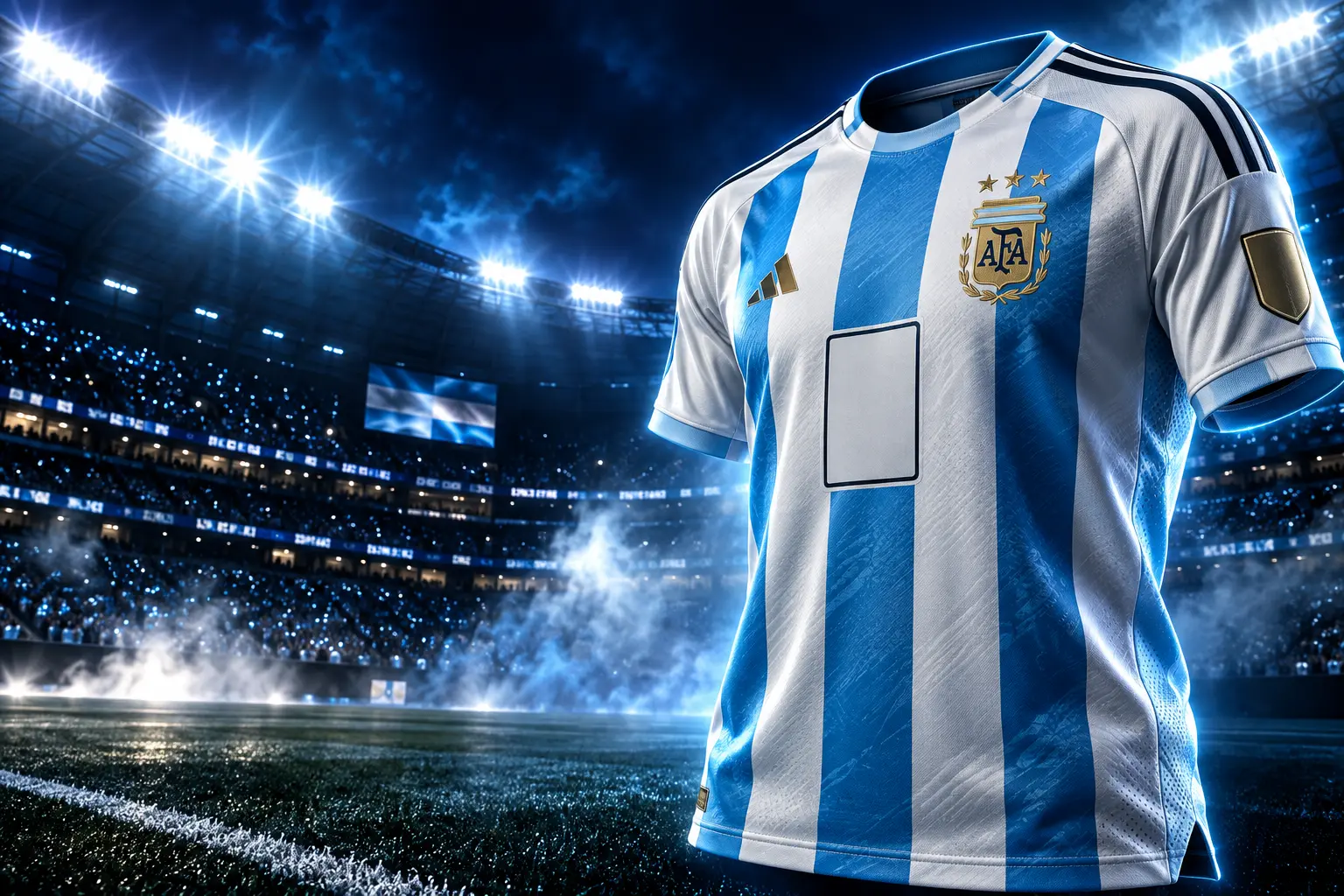
The 1990 Final Returns in New Jersey
Argentina last tried to defend this trophy in Italy. Maradona’s side lost the 1990 final 1-0 to West Germany on an Andreas Brehme penalty, finished with two men sent off, and failed to score. It was the first time a defending champion had reached a final and lost. Maradona, marked into a corner by Guido Buchwald, left the pitch in tears.
The 2026 final did not copy the penalty. It copied everything around it. A champion that had stopped attacking. A No. 10 who could not get on the ball. Two Argentina dismissals, Fernández in stoppage time and Leandro Paredes after the whistle. A 1-0 scoreline. And Messi walking off in tears while Spain lifted the cup.
Opta’s sheet notes that three of the six red cards in World Cup finals have gone to Argentina: Pedro Monzón and Gustavo Dezotti in Rome, Fernández in New Jersey. West Germany outshot Argentina 16-1 in 1990. Spain’s edge was 20-2.
TWO TITLE DEFENCES, TWO 1-0 FINALS
| Fact | Maradona, 1990 | Messi, 2026 |
|---|---|---|
| Status | Defending 1986 title | Defending 2022 title |
| Final | 0-1 vs West Germany | 0-1 vs Spain, extra time |
| Reds | Monzón, Dezotti | Fernández, then Paredes |
| The No. 10 | Marked, in tears | One shot at 117 minutes |
| World titles after | One | One |
Italy in 1934 and 1938, then Brazil in 1958 and 1962, remain the only teams to win the tournament twice in a row. Brazil as holders lost the 1998 final. France as holders lost in 2022. Argentina as holders lost in 1990 and again in 2026. Sixty-four years on from Brazil’s repeat, nobody has done it.
Eight Goals, Then a Blank Night in East Rutherford
The fear before kickoff in June was that Messi would become a parody of himself, a man who could not run gumming up a central role. Lionel Scaloni never asked him to run. He asked him to appear. For five matches, that was enough.
On June 16 in Kansas City, on his 200th cap, Messi scored a hat-trick in a 3-0 win over Algeria at 38 years and 357 days, the oldest World Cup hat-trick on record, and tied Miroslav Klose on 16 career tournament goals. Six days later in Arlington he missed an early penalty, then scored twice as Argentina beat Austria 2-0 and moved the record to 18. He came off the bench against Jordan on June 27, played 31 minutes, and bent in a free kick for 19. Scaloni said he “doesn’t need to be taught anything.”
FBref’s log of Messi’s 740 tournament minutes is the cleanest sheet of the summer.
MESSI AT WORLD CUP 2026
| Date | Round | Opponent | Score | Min | G | A |
|---|---|---|---|---|---|---|
| June 16 | Group | Algeria | 3-0 | 79 | 3 | 0 |
| June 22 | Group | Austria | 2-0 | 90 | 2 | 0 |
| June 27 | Group | Jordan | 3-1 | 31 | 1 | 0 |
| July 3 | Round of 32 | Cabo Verde | 3-2 AET | 120 | 1 | 0 |
| July 7 | Round of 16 | Egypt | 3-2 | 90 | 1 | 1 |
| July 11 | Quarter-final | Switzerland | 3-1 AET | 120 | 0 | 1 |
| July 15 | Semi-final | England | 2-1 | 90 | 0 | 2 |
| July 19 | Final | Spain | 0-1 AET | 120 | 0 | 0 |
He started seven of eight games, took 35 shots, put 18 on target, and missed both of his two penalties, against Austria and Egypt. FIFA’s own clip package of his goals from every round stops, bluntly, before the final. In 120 minutes against Spain he had one shot, zero touches in the box, and a 3/10 night on one set of match ratings. Mbappé’s 10 goals in the same tournament moved the Frenchman to 22 for his career and left Messi on 21, with all of Messi’s World Cup goals now filed behind a new leader.
How the Knockouts Turned on Late Messi Passes
The group stage was a scoring binge. The knockouts were a habit. Argentina kept giving up the first punch, then asking a 39-year-old to throw the last one.
THE PATH THROUGH JULY
- July 3: Scores the opener against Cabo Verde at Hard Rock Stadium and becomes, at 39 years and 9 days, the oldest South American to score in a World Cup knockout game. Argentina win 3-2 in extra time.
- July 7: Misses a penalty while Egypt lead, then produces a goal and an assist in four minutes after the side had trailed 2-0. Argentina win 3-2 in Atlanta.
- July 11: The nine-match scoring streak, stretching back through the last four games of Qatar 2022, ends against Switzerland. He still assists Alexis Mac Allister in a 3-1 extra-time win.
- July 15: Anthony Gordon scores in the 55th minute. Messi lays on Enzo Fernández in the 85th and the header for the stoppage-time winner against England from Lautaro Martínez. Career World Cup assists move to a record 12.
That England night was his third World Cup final appearance, matching Brazil’s Cafu. At 39 years and 25 days in the final itself he became the oldest outfield player to play in one, past Gunnar Gren, and the second-oldest finalist after Dino Zoff, who was 40 years and 133 days in 1982. The body that could not sprint still moved a knockout round. It could not move Spain.
Wayne Rooney had already pointed at Messi’s reluctance to track back as the risk in this side. Scaloni’s answer, for a month, was to hide him on the edges and let Rodrigo De Paul, Julián Álvarez and Fernández cover the ground. Against a Spain team that completed more than 100 passes from both Rodri and Cubarsí in the final, there was no edge left to hide on.
He Dated the Goodbye July 21
Messi wrote the retirement letter two days after the final, then sat on it. His father, Jorge, died in early August. On August 31 he posted the handwritten pages on Instagram and ended a 21-year Argentina career.
After the time that has passed since the final, thinking a lot, I want to let everyone know that I am retiring from the national team. It was a decision that hurt, and still hurts deep down, but I understand that the time has come. I have emptied myself: now I have nothing more to give.
Lionel Messi, Instagram, August 31, 2026
He leaves as Argentina’s record scorer and appearance-maker, 125 goals in 207 games. He will keep playing for Inter Miami, where his contract runs through the 2028 MLS season. Two days before the post he scored four times in a 7-1 win over CF Montreal.
The June essay that asked whether he might eclipse Maradona assumed a player who still needed a second star to settle an old argument. He did not get the star. He also did not cling on through another qualifying cycle. The letter is dated before the grief, and the grief, he wrote, made him “even more convinced than before.”
Maradona and Messi Leave the Stage Even
The asado question from June is closed. Argentines will not have to mutter that Maradona won the World Cup only once while Messi won it twice. They won it once each. Messi added a Copa América in 2021, another in 2024, the 2022 Finalissima, and a World Cup in Qatar. Maradona added 1986, a final in 1990, and a myth that never needed a second trophy to stay loud.
On the numbers that FIFA keeps, Messi is clear. Six tournaments. 34 World Cup matches in all. Three finals. Twenty-one goals. Twelve assists. One title. Pelé still sits alone on three world titles. About 20 players have two, most of them Brazilian.
What 2026 changed is the rhyme. Qatar had offered a clean ending, a bisht, a lap of honour, credits. He stayed for one more job and walked into Maradona’s American epilogue instead: a champion that stopped shooting, a red card, extra time, and a man in a 10 shirt who could not find the game. The second star never arrived. The first one still fits.
Frequently Asked Questions
How many World Cups has Lionel Messi won?
One, in Qatar in 2022, when Argentina beat France on penalties after a 3-3 draw. Pelé is the only player with three world titles, from 1958, 1962 and 1970, and the group with two is still almost entirely Brazilian, including Cafu, Garrincha and Ronaldo Nazário. Maradona, like Messi, has one.
Who holds the World Cup scoring record after 2026?
Kylian Mbappé holds it with 22 career World Cup goals, one ahead of Messi’s 21. Mbappé’s 10 in this tournament included two in the third-place match against England. Klose’s 16, set in 2014, was the men’s record Messi broke in the group stage before Mbappé passed him.
When did Lionel Messi retire from Argentina?
On August 31, 2026, in an Instagram letter he had drafted on July 21, two days after the final. He said the death of his father, Jorge, earlier in August made him more sure. He is still under contract at Inter Miami through 2028 and had just scored four in a 7-1 MLS win over CF Montreal.
Have defending World Cup champions ever won the next tournament?
Only twice. Italy won in 1934 and 1938, and Brazil won in 1958 and 1962. Every champion since has failed, including Brazil in 1998, France in 2022, and Argentina in both 1990 and 2026. Spain, who won this one, will be the next side asked to try.

Kily Gonzalez Has the Inter Miami Job Without Papers

Chelsea Puts USDC on the Shirt for One Year

Esther González Joins Al Qadsiah After Gotham’s Free Exit

Chelsea Stay on Adam Wharton After Palace Hold Firm

Fiorentina Pays for Pellegrino After Juve’s Loan Fails

Only One of Villa’s Five Winger Targets Actually Signed

SoFi Workers Won Pay and an ICE Walk-Off Clause

Hughes Hired Iraola Twice, Then Left for Al-Hilal

Sunderland’s 53-Year European Wait Ends Against AZ

FIFA Took IShowSpeed’s World Cup Bet to the Final
-
 NEWS5 months ago
Only One of Villa’s Five Winger Targets Actually Signed
-
 NEWS5 months ago
SoFi Workers Won Pay and an ICE Walk-Off Clause
-
 NEWS5 months ago
Hughes Hired Iraola Twice, Then Left for Al-Hilal
-
 EUROPA LEAGUE5 months ago
Sunderland’s 53-Year European Wait Ends Against AZ
-
 NEWS5 months ago
Summerville Turned a Shock Call-Up Into Two World Cup Goals
-
 NEWS5 months ago
FIFA Took IShowSpeed’s World Cup Bet to the Final
-
 NEWS5 months ago
SNRT Put Morocco’s World Cup Matches on Free TV
-
 CHAMPIONS LEAGUE5 months ago
Jordan Brand’s 2018 Football Bet Pays on PSG’s Repeat