
MLS
Jim Curtin Waits Out 2026 as Austin FC Rebuilds
Jim Curtin will not coach Austin FC until the 14-game 2027 sprint, after a summer of sales, a late sporting-director hire, and a stalled 2026.

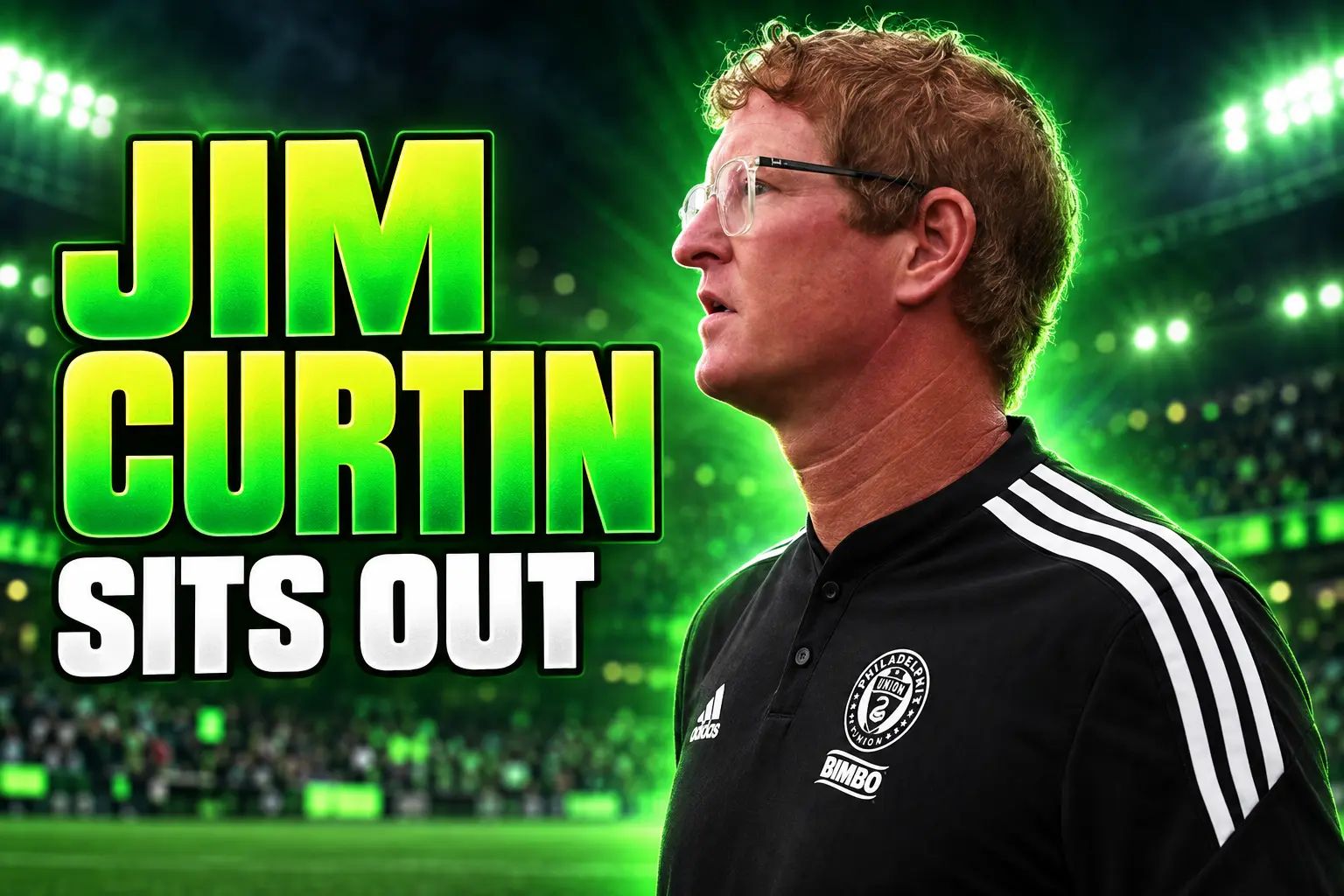
Jim Curtin will not coach a minute of Austin FC’s 2026 season, even though the club named him head coach on June 8. He takes the job the later of Dec. 1 or the end of the campaign, then walks straight into MLS’s first 14-game sprint.
Ownership wanted him on the sideline in the summer. He fought that plan, pointed to family care and to a cleaner run-up, and left 2026 with interim coach Davy Arnaud. The three months since have filled in the cost of that calendar: a sporting director hired after most of the summer window, a homegrown midfielder cashed out, and a West table that still has Austin looking up.
He Fought Ownership to Sit Out 2026
Austin FC introduced Curtin, 46, as the third head coach after 2026, following Josh Wolff and Nico Estévez. The club statement put his start at the later of Dec. 1 or whenever the 2026 season actually ends. Arnaud, already the interim after the May 18 firings, keeps the bench until then.
Founder and majority owner Anthony Precourt said the club acted so it would not lose a coach of Curtin’s standing while the sporting-director search, run with Excel Search & Advisory, was still open. Curtin had been out of work since Philadelphia Union let him go in November 2024, and he said he had turned down other jobs in MLS and abroad.
“While there were many options I had, I’m glad I waited,” Curtin said at his June 9 news conference. “I’ve had a nice year to recharge and spend time with the family.”
I had to battle ownership to tell them it made sense to wait. I also have family issues to deal with. My father went for infusion today for cancer. So on the human side of things, I thought it made sense. I’ll hit the spring season in a full sprint.
Jim Curtin, Austin FC head coach, June 9 news conference
He also said he wanted time to study the roster, the sports-science work, and the data setup rather than drop into a World Cup pause with no sporting director in the chair. Precourt’s public line that day still pointed at 2026. “Our immediate aim is to climb the standings and establish ourselves as a playoff contender in 2026 with Davy at the helm,” he said.
https://x.com/AustinFC/status/2064059763441234056
A 14-Game Sprint Is the Whole First Season
The spring Curtin described is not a soft preseason. On March 19, MLS spelled out a one-off campaign of 14 intra-conference regular season games from February to April, seven at home and seven away, then playoffs and MLS Cup in May. Each of the 30 clubs plays its 14 conference opponents once. The top eight in each conference go through; five Concacaf Champions Cup places and 18 Leagues Cup places come from that table.
SPRINT SEASON STAKES
- The schedule: Fourteen games, conference only, February through April, then a May cup.
- The cut: Eight of 15 clubs per conference reach the playoffs, down from nine in 2026.
- The carryover: Sprint results set 2028 Concacaf Champions Cup and 2028 Leagues Cup berths.
- The next calendar: The first summer-to-spring season then starts in July 2027 and runs to May 2028.
That is the whole first job. Curtin does not inherit a 34-game grind in which a slow September can still be repaired in October. He inherits a short, sealed West race that also decides who plays in the continent’s club tournament a year later. The delay that buys a cleaner reset was the June pitch. The product of that wait is a 14-game season with no hiding place.
What the 2027 Sprint Season Decides
Qualification for the 2028 Concacaf Champions Cup rides on those 14 games, as does a place in the 2028 Leagues Cup, nine clubs from each conference. MLS then flips to a summer start, a winter break from mid-December through early February, and a May final. Curtin’s first Austin cycle is the bridge, not a full year in the old shape.
Fourteenth in the West and Still Selling
Estévez and sporting director Rodolfo Borrell were dismissed on May 18 after a 5-0 loss at San Diego FC and a home defeat to last-place Sporting Kansas City. Precourt said the team should still be chasing a playoff place. Arnaud, who had already filled in for one match in 2024, took the remaining fixture before the World Cup stoppage, a 3-0 loss at St. Louis CITY SC on May 23, then the long break.
The regular season restarted on July 22 with a 3-1 home win over Seattle Sounders FC. After a 1-1 draw with San Jose Earthquakes on Sept. 6, Austin sat 14th in the 15-team West with 26 points from 24 games, a 6-8-10 record and a minus-13 goal difference. Only Sporting Kansas City, on 15 points, sat below them. Three nights later Austin drew Colorado 1-1 at Q2 Stadium, Facundo Torres scoring in the 79th minute.
2026 playoff math still sends nine of 15 Western clubs into the postseason, the top seven plus two wild-card sides. Arnaud, after the San Jose draw, said the playoffs “aren’t by any means out of reach for us” and that he wanted fans to feel how much the group was giving. The club’s summer trading ran the other way. Homegrown midfielder Owen Wolff, winger Jayden Nelson, and original SuperDraft pick Dani Pereira all left, while Polish winger Przemysław Płacheta arrived as the main in-window addition.
Khaled El-Ahmad Walked Into a Cash Pile
Austin did not name a sporting director until Aug. 25, when it appointed Khaled El-Ahmad, 45, as chief soccer officer and sporting director, lifting him from the same dual role at Minnesota United FC. Curtin will report directly to El-Ahmad when he arrives. El-Ahmad reports to chief executive Andy Loughnane.
In June, Curtin had signed without knowing that boss. “That’s the boss’ decision,” he said of the sporting-director hire, adding that he wanted to commit first and would join the conversations. The search ran about three months past the May 18 firings and landed with a week of the summer window left, which left El-Ahmad almost no time to add players for the last stretch of 2026.
I’m excited to listen and learn, then work alongside Jim, our sporting staff and everyone across the Club to establish a clear way forward. We want to be ambitious, we want to be brave, and we want to build an Austin FC that this city and our supporters can be proud of, and that competes consistently for trophies.
Khaled El-Ahmad, Austin FC chief soccer officer and sporting director, Aug. 25 club statement
Minnesota reached the playoffs in both of El-Ahmad’s full seasons and the Western Conference semifinals in 2024 and 2025, with a club-record 58 points in 2025. He had been CEO and sporting director at Barnsley, taking the English third-tier club to a Wembley playoff final in 2023, and before that a City Football Group scouting lead for Concacaf and Scandinavia with roster work for New York City FC. Austin’s release also placed him with general manager Andrew DiLallo, senior vice president of soccer strategy Dean Costalas, and director of strategy Ethan Finlay.
Costalas had been Philadelphia Union’s director of soccer analysis during Curtin’s tenure. A LinkedIn change in late July, noted by Union reporter José Roberto Nuñez, showed the move to Austin while the sporting-director chair was still empty. The first piece of the next staff was a numbers person Curtin already knew, not the executive who will now sit above him.
Why Did Jim Curtin Wait Until 2027?
Curtin waited because he wanted a full run at the sprint, because his father was in cancer treatment on the day of the introduction, and because he did not want to walk into a World Cup pause with no sporting director and a roster he had not studied. Ownership asked him to start in 2026 anyway. He said no, and the club announced him as a future hire rather than lose him.
THE 2026 RESET CLOCK
- May 18, 2026: Austin FC fires head coach Nico Estévez and sporting director Rodolfo Borrell and names Davy Arnaud interim coach.
- June 8, 2026: The club names Jim Curtin head coach after the 2026 season, with a start date of Dec. 1 or whenever that season ends.
- July 2, 2026: Midfielder Dani Pereira is traded to CF Montréal for $1.4 million in 2026 general allocation money, $700,000 in 2027 GAM, and up to $250,000 more in conditions.
- July 22, 2026: The regular season resumes with a 3-1 home win over Seattle after the World Cup break.
- Aug. 25, 2026: Khaled El-Ahmad arrives from Minnesota as chief soccer officer and sporting director; Curtin will report to him.
- Aug. 26, 2026: Homegrown midfielder Owen Wolff is sold to Sporting Kansas City for $4.5 million guaranteed and up to $3.1 million in extras.
- Dec. 1, 2026: The earliest date Curtin can formally take the job, unless Austin is still playing.
- February 2027: The 14-game sprint season begins, seven home and seven away, conference opponents only.
Philadelphia supporters still talk about the hire as a loss. On Austin’s announcement post, one Union follower wrote, “You guys got a good one there. Treat him well. We miss him in Philadelphia.” The other side of that affection is the work he is being paid to copy: a decade in Chester that produced 141 regular-season wins, ninth in league history, plus MLS Sigi Schmid Coach of the Year awards in 2020 and 2022.
The Homegrown He Cited Is Already Gone
In June, Curtin pointed to striker Brandon Vazquez and midfielder Owen Wolff, both coming back from injuries, as reasons the second half could still turn. Wolff did not become that player for Austin. On Aug. 26, one day after El-Ahmad’s introduction, the club agreed a cash trade that brings up to $7.6 million for Wolff, $4.5 million guaranteed and up to $3.1 million in performance extras, plus a sell-on slice.
Wolff, 21, was Austin’s first homegrown signing, taken from the academy in September 2021 at 16. He put up 10 goals and 23 assists in 147 appearances, made the MLS 22 Under 22 lists in 2023, 2024, and 2025, and ranks second in club assists and fourth in appearances. Arnaud said talks about a move had run since December, and that the club would let him leave if the offer matched his quality. Wolff had eight appearances in 2026 after sports hernia surgery in January and a later injury, with no goals or assists.
The sale freed a U22 Initiative slot. It also removed the young midfielder Curtin had named, by name, as part of the 2026 hope. Pereira’s exit on July 2 had already pulled another long-time starter: 165 appearances, 6 goals, and 23 assists, for $2.1 million in guaranteed GAM and up to $2.35 million in all. Nelson, a Canadian World Cup winger, went to Bolton Wanderers the same window.
SUMMER EXITS THAT FUNDED THE RESET
| Player | Destination | Return to Austin |
|---|---|---|
| Owen Wolff | Sporting Kansas City | $4.5 million guaranteed, up to $3.1 million extra, sell-on retained |
| Dani Pereira | CF Montréal | $2.1 million GAM guaranteed, up to $2.35 million, sell-on retained |
| Jayden Nelson | Bolton Wanderers | Sold in the same window; fee not in Austin’s public release |
Those deals read as a 2027 budget, not a push for the last nine or ten games of 2026. El-Ahmad now holds the cash and the U22 space. Curtin holds opinions about a roster that has already changed under him.
Press, Compact Shape and a Ruthless Edge
Curtin’s Union sides made the playoffs in 7 of 10 seasons, including five straight top-four finishes in the East from 2019 to 2023. They won the 2020 Supporters’ Shield, took the 2022 Eastern Conference, and reached MLS Cup 2022 with the league’s best attack and best defense that year, 2.1 goals scored per match and 0.8 conceded. He told Austin’s introduction he wants the same compact distances, an uptempo press, and a team that “relentlessly attack the opponent’s weakest link.”
HOW CURTIN SAYS AUSTIN WILL PLAY
- The press: A negative pass from the opponent is a trigger. He called that non-negotiable.
- The shape: Players stay close so all 11 can attack and defend together.
- The chance: He said it is not fun for fans if the team is not scoring, and that Q2 Stadium should feel that.
- The market: Soccer is the only major pro team in Austin, which he contrasted with sharing Philadelphia with the Eagles, 76ers, Flyers, and Phillies.
He also said he wants Arnaud on the staff after the interim run, and that he had spoken with him the night before the introduction. Arnaud still has the 2026 group. Curtin has the 2027 sprint, a new boss he did not pick in June, and a homegrown he praised who now plays in Kansas City. The first match that will count as his will not come until February, in a 14-game West race that also hands out continental tickets. That is the job he waited for, and it is shorter than the season he declined to finish.

Kily Gonzalez Has the Inter Miami Job Without Papers

Chelsea Puts USDC on the Shirt for One Year

Esther González Joins Al Qadsiah After Gotham’s Free Exit

Chelsea Stay on Adam Wharton After Palace Hold Firm

Fiorentina Pays for Pellegrino After Juve’s Loan Fails

Only One of Villa’s Five Winger Targets Actually Signed

SoFi Workers Won Pay and an ICE Walk-Off Clause

Hughes Hired Iraola Twice, Then Left for Al-Hilal

Sunderland’s 53-Year European Wait Ends Against AZ

Summerville Turned a Shock Call-Up Into Two World Cup Goals
-
 NEWS4 months ago
Only One of Villa’s Five Winger Targets Actually Signed
-
 NEWS5 months ago
SoFi Workers Won Pay and an ICE Walk-Off Clause
-
 NEWS5 months ago
Hughes Hired Iraola Twice, Then Left for Al-Hilal
-
 EUROPA LEAGUE5 months ago
Sunderland’s 53-Year European Wait Ends Against AZ
-
 NEWS4 months ago
Summerville Turned a Shock Call-Up Into Two World Cup Goals
-

 CHAMPIONS LEAGUE5 months ago
Jordan Brand’s 2018 Football Bet Pays on PSG’s Repeat
-

 NEWS5 months ago
SNRT Put Morocco’s World Cup Matches on Free TV
-

 NEWS3 months ago
Stefan Ortega Joins Olympiacos as Fan Tokens Skip Equity