NEWS
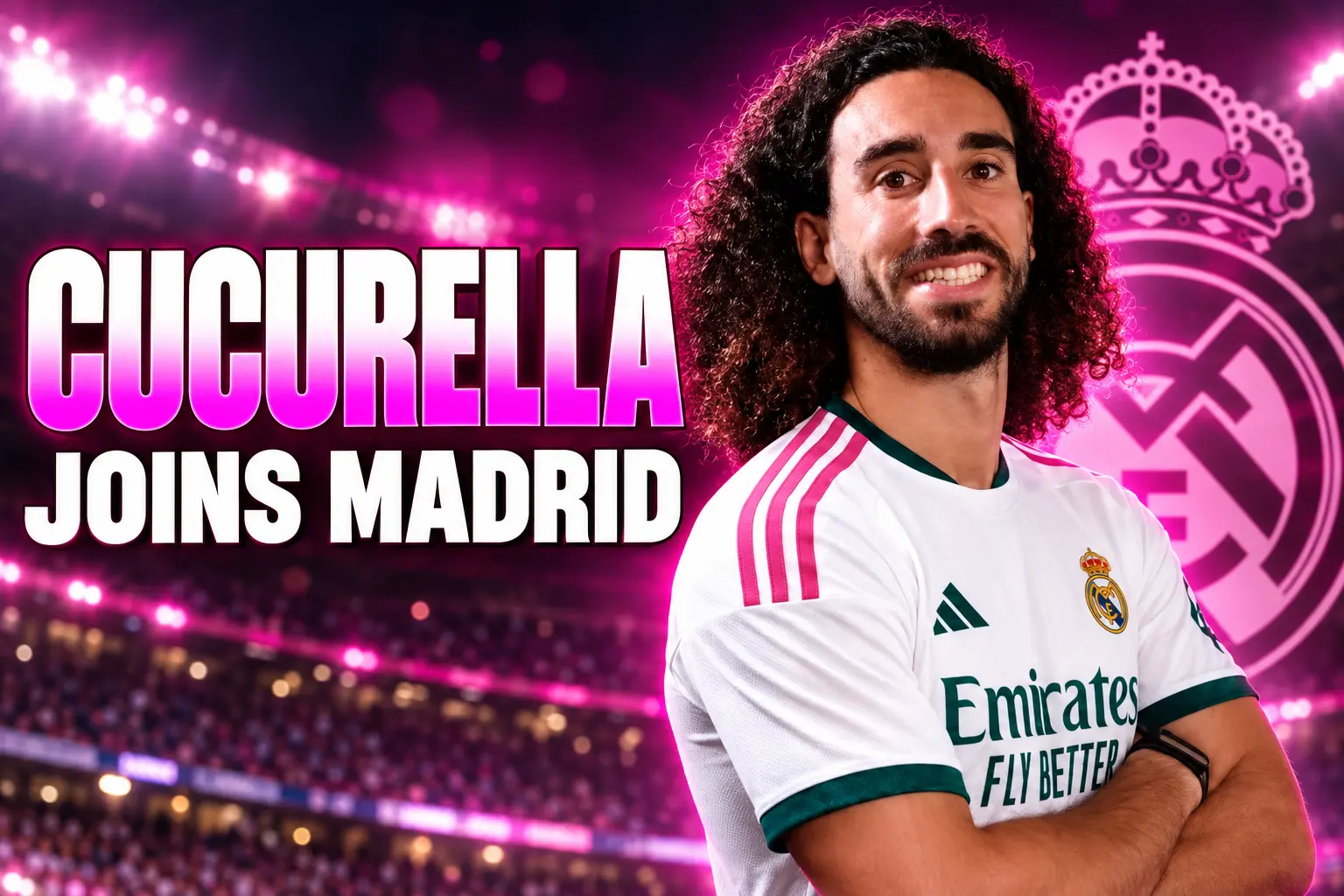
Cucurella Praised Alonso Then Joined Mourinho’s Real Madrid
Marc Cucurella joined Real Madrid in a day-and-a-half €60m raid after praising Xabi Alonso, while Chelsea’s £120m Fernandez price held.

Real Madrid signed Marc Cucurella from Chelsea on June 15 for €55 million plus €5 million in add-ons. The Spain left-back had told interviewers days earlier that Xabi Alonso inspired confidence and that the Chelsea project looked exciting.
Jose Mourinho, back in the Madrid job, had already called. The clubs lined up the terms in roughly a day and a half, and Alonso, who wanted the 27-year-old to stay, was not in the room when it closed.
Real Madrid Closed the Deal in a Day and a Half
Fabrizio Romano reported a verbal agreement on June 14. Madrid published the signing the next morning, the same day Spain opened the World Cup against Cape Verde. Cucurella was in camp in the United States. The medicals had already been allowed.
Madrid’s note said the player would be tied to the club for six seasons, until June 30, 2032. Chelsea’s own statement was shorter. The club thanked him for his efforts at the club and for a Conference League and Club World Cup the season before, then wished him well.
He had arrived from Brighton in August 2022 on a package of £56 million plus up to £7 million in add-ons, after Manchester City dropped out of that race. Last summer he signed a new Chelsea deal that still had three years to run. Fifty appearances in 2025-26, including 34 Premier League games and four league assists, had not put him on the club’s untouchable list.
THE €60 MILLION PACKAGE
| Item | Figure |
|---|---|
| Fixed fee | €55 million (£51.7 million) |
| Add-ons | €5 million |
| Total package | €60 million ($69.4 million) |
| Contract | Six seasons, to 30 June 2032 |
| Age at signing | 27 |
Chelsea were not shopping him. Club voices had said they would listen if the number was right, and they would not block a sale that met their valuation. Madrid met it before anyone else put a public bid on the table.
Mourinho Rang While Alonso Was Still Talking
Alonso, appointed to start on July 1, had already spoken to several players he was due to inherit, Cucurella among them. Chelsea’s incoming coach wanted the left-back in his squad and knew the player was willing to test the market. Jorrel Hato, 20 and signed from Ajax a year earlier, was the in-house reason the club did not treat Cucurella as unsellable.
Cucurella, speaking from Spain’s base in Chattanooga, said he had not expected to leave. Then Madrid came in so hard that the decision sat in front of him on a single morning.
I got a phone call one morning. My people told me the two clubs had the terms mostly agreed and that I had to decide if I wanted to go there. I had no doubts. It all happened in roughly a day and a half.
Marc Cucurella, Spain camp, Chattanooga
He also took Mourinho’s call. The new Madrid coach remembered a Champions League night against Chelsea when he was in the other dugout at Benfica, and told Cucurella he could not wait to work with him. “When Madrid comes for you, it is very difficult to say no,” Cucurella said. His partner Claudia’s family had always supported Madrid. Family reasons sat behind the football ones.
Matteo Moretto said Chelsea did not tell Alonso before the close, and that the new coach left Xabi Alonso in the dark until Romano’s post landed. That sits beside the earlier briefings in which Alonso wanted him to stay. Both can be true. He knew a move was possible. He did not get a vote on the hour it happened.
WHO WAS IN THE RACE
- Atletico Madrid: Sporting director Mateu Alemany had been the most advanced of the Spanish suitors and had moved toward an opening offer and personal terms.
- Barcelona: Sporting director Deco and head coach Hansi Flick admired him, but the club would not have paid the €60 million fee and needed a defender to leave first.
- Real Madrid: Mourinho asked for him after looks at Josko Gvardiol and Riccardo Calafiori went nowhere, then closed before the World Cup group stage began.
Manchester City, with Enzo Maresca inbound, had been a rumour rather than a bid. Atletico had looked like the landing spot until Madrid stepped across them in a weekend.
Why Chelsea Named a Price for Fernandez, Not Cucurella
This is the gap the June briefings kept circling. Enzo Fernandez, like Cucurella, had talked out of turn in the spring and wanted a way out. Chelsea answered that noise with a public number. They would listen from £120 million, after paying £107 million for him in 2023, because stories from the Argentine’s camp had tried to float a cheaper sale.
No such stories ran on Cucurella. Club voices stayed quiet on a set fee. The idea was leverage. What it produced was a vacuum, and Madrid filled it before a bidding war could start.
On July 3, with Cucurella already signed and both men at the World Cup, Madrid went the other way on Fernandez. The club said it had made no effort, direct or indirect, to sign him and had no intention of pursuing such an operation. Chelsea said they had received no club-to-club approach. The printed £120 million did the job the unnamed Cucurella fee never got the chance to do.
Alonso would have kept both. He lost the one Chelsea would not price, and kept the one they would.
The March Interview Chelsea Could Not Unhear
The sale did not come from nowhere. On March 31, while with Spain at Las Rozas, Cucurella sat for a long interview and walked through the season Chelsea were already failing. Paris Saint-Germain had just put them out of the Champions League 8-2 on aggregate. Enzo Maresca had been moved on in January. Liam Rosenior, the replacement, was running out of time. Chelsea would finish 10th and miss Europe. Rosenior was sacked in April.
Cucurella called Maresca the most important of the six permanent managers he had worked under at Stamford Bridge. “If you asked me, I would not have made this decision,” he said of the January change. He wanted the club to wait until the summer. “The moment Maresca left, it had a big impact on us.”
He went at the recruitment model too. Chelsea, he said, were paying a price for inexperience. “Signing young players only might complicate achieving those goals. Against PSG, we lacked players that had gone through situations like that.” For players who still wanted to win the Premier League and the Champions League, “moments like this make you feel discouraged.”
Fernandez had already been dropped after similar remarks. Cucurella was not formally punished. He also was not folded back into the long-term core. By June 1, people around him were telling clubs he was willing to go.
FROM THE INTERVIEW TO THE ANNOUNCEMENT
- January 2026: Chelsea part with Enzo Maresca mid-season. Cucurella later says he would not have made that call.
- March 31, 2026: He criticises the youth-first buying plan and the January sacking while on Spain duty.
- April 2026: Liam Rosenior is sacked. Chelsea finish 10th and miss Europe.
- June 1, 2026: Multiple clubs are in contact. Chelsea will not block a sale that meets their valuation. Alonso has already called him.
- June 14, 2026: Madrid reach a verbal agreement. Cucurella is told the terms are mostly done and asked to decide that morning.
- June 15, 2026: Madrid and Chelsea announce the transfer. Spain play Cape Verde the same day.
Days before that announcement he had downplayed Chelsea exit talk before the World Cup and praised Alonso, saying he had also spoken to Alejandro Grimaldo and Borja Iglesias about the new coach. The project, he said, seemed very interesting. The interesting project lasted until Mourinho’s number appeared.
Spain Won the World Cup With a Chelsea Left-Back
Luis de la Fuente kept him as the starting left-back throughout. Cucurella started all eight matches, logged 750 minutes, and laid on two assists in the 3-0 round-of-32 win over Austria. Spain beat Argentina 1-0 in the July 19 final after 120 minutes.
CUCURELLA AT THE TOURNAMENT
- Starts: Eight from eight, including extra time in the final.
- Minutes: 750 across the knockout run and the group.
- Attacking return: Two assists, both against Austria.
- Registration: FIFA’s champions list recorded him as a Chelsea player, because that was the club on his tournament papers.
Madrid could hang a picture of him in white. They could not hang the official World Cup line next to their own badge. He joined after the final, then went into Mourinho’s side. By early September he was in the Champions League squad list against Inter.
Chavarria Arrives as Alonso’s Chosen Replacement
The hole at left-back sat open through Alonso’s first weeks. Hato was the only senior option until August. Talks with Rayo Vallecano over Pep Chavarria dragged because the Spanish club moved its number after the first contact. Chelsea had been quoted around €15 million, then faced an ask closer to €25 million, and eventually met in the middle.
On August 12 Chelsea said Chavarria had signed a contract until 2031. The club did not print a fee. Figures circulating in Britain put it at £16.3 million plus £1.7 million in add-ons for the 28-year-old. He had played 44 times for Rayo last season and started the Conference League final they lost to Crystal Palace. Alonso wanted a senior left-sided player who could also mentor Hato, and Landon Emenalo behind him in the under-21s.
https://x.com/ChelseaFC/status/2087452527612826089
Chavarria called it a dream and said he was ready to work. He is another Spaniard at left-back, older than the academy pipeline Chelsea have spent four years building, which is the balance Cucurella had asked for in March from the other side of the dressing room.
Cucurella now plays for the club that phoned. Alonso now has the left-back he actually signed. The fee Chelsea would not put on the record is the one Madrid put in writing, and it is already a season old.
Frequently Asked Questions
How Much Did Real Madrid Pay Chelsea for Marc Cucurella?
The deal was €55 million fixed and €5 million in add-ons. Transfermarkt listed his market value at €50 million when the move went through, so Madrid paid above that listing. Chelsea had bought him from Brighton in August 2022 for £56 million up front, with up to £7 million more in clauses.
When Did Marc Cucurella Become a Real Madrid Player?
Madrid announced the agreement on June 15, 2026, and he reported after Spain’s World Cup. FIFA still logged him as a Chelsea player on the official champions document because clubs are frozen at tournament registration. He wears 17 in La Liga.
Who Replaced Marc Cucurella at Chelsea?
Pep Chavarria joined from Rayo Vallecano on August 12 on a deal to 2031. Rayo’s release clause sat at €50 million. The fee that circulated was £16.3 million plus £1.7 million in add-ons, and he had helped Rayo to back-to-back eighth-place La Liga finishes before the move.
Did Xabi Alonso Approve the Cucurella Sale?
Matteo Moretto said Alonso was not told before the deal was completed and first saw it on Fabrizio Romano’s post. Separate Chelsea briefings had already said Alonso wanted to keep him and knew he might explore a move. Hato’s progress was the squad reason he was never classed as untouchable.
Why Did Cucurella Leave Chelsea for Real Madrid?
He said he had not expected to leave a few months earlier, then called the Madrid offer a step he and his family could not refuse. Mourinho’s call, a return to Spain, and his partner’s family support for Madrid all sat in that answer. He also said a long, leaky process would have wrecked his World Cup focus, and Madrid’s speed solved that.


Kily Gonzalez Has the Inter Miami Job Without Papers

Chelsea Puts USDC on the Shirt for One Year

Esther González Joins Al Qadsiah After Gotham’s Free Exit

Chelsea Stay on Adam Wharton After Palace Hold Firm

Fiorentina Pays for Pellegrino After Juve’s Loan Fails

Only One of Villa’s Five Winger Targets Actually Signed

SoFi Workers Won Pay and an ICE Walk-Off Clause

Hughes Hired Iraola Twice, Then Left for Al-Hilal

Sunderland’s 53-Year European Wait Ends Against AZ

Summerville Turned a Shock Call-Up Into Two World Cup Goals
-
 NEWS5 months ago
Only One of Villa’s Five Winger Targets Actually Signed
-
 NEWS5 months ago
SoFi Workers Won Pay and an ICE Walk-Off Clause
-
 NEWS5 months ago
Hughes Hired Iraola Twice, Then Left for Al-Hilal
-
 EUROPA LEAGUE5 months ago
Sunderland’s 53-Year European Wait Ends Against AZ
-
 NEWS5 months ago
Summerville Turned a Shock Call-Up Into Two World Cup Goals
-

 NEWS5 months ago
SNRT Put Morocco’s World Cup Matches on Free TV
-

 CHAMPIONS LEAGUE5 months ago
Jordan Brand’s 2018 Football Bet Pays on PSG’s Repeat
-

 NEWS3 months ago
Stefan Ortega Joins Olympiacos as Fan Tokens Skip Equity