
MLS
Garber’s World Cup Launchpad Meets a Flat First Test
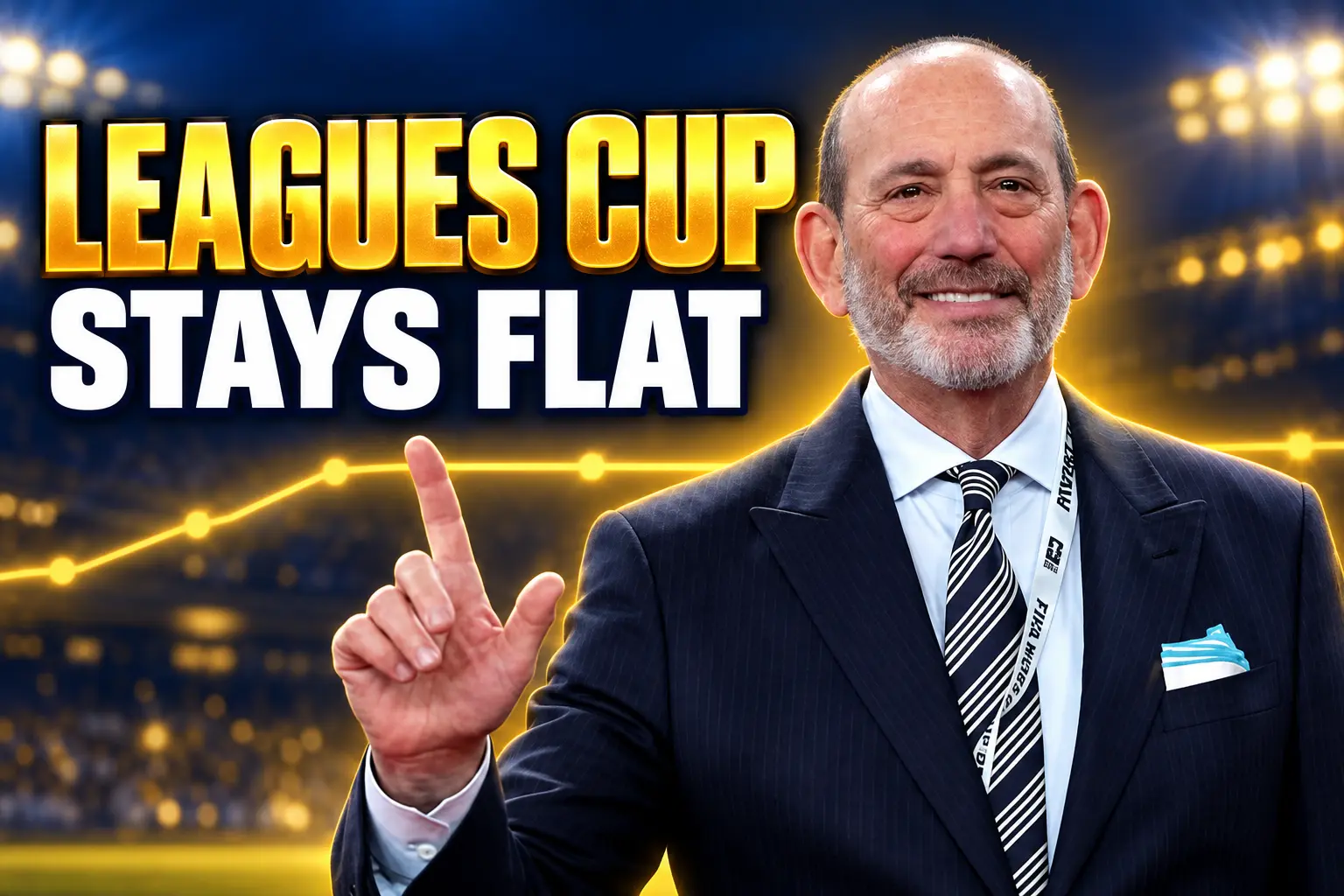
MLS ticket sales jumped 62 percent after the World Cup, yet Leagues Cup attendance stayed flat ahead of a 2027 reset.

MLS said ticket sales rose 62 percent after the 2026 World Cup, and Commissioner Don Garber called the tournament “rocket fuel.” League figures also put television ratings for recent league matches up 40 to 50 percent in late July.
He had treated the Cup as eight years of conversion work, not a festival. The first MLS tournament those new fans could actually attend, Leagues Cup, then closed on September 9 at an average of 17,463, unchanged from 2025.
A 62 Percent Jump in Ticket Sales
Garber spoke a little more than a week after the final and reached for a line he has used since the 2018 hosting vote. “We wanted it to be the rocket fuel that would drive the next generation of growth for our league and of the sport in the United States at all levels,” he said. League staff had already started a national campaign under the slogan “Thanks World, We’ll Take It From Here.”
THE FIRST POST-CUP NUMBERS
- Ticket sales: League figures put sales up 62 percent after the tournament.
- Recent TV ratings: Matches after the restart jumped 40 to 50 percent.
- Pre-break gates: MLS averaged 22,109 fans through May, up 1 percent from 21,902 on May 24, 2025.
- The TV mountain: Fox counted 24.429 million viewers for the United States against Bosnia-Herzegovina on July 2, with a peak of 31.883 million.
That Fox audience was logged as the most-watched English-language soccer telecast in U.S. history. MLS resumed on July 16 and 17, during the Cup’s closing week, with a Fox doubleheader on the 17th. The gap between a 24 million national night and a 22,109 league night is the conversion problem in one pair of figures.
Garber would not score the summer on gates alone. “Will our league be more popular? Will we have more cultural engagement? Will our teams be more valuable? Will we have more media covering us and paying attention to us? And are we as a league viewed competitively, on the field, better or higher than we are today?” he asked. “Those measures are going to take some time to deliver.”
How MLS Spent the Eight-Year Runway
MLS used the 2018 hosting award as a build-out brief: add clubs, finish soccer stadiums, and put World Cup sides in league buildings so a new fan’s first club night would feel close to the tournament. Garber said the league added seven teams and built nine stadiums on that clock, and a June 1 league release put more than $11 billion into stadiums, training sites, academies, and community projects across 30 years.
The 2026 league has 30 clubs in its 31st season. Twenty-seven of them play in stadiums built or renovated for soccer after Inter Miami opened its new ground in April. New York City FC’s stadium is dated 2027 and Chicago Fire FC’s 2028, with FC Dallas in a $182 million renovation of Toyota Stadium. All 13 World Cup host markets in the United States and Canada are MLS cities. Five league homes hosted matches: BC Place, BMO Field, Gillette Stadium, Lumen Field, and Mercedes-Benz Stadium. About 40 MLS stadiums and training sites were used as venues, base camps, or festival grounds, including 14 official team base camps. Argentina trained at Sporting Kansas City’s performance center. England used Sporting Kansas City II’s Swope Soccer Village. Brazil set up at Red Bull New York.
A record 45 MLS players went to the tournament from 22 clubs and 17 countries. Before kickoff, clubs had already been borrowing NFL yards for Inter Miami nights: 75,673 at the Los Angeles Memorial Coliseum on February 21, 75,824 at Empower Field at Mile High on April 18, and 72,026 at M&T Bank Stadium on March 7. Those three crowds all cleared 72,000 and sit among the 10 largest in league history. They also show what still sells before any World Cup hangover is measured: the visiting pink shirts.
Local clubs spent the break on street-level inventory. Seattle’s Sounders and Reign put a mini pitch and a giant screen on a waterfront barge, a stunt tied to the RAVE Foundation’s drive for 52 small pitches around Washington. Boston Legacy FC worked with FIFA on a fan zone in Providence while Gillette Stadium staged seven tournament games. Those were the right pictures for a launchpad summer. They were not a 30-club attendance report.
After the Trophy, Leagues Cup Did Not Move
Leagues Cup is the first league-owned product a World Cup tourist could buy without waiting for a Messi Saturday. It closed on September 9 averaging 17,463 fans per ticketed session, roughly even with 2025. Regular-season MLS had been at 22,109 before the break. Total Cup turnout reached 1.06 million, up 7 percent, because the 2026 draw had four more ticketed sessions after last year’s doubleheaders were stripped out.
Among the 14 MLS clubs that hosted three Phase One matches, average attendance fell 10.9 percent from the first home date to the third. After three years with no Liga MX club in the semifinals, 2026 produced an all-Liga MX final four, so the biggest nights sat at neutral grounds. Toluca beat Monterrey in the final at Shell Energy Stadium in Houston.
The All-Star Game in Charlotte on July 30 was sold as a post-Cup party. Bank of America Stadium announced 35,197, a lower-bowl sellout and the largest All-Star crowd since 72,317 in Atlanta in 2018. Lionel Messi was absent after a deep Argentina run, and LAFC’s Son Heung-min took MVP. Charlotte supporters hung a banner with the league slogan. A clip of empty seats moved anyway, shot before the lower bowl filled. The night still sat on Apple TV, which is a poor shop window for a viewer who just watched the World Cup on free broadcast.
MLS will flip to a summer-to-spring calendar in 2027, and Leagues Cup is expected to keep this late-summer window when that happens. The first tournament after the trophy, run on the old clock, did not move the average.
Soldier Field Drew 63,094 for Two Stars
On September 9, Chicago Fire FC announced 63,094 at Soldier Field for Inter Miami, a club record. Messi and Robert Lewandowski both played the full 90 in a 1-1 draw. With Lewandowski on the roster, the Fire are averaging 41,815 across three league matches at Soldier Field. Over eight dates before he arrived, they drew 19,668. Messi’s previous MLS night there, a 0-0 draw on April 13, 2025, pulled 62,538.
That is the conversion the league can sell on a poster. It is also the conversion it already had. Opening weekend in February moved 387,271 fans across 15 games, up 5 percent from 2025’s first weekend, on the back of that Coliseum Miami match. The 2025 season had already slipped to 21,988 per match, down 5.4 percent from 2024’s record 23,234, the lowest average since 2022. A World Cup does not erase a league that still needs two visiting Ballon d’Or names to fill an NFL bowl.
On September 9, the same day Leagues Cup wrapped, MLS said clubs had put a record $370 million on new players in 2026 and had taken in $218 million in transfer fees. Thirty players with World Cup experience joined this year, 20 of them from 2026 tournament rosters. The free-agent marquee names were Antoine Griezmann at Orlando City SC, Lewandowski in Chicago, and Casemiro at Inter Miami, the same aging stars Liga MX has been cutting. Concacaf president Victor Montagliani had said in June that MLS could become “the second-biggest league in the world. Maybe even the first,” and that what it still lacked was “a few more star players, a higher salary cap, those sort of things.”
MLS TRANSFER SPEND AND FEES, 2021 TO 2026
| Season | Spend to buy players | Fees collected |
|---|---|---|
| 2026 | $370 million | $218 million |
| 2025 | $336 million | $202 million |
| 2024 | $188 million | $143 million |
| 2023 | $172 million | $99 million |
| 2022 | $163 million | $114 million |
| 2021 | $170 million | $60 million |
The last two seasons top $700 million in buy fees (370 plus 336 is 706). MLS said the average international signing in 2026 was just 25 years old, with 186 arrivals from 51 countries, and that one in five new players had Champions League minutes. Eight clubs set club-record buys, including Toronto FC’s deal for Josh Sargent. Fifteen players from the league’s own pathway drew multi-million outgoing fees, more than $65 million in that group, led by Real Salt Lake’s Zavier Gozo to Crystal Palace. The shopping is younger than the billboards. The gates that jump overnight are still the old names.
What the Host-League Bump Usually Looks Like
University of Michigan sports economist Stefan Szymanski, studying World Cups and European Championships, found a 15-to-20 percent attendance lift in a host country’s top two divisions, holding for about five years. Garber has cited that band as the research behind his conversion brief. The same work calls the record patchy, and negative for some recent tournaments, so a 62 percent ticket-sales print in the first weeks after a final is a sales funnel, not the five-year hold.
WHAT PAST HOST LEAGUES ACTUALLY GOT
- The working band: Szymanski’s host-league study put the lift at 15 to 20 percent and lasting about five years.
- The patchy cases: The same research found no lasting bump, or a drop, after some recent tournaments.
- Garber’s own scoreboard: He wants popularity, cultural reach, club values, media attention, and a higher on-field standing, and he said those will take time.
- MLS before the break: 22,109 a match was only 1 percent up on 2025, and 2025 had already fallen 5.4 percent from 2024.
A 62 percent jump in tickets after a home World Cup would, if it held as attendance, sit well above that 15-to-20 percent band. League figures have not yet published a full post-restart average to match the 22,109 pre-break mark, so the 62 percent remains a sales number. The 17,463 Leagues Cup average is the first completed post-Cup product average the league has in public.
Apple Folded Matches Into the Main Plan
The cleanest pre-Cup audience gain was not a World Cup hangover. It was a price cut. Apple ended the standalone MLS Season Pass after 2025 and folded into a standard Apple TV plan every league match and the extra shows that used to sit behind a second charge, which had been $99 a season on top of Apple TV. MLS said that in the first three months of 2026, before the tournament break, coverage averaged 7.9 million live match viewers a week across Apple TV, Fox, TSN, RDS, and international feeds, up 62 percent from 2025.
Camilo Durana, the league’s chief business officer, tied that run to three years of fan growth heading into the Cup. Seth Bacon, executive vice president of media, was blunter: “A huge part of the growth this year is obviously the fact that we moved all of our matches to Apple TV, we’re seeing that pay dividends.” Garber has said the paid-subscription experiment did not work and that MLS was early. The original Apple pact was a 10-year, $2.5 billion deal; it has been shortened to end after 2029, which puts the next rights fight on Berg’s desk, not Garber’s.
We didn’t want it just to be a moment in time. We wanted it to be the rocket fuel that would drive the next generation of growth for our league and of the sport in the United States at all levels.
Don Garber, MLS commissioner, late July 2026
Putting All-Star behind that same Apple login, days after Fox had 24.429 million people for a U.S. knockout game, cut against the slogan. The viewers MLS most wanted to keep were still on a broadcast habit. The league night they were offered required a subscription they may not have.
An Unfinished Conversion Lands on Larry Berg
On August 3, MLS named LAFC co-managing owner Larry Berg as its next commissioner. Berg takes over on January 1, 2027. Garber stays in the chair through 2026, then moves to chairman, after 27 years in the job, a run MLS dates to 1999. Berg will sell his LAFC stake. He is a former Apollo Global Management senior partner with past club interests at Roma and Swansea City, and he co-chaired the league’s sporting and competition committee. Jimmy Haslam and Bennett Rosenthal co-chaired the search.
“I’m honored to lead Major League Soccer into its next era,” Berg said. “I believe our greatest opportunities are still ahead.” The league listed those opportunities in the same release: the 2027 calendar, a roster-model rewrite, more stadiums, the next media rights talks, and a new collective bargaining agreement. Garber had already framed that bundle as MLS 3.0, after a 2.0 era of expansion, buildings, and global names. The World Cup was supposed to hand 3.0 a larger public. The public is larger on some nights. The rulebook is not done.
THE FILE BERG INHERITS
- The calendar: MLS flips to a summer-to-spring season in 2027, after this last All-Star on the old clock.
- The roster: A rewrite is still open, including how a club buys a World Cup name or a young Designated Player.
- The labor deal: A new CBA with the MLS Players Association is unfinished.
- The rights clock: Apple’s shortened deal runs out after 2029, so the next negotiation starts on his watch.
Garber’s own metrics, popularity, club value, and a higher competitive standing, were always going to outlive one summer, which is why the conversion test he set for clubs still has no final score. On September 9, the Fire announced 63,094 at Soldier Field for Messi and Lewandowski. Leagues Cup closed the same date at 17,463 a session. Berg takes both figures into 2027, with a calendar change and a roster rulebook that is still open.

Kily Gonzalez Has the Inter Miami Job Without Papers

Chelsea Puts USDC on the Shirt for One Year

Esther González Joins Al Qadsiah After Gotham’s Free Exit

Chelsea Stay on Adam Wharton After Palace Hold Firm

Fiorentina Pays for Pellegrino After Juve’s Loan Fails

Only One of Villa’s Five Winger Targets Actually Signed

SoFi Workers Won Pay and an ICE Walk-Off Clause

Hughes Hired Iraola Twice, Then Left for Al-Hilal

Sunderland’s 53-Year European Wait Ends Against AZ

Summerville Turned a Shock Call-Up Into Two World Cup Goals
-
 NEWS4 months ago
Only One of Villa’s Five Winger Targets Actually Signed
-
 NEWS4 months ago
SoFi Workers Won Pay and an ICE Walk-Off Clause
-
 NEWS4 months ago
Hughes Hired Iraola Twice, Then Left for Al-Hilal
-
 EUROPA LEAGUE4 months ago
Sunderland’s 53-Year European Wait Ends Against AZ
-
 NEWS4 months ago
Summerville Turned a Shock Call-Up Into Two World Cup Goals
-

 CHAMPIONS LEAGUE4 months ago
Jordan Brand’s 2018 Football Bet Pays on PSG’s Repeat
-
 NEWS4 months ago
SNRT Put Morocco’s World Cup Matches on Free TV
-

 EUROPA LEAGUE4 months ago
Rangers Never Played the Sparta Prague Sharpener