
NEWS
Real Madrid Beat Liverpool to Denzel Dumfries for €20m
Real Madrid paid Denzel Dumfries’ €20 million Inter clause after Liverpool paused, and Anfield never bought a right-back.

Real Madrid signed Denzel Dumfries from Inter Milan on 5 July, paying the €20 million (£17.1 million) release clause Liverpool had been circling since January. Arne Slot had been sacked on 30 May. Andoni Iraola walked into Anfield five days later, and by then the Dutch wing-back had already chosen the Bernabeu.
On 8 September he started Madrid’s Champions League opener against the club he had just left. Liverpool still had not bought a right-back.
Real Madrid Triggered the Clause While Anfield Changed Coaches
Italian coverage on 2 June said Dumfries had reached an agreement with Real Madrid the night before, taking the call from the Netherlands camp. Inter had known for a month that his camp intended to fire the clause, which was live until mid-July, and collect one last big contract. Barcelona and Liverpool had been sounded out in the same stretch. Madrid moved first.
The fee was €20 million, not the €25 million figure attached to earlier summers. His Inter deal ran only to 2028, and the clause had dropped with it. Real Madrid’s statement on 5 July said the player would be linked to the club until 30 June 2030.
Inter posted the farewell the same day. The Dutch full-back left after 207 matches, 27 goals and 28 assists and eight trophies, with the release clause activated rather than negotiated. Sporting director Piero Ausilio had already said the exit was in practice done, and that Dumfries wanted to go. Ibrahima Konate joined Real Madrid as a free agent in the same window, so Anfield watched two defensive pieces land at the same club.
For anyone, playing for Real Madrid is a dream.
Denzel Dumfries, at his Real Madrid presentation
He was 30, born in Rotterdam on 18 April 1996, and he was walking into a right-back group that already had Trent Alexander-Arnold and had just lost Dani Carvajal after 13 seasons. That was a starter’s job with competition. It was not a stopgap behind a 22-year-old.
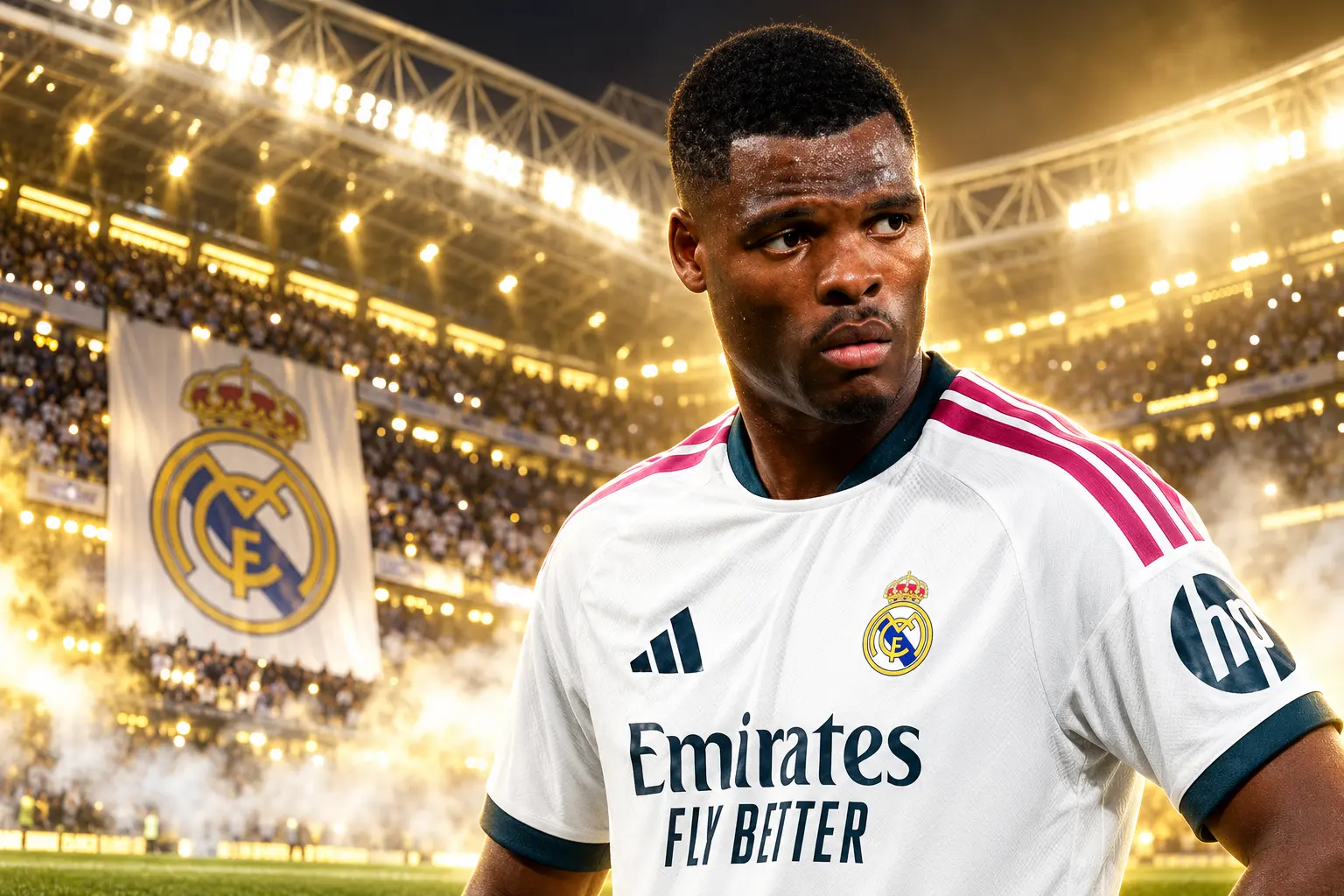
Slot’s Sacking Left the Right-Back File Open
Slot was told on the Saturday morning after a title defence that finished fifth, with 60 points, 12 league defeats and a 25-point gap to Arsenal. Fenway Sports Group called it a difficult call and said change was needed for the club to keep moving forward. He had won the league in his first season and taken Liverpool to a 20th English title. The second year, and a spending spree that did not play, finished him.
THE WEEK LIVERPOOL LOST THE CLAUSE
- 30 May 2026: Richard Hughes informs Slot that his two-year reign is over.
- 1 June 2026: Dumfries agrees to join Real Madrid from the Netherlands camp.
- 4 June 2026: Iraola is appointed as Liverpool FC head coach on a two-year contract.
- 5 July 2026: Real Madrid confirm the four-year deal after the World Cup.
Hughes had worked with Iraola at Bournemouth, and the Spaniard was the only candidate Liverpool approached. He signed a two-year deal to succeed Slot after finishes of 12th, ninth and sixth on the south coast, and a first European qualification. The club wanted a more aggressive, front-foot game than Slot’s second season had produced. That briefing also paused a full-back file that had been live since January.
Early June talk in Italy had even floated Dumfries as a makeweight in discussions over Curtis Jones, whose valuation Liverpool put near €30 million. Jones later joined Inter anyway. Dumfries was already gone.
Why Mourinho Paid €20 Million for a Wing-Back
Jose Mourinho, back at Madrid for a second spell, wanted a powerful attacking right-back to sit beside Alexander-Arnold rather than behind him. Carvajal’s exit left a hole that Pedro Porro would have filled at a much higher price. Dumfries, at the clause, was the cheap version of a Champions League regular with 76 Netherlands caps.
The knock on him has always been the same knock Liverpool used on Jeremie Frimpong. He is a wing-back who attacks the back post, not a stay-at-home full-back in a flat four. That doubt is already following him in Madrid, where some supporters want Alexander-Arnold restored on the right and Dumfries taken out. Mourinho still put him in against Inter on 8 September, and lined the two right-sided players together in pre-season, which is the point of paying €20 million for a 30-year-old: use him now.
He would not have left Inter only for wages. His camp wanted a project, and Madrid, trophy-less for two seasons and rebuilding under Mourinho, sold him that. Liverpool, between coaches, could not.
Twelve Starts, Then a Season-Ending Knee
The hunt existed because the succession after Alexander-Arnold’s free move to Madrid had already failed. Conor Bradley, on a new four-year deal, was meant to inherit the job. A serious knee injury against Arsenal in January ended his 2025-26. Frimpong, signed from Bayer Leverkusen for £29.5 million, was meant to cover him. Hamstrings and patchy form ate the year. The Netherlands then left him out of the World Cup squad.
Opta logged the right-back minutes across all competitions and they read like a committee, not a position.
LIVERPOOL RIGHT-BACK MINUTES, 2025-26
| Player | Minutes at right-back | What followed |
|---|---|---|
| Conor Bradley | 1,205 | Season-ending knee in January |
| Jeremie Frimpong | 1,131 | 12 league starts, seven at right-back |
| Dominik Szoboszlai | 1,036 | Still covering in September |
| Curtis Jones | 738 | Joined Inter in August |
| Joe Gomez | 698 | Muscular injury in pre-season |
| Wataru Endo | 167 | Emergency cover |
| Calvin Ramsay | 90 | Cameo only |
Bradley began only 12 Premier League matches and was withdrawn at half-time in three of them. With Frimpong’s 12 starts, Liverpool spent half a top-flight season without either specialist opening the game. Midfielders in the back line got them through nights. It was not a plan for a second season of that.
A Centre-Back on Loan Filled the Gap Instead
Iraola inherited the hole and, once pre-season started, said the squad looked thin without Bradley and Gomez. The club still decided a dedicated right-back was a poor use of money with Bradley due back later and Frimpong still on the books. The spend went elsewhere in a window of about £250 million: Jeremy Jacquet for £60 million from Rennes, Victor Munoz for £34.5 million from Osasuna, Bradley Barcola for £123 million from Paris Saint-Germain.
WHAT ANFIELD DID INSTEAD OF BUYING DUMFRIES
- Wait on Bradley: The club kept the 22-year-old as first choice on paper while his knee rehab ran on with no return date in pre-season.
- Ask Frimpong to prove it: He was left to win Iraola over after a year of injuries and a World Cup snub, on an individually built training block in Los Angeles.
- Loan a centre-back who can cover: Ronald Araujo arrived on 10 August on a loan from FC Barcelona for the 2026-27 season, with no loan fee, wages covered, and a right-sided option in his game.
- Keep Szoboszlai as emergency cover: The midfielder, on a new five-year contract, remained the in-house patch when the back line ran short.
Araujo, 27, had 213 appearances and 14 goals for Barcelona and 27 Uruguay caps. He can play on the right of a back four, which is why he was the August patch after Gomez went down eight minutes into a pre-season game in Nashville. He is not a specialist wing-back, and he is not Dumfries.
We look thin, yes. We don’t have Conor Bradley or Joe Gomez right now.
Andoni Iraola, Liverpool head coach
Versatility, Iraola added, was how they would get through those nights. That is the sentence you give when the €20 million starter already plays for someone else.
Dumfries Has Already Started Against His Old Club
He trained with Madrid from 28 July, debuted in a 2-2 friendly with Fiorentina, and was presented with Florentino Perez on 21 August. The club listed him among six summer arrivals who debuted together against Espanyol, with Dumfries starting and coming off in the 80th minute. Shirt number 24.
DUMFRIES IN MADRID, EARLY NUMBERS
- Games: Real Madrid’s site credits him with four matches and 324 minutes, with no goals and no assists.
- League: Three La Liga starts, 234 minutes, 96 passes, seven balls won back.
- Europe: The fourth outing was the Champions League night against Inter, about 90 minutes of the total.
- Role: He is the more defensive complement to Alexander-Arnold, and he was in the squad list that also named Trent, Konate and Marc Cucurella.
Before kick-off at the Bernabeu he made a point of greeting Inter’s staff and players. San Siro still had a chant for him. That is what a five-year, eight-trophy stay looks like on the way out. Liverpool’s right-back, on the same dates, still belonged to whoever was fit enough to stand there.
The clause was never complicated. Madrid paid it. Liverpool changed coaches, then spent the summer on other positions, and the job Dumfries would have taken is still being shared around.
Frequently Asked Questions
What Was Denzel Dumfries’ Inter Milan Release Clause?
The clause for foreign clubs had sat at €25 million in earlier windows and reset each summer. For 2026 it had fallen to €20 million because his Inter contract ran only to 2028, and it stayed live until mid-July. Real Madrid paid it in a single instalment rather than negotiating a higher fee.
When Did Dumfries Officially Join Real Madrid?
The club announced him on 5 July, less than a week after the Netherlands went out of the World Cup to Morocco in the round of 32, a run in which he started all four matches. He first trained on 28 July and was presented with Perez on 21 August, 47 days after the statement.
How Many Trophies Did Dumfries Win With Inter?
Eight: two Serie A titles, three Coppa Italia trophies and three Italian Super Cups. His last season produced a personal best of 11 goals, and he wore the captain’s armband against Feyenoord, the Rotterdam club where he learned the game at Sparta.
Did Liverpool Buy a Right-Back After Missing Dumfries?
No permanent right-back arrived. A late deadline-day loan for Chelsea’s Malo Gusto collapsed because Chelsea wanted a sale, not a straight loan. Northern Ireland head coach Michael O’Neill has said Bradley is unlikely to return before the end of 2026, which is why Szoboszlai and Araujo are still covering.

Kily Gonzalez Has the Inter Miami Job Without Papers

Chelsea Puts USDC on the Shirt for One Year

Esther González Joins Al Qadsiah After Gotham’s Free Exit

Chelsea Stay on Adam Wharton After Palace Hold Firm

Fiorentina Pays for Pellegrino After Juve’s Loan Fails

Only One of Villa’s Five Winger Targets Actually Signed

SoFi Workers Won Pay and an ICE Walk-Off Clause

Hughes Hired Iraola Twice, Then Left for Al-Hilal

Sunderland’s 53-Year European Wait Ends Against AZ

Summerville Turned a Shock Call-Up Into Two World Cup Goals
-
 NEWS5 months ago
Only One of Villa’s Five Winger Targets Actually Signed
-
 NEWS5 months ago
SoFi Workers Won Pay and an ICE Walk-Off Clause
-
 NEWS5 months ago
Hughes Hired Iraola Twice, Then Left for Al-Hilal
-
 EUROPA LEAGUE5 months ago
Sunderland’s 53-Year European Wait Ends Against AZ
-
 NEWS5 months ago
Summerville Turned a Shock Call-Up Into Two World Cup Goals
-

 NEWS5 months ago
SNRT Put Morocco’s World Cup Matches on Free TV
-
 NEWS5 months ago
FIFA Took IShowSpeed’s World Cup Bet to the Final
-
 CHAMPIONS LEAGUE5 months ago
Jordan Brand’s 2018 Football Bet Pays on PSG’s Repeat