
NEWS
FIFA Partially Reverses Water Bottle Ban for the 2026 World Cup
FIFA reversed its 2026 World Cup water bottle ban on Friday, allowing one sealed 20-ounce bottle per fan in the US and Canada while keeping reusable containers banned.

FIFA reversed its water bottle ban for the 2026 World Cup on Friday, but only partway back. Each ticket holder for games in the United States and Canada may now carry one factory-sealed, soft-plastic, 20-ounce (590ml) disposable bottle past stadium gates. Reusable containers of any kind remain prohibited, Heimo Schirgi, FIFA World Cup 2026’s chief operating officer, confirmed in a video posted to social media. Mexico’s three host cities were not mentioned in Friday’s announcement.
The pivot followed four days of escalating pressure from English fan groups, climate scientists and British Prime Minister Keir Starmer, who accused the governing body of placing concession revenue ahead of spectator welfare at a tournament where one in four matches is forecast to be played in dangerous heat. The World Cup opens on June 11 across 16 stadiums in the United States, Mexico and Canada.
Three Policies in Five Days
FIFA’s position on what fans could carry through stadium gates shifted three times between late May and June 6, a compressed sequence that left ticket holders scrambling to understand which rule applied and whether their preparations would still be valid by match day.
| Period | What Fans Could Carry In | FIFA’s Stated Reason |
|---|---|---|
| Before June 2 | Empty, transparent, reusable bottle up to 1 liter | Standard access under the stadium code of conduct |
| June 2 to 6 | No bottles of any kind | “Prevent risk and injury to players and attendees” |
| June 6 onward (USA and Canada) | One sealed, soft-plastic 20-ounce bottle per person | Partial reversal; reusable containers still banned for “safety and security reasons” |
Just over three weeks before the ban arrived, FIFA had explicitly updated its stadium code of conduct to state that “empty, transparent, reusable plastic bottles, up to [1 litre in] capacity, may be brought into the Stadium.” That allowance was already in ticket holders’ hands when an email on June 2 cancelled it. Fan groups say FIFA had also given prior assurances, dating to the Club World Cup stage, that empty bottles would be permitted at the 2026 tournament. Neither the code-of-conduct clause nor those assurances were reconciled in the June 2 notification, which cited safety without elaboration.
Schirgi said in his Friday video that “hard-sided resealable water containers could pose a safety and security risk.” He gave no explanation for why soft reusable containers, which he did not address separately, remained excluded from the partial restoration. Matches across Mexico’s venues in Guadalajara, Mexico City and Monterrey were absent from his statement, and FIFA had issued no separate clarification for those games by Saturday.
One Sealed Bottle and a Closed Gate
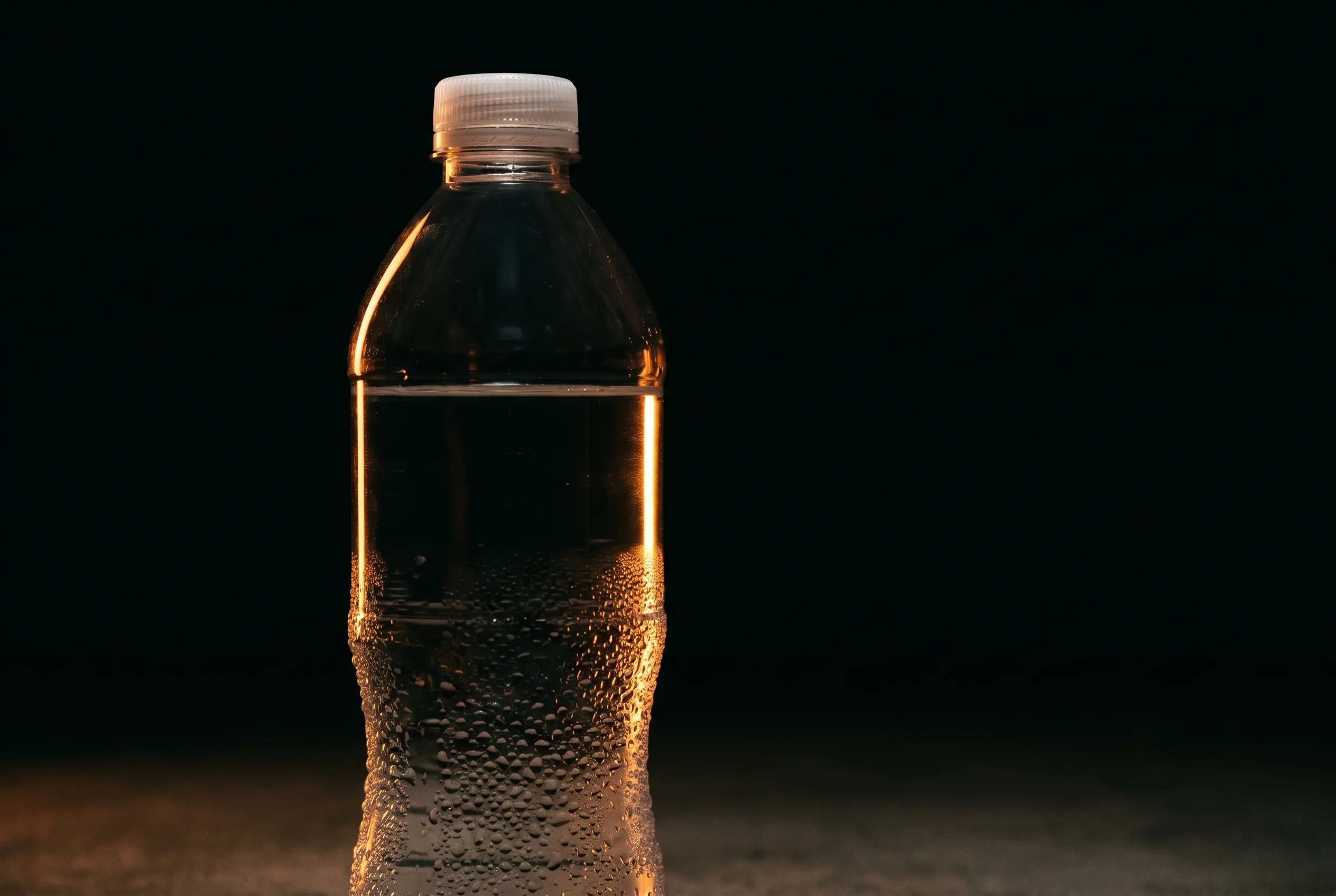
The original policy gave fans a 1-liter reusable container they could fill at internal water fountains throughout the match day at no cost. Friday’s announcement replaced that with a single factory-sealed 20-ounce bottle per person: less than two-thirds the previous volume, non-refillable once opened, and good for one use. Since reusable containers remain banned, fans have no permitted vessel with which to use an internal water fountain even if one is operational, making the sealed bottle’s contents the only water they can bring in without a stadium purchase.
One element of FIFA’s existing code of conduct offers a pointed comparison. Fans may bring baby milk and sterilized water in containers of up to 1 liter per child. Ticket holders needing liquids for medical reasons may carry up to 500 milliliters with a supporting certificate in English, French or Spanish. The 20-ounce sealed allowance for the general adult public sits below both of those exception categories in total volume and flexibility.
The governing body has spent years attaching sustainability language to its tournaments, committing publicly to reductions in single-use plastic and partnering with environmental campaigns. Mandating sealed disposable bottles for every general-admission fan at a 104-match tournament, while cancelling the allowance for reusable containers, drives single-use plastic consumption upward as a direct policy outcome. Schirgi’s statement contained no acknowledgement of that outcome.
The 2025 FIFA Club World Cup, held at the same North American venues during summer heat, operated under the original rule: fans could bring empty bottles through the gates. Players and fans both lodged heat complaints at that tournament. The 2026 World Cup, after five days of policy revision, imposes a more restrictive access standard than the competition that preceded it at the same venues.
The Heat Data Behind the Backlash
What Climate Scientists Found
Climate researchers had documented the thermal risk at this summer’s tournament weeks before the water bottle policy surfaced, publishing specific figures that gave critics concrete ground to stand on when the ban landed.
- 26 of 104 matches are forecast to be played in conditions exceeding physiological heat-stress safety thresholds for outdoor spectators, per World Weather Attribution’s 2026 World Cup climate analysis (WWA), a network of researchers including those at Imperial College London.
- 14 of 16 host stadiums are projected to reach temperatures posing health risks to players and spectators, according to a Queen’s University Belfast study using 20 years of meteorological records.
- 5 scheduled matches are projected to hit the conditions at which FIFPRO, the global players’ union, recommends postponing play.
WBGT (wet bulb globe temperature), the heat-stress index used in professional sports safety protocols, combines air temperature, humidity, wind speed and solar radiation into a single measure. At 26 degrees Celsius WBGT, cooling and hydration interventions are generally recommended in professional sport. At 28 degrees, FIFPRO says play should be postponed. The five games projected to reach that second threshold are among 104 scheduled across a June-to-July window in the North American summer.
Spectator Exposure and the Player Protocol
FIFA had addressed player heat risk before the bottle controversy began, mandating three-minute cooling breaks during each half of every match and arranging chilled benches for players. No equivalent structured protection was written into the published spectator plan. Fans typically spend several hours in outdoor queues, transit and open concourse areas before kick-off, exposed to the same ambient temperatures that prompted the player provisions, with none of the same support. Free Lions, the England fans’ group, observed the gap directly: “For all of the effort they are going to with ‘drinks breaks’ for the players, this is such a strange, late change,” the group said of the ban.
Cities including Miami, Dallas and Philadelphia are among those projected to face the highest heat-humidity combinations during the tournament’s six weeks. Joyce Kimutai, a research associate in extreme weather and climate change at Imperial College London, told a WWA press briefing in May that heat-stress conditions at the 2026 tournament are “more likely and more intense” than at the 1994 World Cup held on the same continent, a shift she attributed to anthropogenic climate change. Those findings, covered in a Scientific American analysis of the climate research, also noted that older fans and those with underlying health conditions face the sharpest exposure risk. Theodore Keeping, also at Imperial College, observed at the same briefing that fan exposure builds across hours of outdoor city transit and queueing before anyone reaches a stadium gate.
Who Profits When You Can’t Bring Your Own
At the 2025 Club World Cup, stadium vendors at North American venues charged between $4 and $6 for a bottle of water at most venues; at Lincoln Financial Field in Philadelphia, the price reached $10, the Philadelphia Inquirer reported. Fans who brought their own empty containers to that tournament paid nothing at internal hydration points. FIFA said in a June 3 statement that “inside the stadium footprint, pricing for water bottles for the FIFA World Cup 2026 will remain consistent with other events held at each stadium,” a formulation that applies no ceiling and sets no commitment to prices below what Club World Cup attendees encountered.
Water, sodas and juices sold at World Cup stadiums are supplied exclusively by longtime FIFA sponsor Coca-Cola, ESPN reported. The arrangement predates the water bottle controversy. The commercial partner that benefits when fans cannot bring their own supply is the governing body’s contracted beverage supplier. FIFA’s public statements have not addressed how those two facts relate. Coca-Cola did not respond to requests for comment.
The governing body’s safety justification distinguished hard-sided containers, which it said could cause injury if thrown, from soft ones. At the Club World Cup, soft bottles were permitted at the same North American venues under FIFA governance. FIFA offered no reconciliation of that inconsistency in either the ban notice or Schirgi’s Friday statement.
Speaking to LBC radio on Friday before FIFA announced the partial reversal, Starmer named the commercial logic directly.
It’s just wrong. And I can’t help but think that it’s about making money. So you can’t bring plastic bottles in but you can buy a bottle of water when you get in the crowd? And then it’ll be expensive.
Britain’s prime minister added that World Cup ticket prices were “far too expensive in my view” and called on the governing body to “think of the fans.”
How Four Days of Pressure Moved FIFA
The backlash to the June 2 email arrived almost immediately. Free Lions, an England fans’ group affiliated with the Football Supporters’ Association, called the ban “just the latest money-grab” and asked whether sun cream would be next, sold only inside stadiums. The group cited specific prior conversations with FIFA: “In all of our discussions, free water availability in stadiums was a key one and we were assured by FIFA that this would be the case.” The June 2 update provided no explanation for why those assurances had been withdrawn, and FIFA’s June 3 safety statement did not address them. Toronto Mayor Olivia Chow, whose city hosts multiple group-stage matches, separately called the ban “a pure money grab” and said she would explore what city hall could do to push back.
By Friday, scientific and political pressure had converged simultaneously. WWA’s heat analysis had been public for weeks. Starmer’s LBC appearance gave the dispute a head-of-government platform. FIFA separately acknowledged that it would place misting stations, cooling tents and hydration points near stadium perimeters in coordination with host cities, provisions that address outdoor queuing conditions but do not extend inside the gates where Coca-Cola’s exclusive supply applies. Schirgi’s video followed later that day.
Free Lions had asked for the original 1-liter policy to be reinstated in full. The governing body’s answer was one sealed 20-ounce single-use bottle. By Saturday, FIFA had not publicly addressed the prior assurances fan groups say they received, and had not confirmed a rule for Mexico’s venues. The World Cup kicks off on June 11.

-
 NEWS2 months ago
SoFi Stadium Strike Vote Puts U.S. World Cup Opener on Alert
-

 NEWS2 months ago
The Five Wingers Aston Villa Are Chasing This Summer
-
 NEWS2 months ago
Liverpool Agree Deal With Iraola to Lead Anfield’s Rebuild
-
 NEWS2 months ago
SNRT Gives Morocco’s World Cup Games a Public TV Window
-
 LA LIGA2 months ago
Real Madrid Now Pay More for Mourinho After Benfica Clause Lapsed
-
 EUROPA LEAGUE2 months ago
Sunderland’s Europa League Dates Start a Travel Race
-

 NEWS2 months ago
Barcelona’s Gamble to Underpay for Rashford Is Running Out of Time
-

 NEWS2 months ago
Arsenal’s Julian Alvarez Move Tests Atletico’s New Owners