
NEWS
Forest’s £13m Deal Flips Premier League Manager Pay
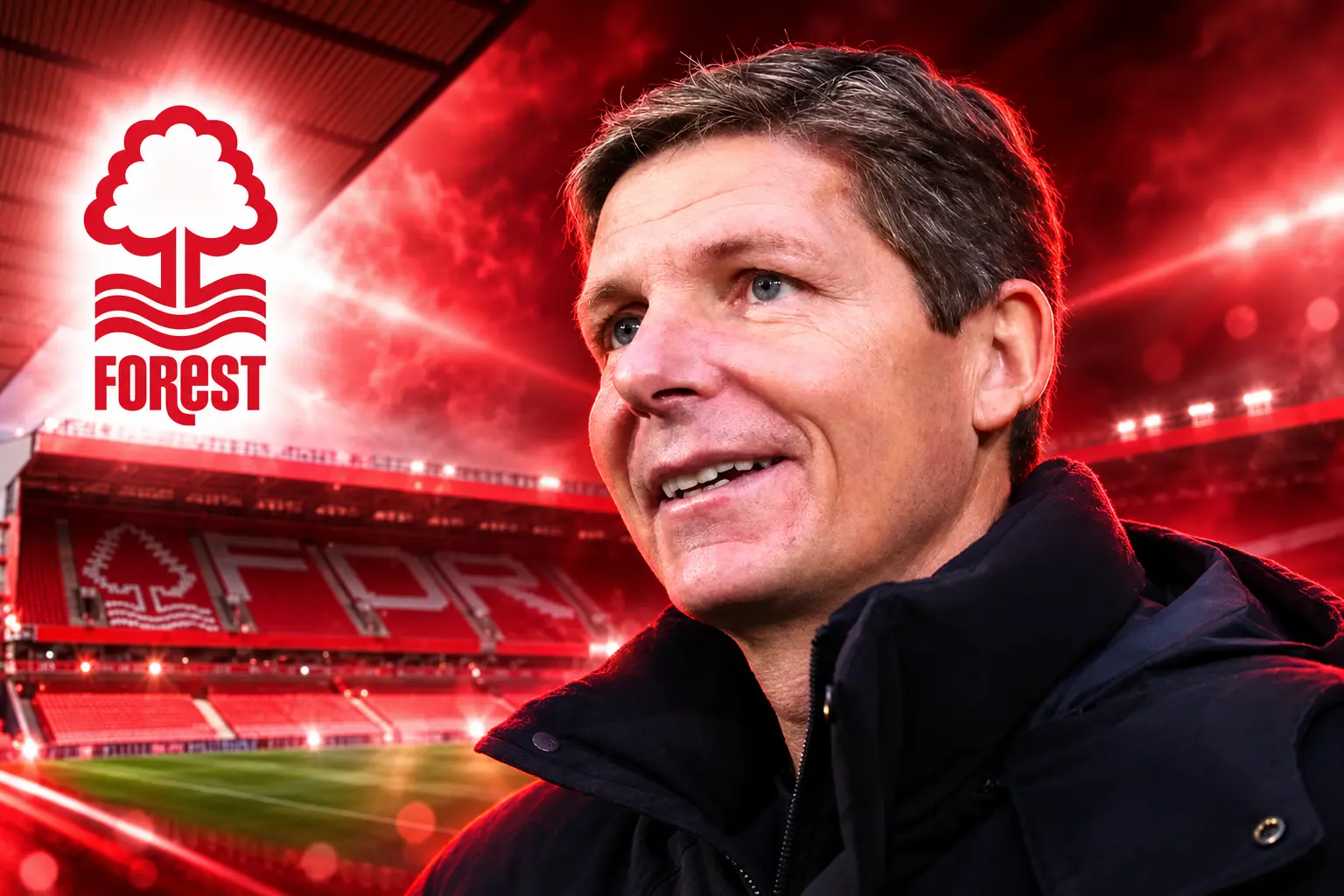
Forest’s Oliver Glasner is on a reported £13 million among the highest-paid Premier League managers, while United’s Carrick earns about half.

Nottingham Forest are paying Oliver Glasner a reported £13 million a year, matching Chelsea money for a club on its fifth head coach in a year. Manchester United’s Michael Carrick is on about half of that. The Premier League’s highest-paid managers are no longer clustered at the old giants.
Mikel Arteta still sits at the top on a £15 million package after Pep Guardiola left on £20 million. Below him the list has been rebuilt by panic hires, short auditions and one title that finally arrived.
A Fifth Forest Boss on Chelsea Money
Glasner signed until June 2029, with the highest salary in club history for a Forest coach, Fabrizio Romano said on 3 July 2026. An exclusive circulating the same week put the annual figure at £13 million, a jump from about £4.5 million at Crystal Palace.
He left Selhurst Park after the FA Cup, the Community Shield and the Conference League, having run down his deal and turned down offers to stay. Chelsea and Manchester United had looked. AC Milan and Bayer Leverkusen held talks. He joined a Forest side that had just used four head coaches in a single season and still needed a fifth.
THE FIVE CITY GROUND BOSSES IN A YEAR
- Nuno Espirito Santo: Sacked three games into last season.
- Ange Postecoglou: Given the job next and then removed.
- Sean Dyche: Brought in to steady the place after Postecoglou.
- Vitor Pereira: Arrived in February and kept Forest in the division.
- Oliver Glasner: Hired in July on the club-record coach deal.
Taking a Palace trophy run to the City Ground only makes sense if the contract is the point. The risk that travels with that cheque is an owner who has already gone through four head coaches in a year, and a dressing room that has had to learn a new voice every few months.
Who Earns What in This Season’s Dugouts?
Circulating 2026-27 estimates put Arteta first, Glasner and Xabi Alonso next on £13 million, then Enzo Maresca and Roberto De Zerbi on £12 million. Andoni Iraola’s Liverpool deal sits below both of those, and Carrick’s United deal sits in a different league of its own.
THE REPORTED 2026-27 PAY TABLE
| Rank | Manager | Club | Reported annual pay |
|---|---|---|---|
| 1 | Mikel Arteta | Arsenal | £15m (£10m basic + £5m CL) |
| 2= | Oliver Glasner | Nottingham Forest | £13m |
| 2= | Xabi Alonso | Chelsea | £13m |
| 4= | Enzo Maresca | Manchester City | £12m |
| 4= | Roberto De Zerbi | Tottenham Hotspur | £12m |
| 6 | Andoni Iraola | Liverpool | £10m |
| 7 | Unai Emery | Aston Villa | £9.5m |
| 8 | Eddie Howe | Newcastle United | £9m |
| 9 | Michael Carrick | Manchester United | £6.5m |
| 10 | David Moyes | Everton | £5m |
Those numbers are media estimates, not club filings, and bonuses can move a man a rung. They still show the inversion. Forest and Tottenham are in the top five. United are ninth. Liverpool, who won the league the season before last, are sixth.
United Chose a Two-Year Discount
United made Carrick permanent on 22 May 2026 on a two-year contract to 2028, with the option of a further year. He had replaced Ruben Amorim in January after 14 months of the Portuguese’s reign, then taken 11 wins and two losses from 16 league games, 36 points, a third-place finish and a return to the Champions League. United had finished 15th the season before.
Jason Wilcox, the director of football, said Carrick had “thoroughly earned the opportunity to continue leading our men’s team.” Carrick, the seventh permanent appointment since Alex Ferguson retired in 2013, spoke about resilience and purpose and about a club that “deserve to be challenging for the biggest honours.”
The length of the deal is the tell. United had been handing three-year contracts to the men they then paid off. A two-year ticket with an option is a club that has learned, the hard way, what a long deal costs when it sours. It also leaves the manager of Manchester United on a reported £6.5 million, half of Glasner’s Forest wage and below Eddie Howe at Newcastle.
The Champions Left and Their Clubs Spent Less
Guardiola’s exit and Arne Slot’s sacking opened the two richest dugouts in the country, and neither club matched the old bill. That is the wage reset after the champions left, and it runs through the middle of this list.
THE 2026 HIRING WAVE
- 31 March 2026: Tottenham hire Roberto De Zerbi on a five-year contract with no relegation clause.
- 17 May 2026: Chelsea appoint Xabi Alonso as manager on a four-year deal from 1 July.
- 22 May 2026: Manchester United make Michael Carrick permanent to 2028.
- 4 June 2026: Liverpool hire Andoni Iraola on a two-year contract after sacking Arne Slot.
- 29 June 2026: Manchester City complete Enzo Maresca’s move from Chelsea on a three-year deal.
- 3 July 2026: Nottingham Forest sign Oliver Glasner until June 2029.
City paid a €20 million fee, per Transfermarkt, to free Maresca from Chelsea, a sum that ranks among the dearest coach hires on record, then put him on a reported £12 million. Guardiola had been on £20 million. The Italian costs less per year than the man he replaced, even after that exit fee.
Liverpool moved in days. Slot had won the club’s 20th English title in his first season, then been sacked after a troubled second; he had earned just under £7 million in that first year before title bonuses. Iraola left Bournemouth after a sixth-place finish, an unbeaten last 18 games and the club’s first European qualification, and said he did not need much selling. “You don’t need a lot of things to get attracted by Liverpool. Liverpool is Liverpool,” he said. His reported £10 million still sits under Forest, Spurs and Chelsea.
Chelsea did not take the discount. Alonso had been out of work since Real Madrid ended his stay seven months into a three-year deal in January, and Liverpool had been the romantic fit. He joined Chelsea instead as manager, not head coach, on four years through 2030, the latest permanent appointment of the Todd Boehly and Clearlake era. Liam Rosenior had been sacked on 23 April after less than four months, himself a successor to Maresca, who was dismissed on New Year’s Day.
Chelsea is one of the biggest clubs in world football and it fills me with immense pride to become manager of this great club. From my conversations with the ownership group and sporting leadership, it is clear we share the same ambition. We want to build a team capable of competing consistently at the highest level and fighting for trophies.
Xabi Alonso, Chelsea manager, club statement, 17 May 2026
Howe remains on a reported £9 million after a first trophy in decades, with the 2026-27 start already ugly: two league defeats to newly promoted Sunderland and a hiding by Barcelona. Emery, who took Villa in October 2022 as relegation candidates and turned them into regular Champions League qualifiers, is listed at £9.5 million. Moyes rebuilt Everton from a drop fight into midtable on £5 million. The middle of the table is where the old hierarchy still roughly holds. The top of it does not.
Tottenham Locked De Zerbi In Even If They Went Down
Spurs announced De Zerbi on 31 March 2026 as the third head coach of that season, after Thomas Frank and then Igor Tudor, who lasted 44 days. The club sat 17th, one point above the relegation places, with seven games left. Johan Lange, the sporting director, called him “our No. 1 target for the summer” and said they were pleased to bring him in immediately.
The Italian signed for five years. British coverage at the time said the deal had no relegation release clause, so he would stay even if Tottenham went down, a club ever-present in the top flight since 1978. A long-term contract for an out-of-work coach, struck while the team was one bad month from the Championship, is the other face of Forest’s cheque: pay up, and make it expensive to change your mind again.
He kept them up. Spurs will treat £12 million as cheap if that is the line that holds. They then backed him in the market, part of Tottenham’s heavy summer spending, which is why the five-year paper now has a squad attached to it. Fire him early and the residual is the bill for a negotiation they entered from 17th.
The New Spending Cap Counts the Manager
From the start of 2026-27 the Premier League has replaced its old profit rules with Squad Cost Ratio, which limits on-pitch spending to 85 percent of football-related revenue and net player-sale profit. Head coach wages sit inside that cap. Assistant coaches do not.
WHAT COUNTS IN SQUAD COST
- Wages: First-team players and the head coach, not the rest of the coaching staff.
- Agents: Fees on transfers and contract renewals.
- Amortisation: Transfer fees spread across a player’s contract, plus write-downs.
- The tests: A 1 March compliance check, then June and October true-ups if a club is over 85 percent.
Every club starts with a 30 percent allowance above the 85 percent green line, so the red line is 115 percent. Spend above 85 but under that ceiling and the punishment is a levy. Cross the red line and the sporting hit is a six-point deduction, plus another point for every £6.5 million over. Clubs in Europe still have UEFA’s tighter 70 percent cap on top.
A £13 million coach is not City’s weekly player bill, which Capology figures via FBref put at £3,682,000. It is still a squad-cost line that Forest, Spurs and Chelsea now carry into the March test, on top of the residual risk in those long contracts. United’s cheaper, shorter ticket is the one that looks built for the new rules.
Arteta’s Title Bonus Made Him the Top Earner
Arteta’s package is a basic £10 million plus £5 million for Champions League football, and it became the league’s top salary only when Guardiola left. He has been in the job since December 2019. Arsenal won the Premier League in May 2026, a first title in 22 years, and the contract is due to expire in 2027.
SalaryLeaks’ 30 August 2026 dump puts Bukayo Saka’s £15.6 million base just above the manager, with Kai Havertz on £14.2 million, in a squad wage bill of £227 million. The head coach is paid like a senior forward, not like Guardiola. Talk around the next deal is of a rise. Until it is signed, the man who actually won the league is top of a list rebuilt by clubs that could not wait.
Forest already know what the alternative costs. They paid Chelsea wages to stop being a club that changes coaches with the weather. United paid less, on a shorter clock, because they have spent the years since Ferguson learning the price of the other choice. Both bets are now in the same 85 percent pot, and March is when the league starts counting.

Kily Gonzalez Has the Inter Miami Job Without Papers

Chelsea Puts USDC on the Shirt for One Year

Esther González Joins Al Qadsiah After Gotham’s Free Exit

Chelsea Stay on Adam Wharton After Palace Hold Firm

Fiorentina Pays for Pellegrino After Juve’s Loan Fails

Only One of Villa’s Five Winger Targets Actually Signed

SoFi Workers Won Pay and an ICE Walk-Off Clause

Hughes Hired Iraola Twice, Then Left for Al-Hilal

Sunderland’s 53-Year European Wait Ends Against AZ

Summerville Turned a Shock Call-Up Into Two World Cup Goals
-
 NEWS5 months ago
Only One of Villa’s Five Winger Targets Actually Signed
-
 NEWS5 months ago
SoFi Workers Won Pay and an ICE Walk-Off Clause
-
 NEWS5 months ago
Hughes Hired Iraola Twice, Then Left for Al-Hilal
-
 EUROPA LEAGUE5 months ago
Sunderland’s 53-Year European Wait Ends Against AZ
-
 NEWS5 months ago
Summerville Turned a Shock Call-Up Into Two World Cup Goals
-

 NEWS5 months ago
SNRT Put Morocco’s World Cup Matches on Free TV
-

 NEWS5 months ago
FIFA Took IShowSpeed’s World Cup Bet to the Final
-

 CHAMPIONS LEAGUE5 months ago
Jordan Brand’s 2018 Football Bet Pays on PSG’s Repeat