
NEWS
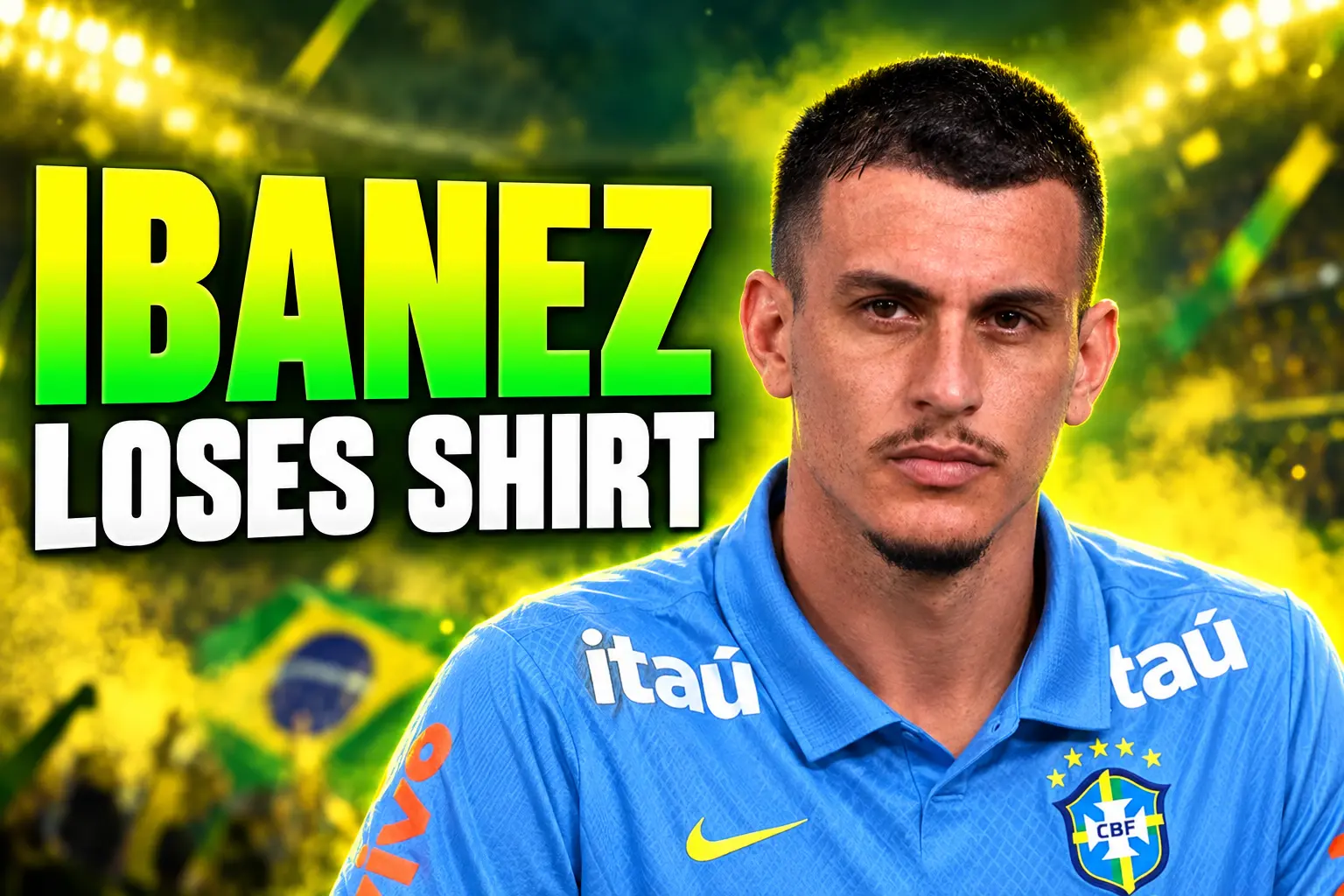
Ibanez Played 49 Minutes, Then Lost the Brazil Shirt
Roger Ibanez started Brazil’s World Cup opener at right-back after Wesley’s injury, lasted 49 minutes, then vanished from Ancelotti’s first post-Cup squad.

Roger Ibanez started Brazil’s World Cup opener at right-back, lasted 49 minutes, and never played another. Wesley’s torn thigh seven days earlier had opened the job. Carlo Ancelotti handed it to a centre-back who had said he would play anywhere.
On September 9, Ancelotti named his first squad of the 2030 cycle. Ibanez was out. Wesley was back.
Ibanez Lasted 49 Minutes Against Morocco
Brazil kicked off Group C against Morocco on June 13 at MetLife Stadium in East Rutherford, New Jersey. Ancelotti started Alisson; Ibanez, Marquinhos, Gabriel Magalhaes and Douglas Santos; Casemiro and Bruno Guimaraes; Raphinha, Lucas Paqueta and Vinicius Junior; Igor Thiago.
Noussair Mazraoui went past Ibanez in the opening spell. Morocco led in the 21st minute when Ismael Saibari chipped Alisson after a Brahim Diaz through ball. Vinicius equalised in the 32nd, cutting inside and beating Yassine Bounou.
Casemiro was booked in the 37th minute. Ibanez went into the book in the 43rd for a foul that stopped a Morocco break started by Diaz. Ancelotti did not wait for a second yellow. At half-time he sent on Danilo for Ibanez and Fabinho for Casemiro.
FIFA’s match report logged Ibanez at 49 minutes, the first half plus the added time. Former Brazil midfielder Felipe Melo said the Italian was wrong to start him at full-back. Morocco had spent the half running at a centre-back asked to defend the width of MetLife, with Saibari and Azzedine Ounahi doubling the right side so El Khannouss and Diaz could win their duels.
Whether it’s at center back or right back, I believe I’m ready. The question about my position doesn’t depend on me. Wherever I’m needed, I’ll be prepared to represent my country.
Roger Ibanez, Brazil defender, Basking Ridge, New Jersey
He had said that on June 9 at Brazil’s hotel, four days before the opener, when reporters asked who would replace Wesley. He added that if he said more he would get in trouble afterward. Ancelotti had not sat him and Danilo down for a special talk. The 1-1 stood. Brazil’s 1-1 draw with Morocco was the only time Ibanez started a match at the tournament.
The Injury in Cleveland That Opened the Door
Wesley Vinicius Franca Lima, 22, of Roma, had been Brazil’s first-choice right-back. He started four of their last five games before the Cup. In the final warm-up, a 2-1 win over Egypt on June 6 at Huntington Bank Field in Cleveland, he lasted into the 15th minute, then left in tears. Danilo finished the friendly at right-back. Endrick scored the winner.
FROM CLEVELAND TO METLIFE
- June 6, 2026: Wesley feels his left thigh against Egypt and is replaced in the 15th minute.
- June 7, 2026: An MRI shows an adductor tear. CBF cuts him and called up Atalanta midfielder Ederson.
- June 8, 2026: Ederson is due to join the squad in the United States.
- June 9, 2026: Ibanez tells reporters in Basking Ridge he is ready at centre-back or right-back.
- June 13, 2026: Ibanez starts the opener. Danilo replaces him at half-time.
CBF said the scan confirmed a muscle injury to the adductor of the left thigh. “Wesley is a player who is well liked by the group and will always be considered part of this team seeking its sixth world title,” the federation said. He would have been the first player from Maranhao to appear for Brazil at a World Cup.
Ibanez, 27, was born in Canela, Rio Grande do Sul, and stands 1.86 m. He joined Al-Ahli from Roma in August 2023 for about 30 million euros and wears number 3 in Jeddah. Brazil gave him shirt 24. He had eight caps by the opener, a return to the national team that he celebrated in March after three years away, telling CBF TV he had feared the Saudi move would push him out of reach.
Al-Ahli posted the call-up in May, calling him the rock at the back.
https://x.com/ALAHLI_FCEN/status/2056497225270800864
Why Ancelotti Replaced Wesley With a Midfielder
Ancelotti did not bring in a specialist right-back. He added Ederson, 26, a central midfielder from Atalanta who was lining up a move to Manchester United. The pre-list had carried Botafogo’s Vitinho and Vasco’s Paulo Henrique. Neither came. Ancelotti would rather shift a centre-back than take a domestic full-back whose club form had dipped.
Before Wesley went down, Ancelotti had already sketched the depth chart. Wesley would play right-back, he said, and Ibanez and Danilo could play there too. After the Egypt night he said Danilo can play in all positions and that, with Wesley hurt, Brazil needed him as a right-back. Ibanez could play there as well. He had already used Ibanez in that role during the March window, including a night against Croatia.
THE OPTIONS ANCELOTTI LEFT ON THE TABLE
- Wesley: The 22-year-old Roma starter, gone after the adductor tear in Cleveland.
- Danilo: Flamengo’s 34-year-old utility defender, the man who finished the Egypt friendly and then the tournament.
- Ibanez: Al-Ahli’s centre-back, more defensive than Wesley, willing to overlap if asked.
- Ederson: The squad replacement, a midfielder, not a full-back.
- Vitinho and Paulo Henrique: On the pre-list, left at home.
- Fabinho: A midfielder with some right-back history, kept as cover rather than a starter.
Ibanez described his own game in plain terms. His traits are more defensive than Wesley’s, he said, but he felt ready to get forward if needed, because the job is still to defend well and be comfortable on the ball. Day to day with Danilo was good, he said, because Danilo plays both positions and clears up doubts. That was the pitch. Morocco was the test.
Danilo, Haiti and the Rest of Group C
Ancelotti made two changes for Haiti on June 19 in Philadelphia. Danilo came in at right-back. Matheus Cunha replaced Thiago. Brazil won 3-0, Cunha scoring in the 23rd and 36th minutes, Vinicius adding one in first-half stoppage time. Ibanez stayed on the bench. Danilo looked the calmer option: he could pass, he could head, and he did not have to survive Hakimi’s side for another 45 minutes.
Scotland in Miami on June 24 went the same way. Danilo started. Vinicius scored in the 7th minute and again in first-half stoppage time, Cunha adding a third in the 60th. The Scottish FA listed Ibanez among the unused men. Brazil took Group C with two wins, one draw, seven goals scored and one conceded, seven points and a plus-six difference, ahead of Morocco on goal difference after both finished on seven.
BRAZIL’S RIGHT BACK BY MATCH
| Match | Date | Score | Right back | Ibanez minutes |
|---|---|---|---|---|
| Morocco | June 13 | 1-1 | Ibanez, then Danilo | 49 |
| Haiti | June 19 | 3-0 | Danilo | 0 |
| Scotland | June 24 | 3-0 | Danilo | 0 |
| Japan (round of 32) | June 29 | 2-1 | Danilo | 0 |
| Norway (round of 16) | July 5 | 1-2 | Danilo | 0 |
He was an unused substitute in Miami and unused again in Houston. The improvised starter of June 13 had become a spectator in a back line that no longer needed him.
Norway Closed Brazil’s World Cup in New Jersey
Japan led the round of 32 in Houston on June 29 after Kaishu Sano intercepted a loose Danilo pass in the 29th minute and drove past Casemiro to beat Alisson. Casemiro headed the equaliser in the 56th from a Gabriel Magalhaes cross. Gabriel Martinelli, on for Cunha, scored in stoppage time from a Bruno Guimaraes pass. Ibanez watched that one too. The safer right-back had gifted the opening goal and still kept the shirt.
Norway ended it on July 5 back in East Rutherford. Danilo started again. Erling Haaland scored in the 79th minute and the 90th. Neymar converted a penalty in the 10th minute of stoppage time. Brazil were out in the round of 16. Ibanez was not among the four substitutes Ancelotti used. His World Cup was still those 49 minutes in June.
Pre-tournament noise had cast him as the surer defender, the man who would lock the flank while Wesley recovered in Italy. Morocco’s wide pair did not treat him that way, and Ancelotti never went back. Danilo could not offer Wesley’s overlapping for 90 minutes, and he did not need to once Cunha and Vinicius were scoring. The right-back job, after half-time on opening night, belonged to the older utility man.
Wesley Returns on the First Post-Cup List
Ancelotti’s first squad after the tournament, named on September 9, kept nine of the 26 who went to North America: Douglas Santos, Gabriel Magalhaes, Marquinhos, Danilo of Botafogo, Bruno Guimaraes, Endrick, Raphinha, Rayan and Vinicius Junior. Seventeen were left out, including Alisson, Casemiro, Neymar and the veteran Danilo who had played the Cup at right-back.
Ibanez was on that cut list with Alex Sandro, Bremer and Leo Pereira. Wesley, the Roma full-back whose thigh had started all this, was in. So were Matheuzinho and Mauro Junior. Brazil will play Australia on September 25 in Townsville and September 29 in Brisbane, then India on October 3 in Kolkata.
Ibanez has already started Al-Ahli’s new Saudi Pro League season. In August the Jeddah club announced he had extended through 2030, after talks that paused while he was at the World Cup. He went to North America as a centre-back who would play anywhere. He left it as a 49-minute right-back, and the next Brazil list did not have his name.
Wesley is in the travelling party for Australia and India. Ibanez is not. The hole he volunteered to fill is a specialist’s job again.
Frequently Asked Questions
Who replaced Wesley in Brazil’s World Cup squad?
Ancelotti called Ederson, a 26-year-old Atalanta midfielder with three Brazil caps, the last of them in March 2025. He joined the camp in the United States on June 8 and was a squad midfielder, not a like-for-like right-back.
Had Ibanez played right-back for Ancelotti before Morocco?
Yes. Ancelotti used him in the role during the March window, including against Croatia, and Ibanez also came on for Wesley in the March 26 friendly against France in Boston, a 2-1 defeat at Gillette Stadium.
What shirt number did Ibanez wear at the World Cup?
He wore 24 for Brazil. At Al-Ahli he wears 3. FIFA’s Morocco report listed him as defender number 24, the same number he kept on the bench for Haiti, Scotland and Japan.
Where was Brazil’s World Cup opener played, and how many watched?
The Morocco match was at MetLife Stadium in East Rutherford, New Jersey, listed by FIFA as New York/New Jersey Stadium, in front of 80,663. Slavko Vincic of Slovenia refereed, and Brazil and Morocco shared 12 and 14 attempts at goal.

Kily Gonzalez Has the Inter Miami Job Without Papers

Chelsea Puts USDC on the Shirt for One Year

Esther González Joins Al Qadsiah After Gotham’s Free Exit

Chelsea Stay on Adam Wharton After Palace Hold Firm

Fiorentina Pays for Pellegrino After Juve’s Loan Fails

Only One of Villa’s Five Winger Targets Actually Signed

SoFi Workers Won Pay and an ICE Walk-Off Clause

Hughes Hired Iraola Twice, Then Left for Al-Hilal

Sunderland’s 53-Year European Wait Ends Against AZ

Summerville Turned a Shock Call-Up Into Two World Cup Goals
-
 NEWS4 months ago
Only One of Villa’s Five Winger Targets Actually Signed
-
 NEWS4 months ago
SoFi Workers Won Pay and an ICE Walk-Off Clause
-
 NEWS4 months ago
Hughes Hired Iraola Twice, Then Left for Al-Hilal
-
 EUROPA LEAGUE4 months ago
Sunderland’s 53-Year European Wait Ends Against AZ
-
 NEWS4 months ago
Summerville Turned a Shock Call-Up Into Two World Cup Goals
-

 NEWS4 months ago
SNRT Put Morocco’s World Cup Matches on Free TV
-

 CHAMPIONS LEAGUE4 months ago
Jordan Brand’s 2018 Football Bet Pays on PSG’s Repeat
-

 EUROPA LEAGUE4 months ago
Rangers Never Played the Sparta Prague Sharpener