
NEWS
FIFA’s 48-Team World Cup Is Already the 64-Team Template
The 48-team World Cup filled stadiums, split matches into ad breaks, and gave FIFA its brief for a 64-team tournament in 2030.

FIFA’s 48-team World Cup sold 6,810,966 tickets, paused every match twice for water, and is already the working model for a 64-team tournament. Spain beat Argentina in extra time on July 19, 2026, in a final that drew 80,663 and became the 70th sellout of 104 games. The rule changes around that month are now the file on FIFA’s desk.
Gianni Infantino called the 104-match grid “104 Super Bowls.” The line was sales talk. The month that followed gave him something sturdier: proof that a bigger field, a higher price, and a scheduled stoppage still filled the seats.
Cape Verde Forced Extra Time on Argentina
The last expansion before 2026 was 1998, when the field went to 32 and stayed there through Qatar. FIFA’s council voted in 2017 to go to 48 teams, 12 groups of four, and a round of 32. Critics reached for 1970 and 1974, when El Salvador, Haiti, and Zaire were buried in the group stage, and warned that blowouts would cheapen the thing.
Germany did beat debutant Curacao 7-1 in an early game. That score also happens when Germany plays better sides. The floor of the sport was higher than the old scare stories. Congo DR, once Zaire, drew Portugal in the group and then took England to a 2-1 round-of-32, Cederick Cipenga scoring in the seventh minute before Harry Kane answered in the 75th and 86th in front of 68,239 in Atlanta.
Cape Verde went further. Three draws, three points, second in Group H behind Spain, and the smallest nation ever to reach a World Cup knockout round. Uruguay, on two points, went home even though two-thirds of third-place teams still advanced. In Miami on July 3, Argentina needed extra time to survive, 3-2. Lionel Messi scored in the 29th minute, Deroy Duarte answered in the 59th, Lisandro Martinez put Argentina back in front in the 92nd, Sidny Lopes Cabral tied it in the 103rd, and Diney Borges turned in an own goal from a Messi corner in the 111th.
Jordan and Uzbekistan, the other debutants who drew short straws, scored and went home. The point of a bigger World Cup, if it is not only more inventory, is that a side like Cape Verde can force the holders into a second 45. That part of the experiment held.
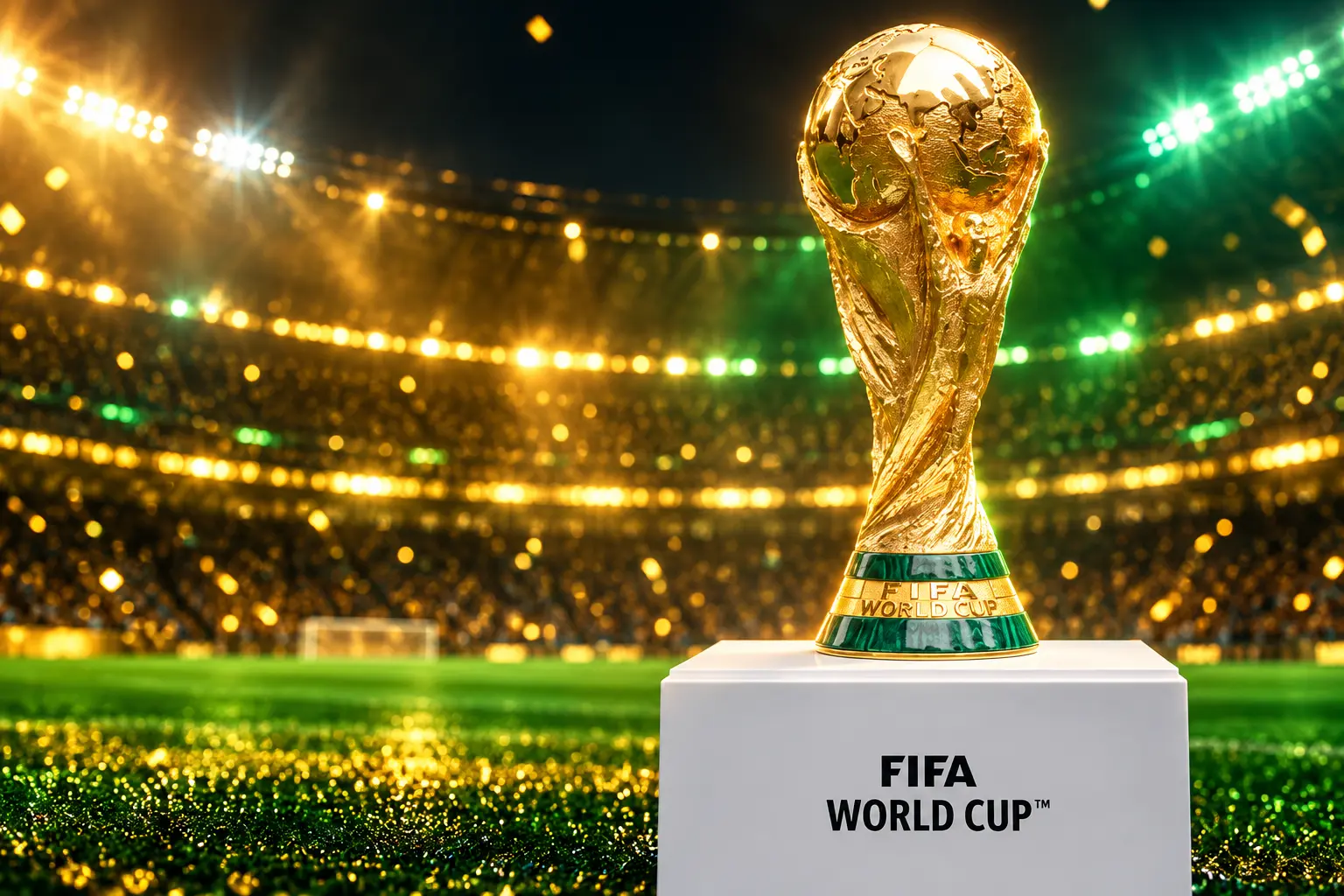
The Third-Place Rule and a Night of Draws
The awkwardness sat in the arithmetic. Thirty-two of 48 teams reached the knockout round, so eight of the 12 third-place sides went through. Three points and a plus goal difference was usually enough. Only two teams in the whole tournament won a match and still failed to advance. Plenty of sides walked into the last group game happy to split the points.
THE 2026 FORMAT SHIFT
| Feature | Qatar 2022 | North America 2026 |
|---|---|---|
| Teams | 32 | 48 |
| Matches | 64 | 104 |
| Group games | 48 | 72 |
| Knockout teams | 16 | 32 |
| Best third-place sides | 0 | 8 |
That is 24 extra group matches and 16 extra knockout matches, with the four semifinalists still playing eight games if they go the distance. FIFA’s first sketch for 48 teams, 16 groups of three and two games each, would have been thinner. The version that was played still flattened the last group night. Australia and Paraguay could draw and both go through, and they did. Japan and Sweden had a similar shape. Algeria and Austria played out 3-3, with two goals in second-half stoppage, a rare live table in a round that often did not need one. Scotland had to hang around for days after a campaign that was already over, in case a third-place miracle appeared on another pitch.
The eight third-place tickets went to Sweden, Ecuador, Bosnia and Herzegovina, Paraguay, Senegal, Ghana, DR Congo, and Algeria. Cape Verde never needed one. A 64-team grid of 16 groups of four, with only the top two advancing, would retire that table. That is the cleanest “fix” FIFA now has for a problem its own 48-team draw created.
6.8 Million Tickets at Super Bowl Prices
Dynamic pricing was the change with the least romance. Infantino’s pitch was that every game could be sold like a Super Bowl, and that pricing out anyone below the upper middle class was acceptable if the tickets moved. They moved.
TICKET AND CROWD SNAPSHOT
- Total attendance: FIFA counted 6,810,966 people through the gates, 65,490 per match, at 99.7% occupancy.
- Sellouts: 70 of 104 matches sold out, and GlobalData found 89% of games reached at least 99% of capacity.
- The 1994 mark: The last U.S. World Cup still holds the per-match record at 68,991, from a total of 3,587,538 across 52 games, but 2026 passed that total on June 25, with 48 matches still to play.
- Demand: FIFA said 150 million ticket requests hit the system, and GlobalData put the extra inventory versus earlier World Cups at 2.15 million tickets.
Jake Kemp, sport senior analyst at GlobalData, said high prices plus the extra matches meant FIFA made more from ticket and hospitality sales above $5 billion than from any other 2026 revenue line, with budgeted tournament revenue rising from $11 billion before the event to $15 billion. FIFA’s own resale stand took 15% from the buyer and 15% from the seller. Keith Pagello, founder of TicketData.com, tracked the final’s get-in price from $7,322 in October 2025 to a peak of $12,300 on June 23, then $7,477 about six hours before kickoff. The expected collapse in the secondary market did not arrive.
Empty seats still showed on television, and FIFA had to explain that scanned tickets include people standing in concourses. Fan festivals still pulled more than 9 million visits across 13 host cities, which is how host-city crowds far beyond the stadiums became their own logistics story. Infantino’s defence is the same one he has used for years: World Cup money, he said, is why there is football in 150 countries, and more than half of FIFA’s member associations could not operate without it. The public can hate the prices and still buy them. That is the lesson 2030 will inherit, and it is not a small one.
Why Every Match Stopped at Minute 22
Hydration breaks are not new in heat. Making them mandatory in every World Cup game, indoors or in rain, was. FIFA put three-minute hydration breaks in every match, 22 minutes into each half, with no temperature trigger. Across 104 games that is 624 scheduled minutes, or 10 hours and 24 minutes of official water time, before injury, VAR, and added time.
For every game, no matter where the games are played, no matter if there’s a roof, (or) temperature-wise, there will be a three-minute hydration break. It will be three minutes from whistle to whistle in both halves.
Manolo Zubiria, Chief Tournament Officer USA, FIFA World Cup 2026, World Broadcaster Meeting in Washington
FIFA announced that line as player welfare, drawing on the 2025 Club World Cup in the United States. It also told broadcasters they could cut to commercials 20 seconds after the referee signalled the break, and had to be back on the match feed 30 seconds before play restarted. Soccer’s 45-minute half had never carried a reliable ad pod. The break manufactured one.
Fox went full-screen in the opener between Mexico and South Africa. Ian Darke told viewers the stoppage was “powered to you by Powerade.” In the second half, after Raul Jimenez scored, the ad block ran long and the network came back after the restart, a handful of seconds late. Thirty-second spots in those windows were quoted from $200,000 to $750,000 depending on the round. Fox’s always-on World Cup broadcast treated the pause as inventory, not a medical timeout that happened to be on camera.
https://x.com/FOXSports/status/2072766612177109193
Boos followed teams off the pitch in several stadiums. Coaches used the window as a timeout. Argentina outscored opponents 5-0 in the stretch after the breaks, a quiet edge for a side that lived on tight games. The United States ranked well across the other 70 minutes and still conceded three of its eight goals in the 28th, 31st, and 33rd minutes of a half. The United States had even tried a laptop huddle in a pre-tournament friendly and waited to learn whether FIFA would allow it in June.
Alexi Lalas, working the tournament for Fox, put the trade in plain words in December 2025: the breaks create quarters and in-game commercials, and he loved it. The objection writes itself. A match format that had run for more than a century was split so a network could sell the middle of a half. Player welfare in a North American summer is real. So is the clock the ads run on. Both can sit in the same three minutes, and 2026 proved broadcasters will not give that clock back.
The Tiebreaker That Emptied a Group Night
FIFA also flipped the first group tiebreaker from goal difference to head-to-head. Beat the side you finish level with, and you rank above them. In Group D that froze the table a game early. After two matchdays the United States sat on six points and plus-5, Australia on three and even, Paraguay on three and minus-2, Turkiye on zero and minus-3. Under the old list, Turkiye would have had a live shot at third against a United States side that still had something to protect. Because of head-to-head, the Americans had already locked first, Turkiye were already out, and Mauricio Pochettino could rest almost every starter. The match became an exhibition, a fun one, and a dead one.
Pair that with eight third-place tickets and the last group night lost its fear. The United States and other group winners knew first place was banked. Australia and Paraguay could hold hands. Even if 2030 kills the third-place round, head-to-head still lets a team clinch a ranking before the last whistle, which is another way of saying it steals a Saturday.
A 10-Second Walk and a New Straight Red
Three changes aimed at time-wasting did what they were supposed to do. Referees were not theatrical about them. Play sped up at the edges without a circus.
THE MATCH-FLOW LIMITS
- Substitutions: The player going off had 10 seconds to leave at the nearest point. Miss it, and the new player waited until the first stoppage after one minute of running time, with the team a player short in between.
- Throw-ins: A visible five-second countdown, then the other side took the throw.
- Goal kicks: The same five-second count, with a corner the other way if the kick was late.
- On-field treatment: An outfield player assessed on the pitch had to go off and stay off for one minute of running time after the restart, with exceptions for keepers and serious collisions.
The red card for covering a mouth was the rule that needed a villain. IFAB approved two new sending-off offences at a special meeting in Vancouver on April 28, 2026, and sent circular no. 33 on May 19. FIFA opted into both for the World Cup. One was leaving the field in protest. The other was covering the mouth with a hand, arm, or shirt while talking to an opponent in a provocative or inflammatory situation. The prompt was Benfica’s Gianluca Prestianni and Real Madrid’s Vinicius Junior in the Champions League, a “he said, he said” that lip-readers could not break because the mouth was hidden.
If it is a friendly conversation, they can continue to do it without any problem. We respect that there are players who are friends and it is normal to chat before, during or after the match. When it is confrontational, it is a completely different story. Covering the mouth means you are doing something potentially very wrong.
Pierluigi Collina, chairman of the FIFA referees committee
Paraguay’s Miguel Almiron became the first player sent off under that text, in first-half stoppage against Turkiye on June 20 in Santa Clara, after a short VAR check by referee Ivan Barton. He had covered his mouth while talking to Mert Muldur. Nothing was established about the words. Paraguay still won 1-0. Coach Gustavo Alfaro said the law was the law, then added that he feared the game was getting too strict and losing its essence. Lionel Messi later tried to interest officials in Marc Cucurella’s hand near his face in the final, a reminder that a confrontation test will always be blurry. The intent is cleaner than the edges.
What a 64-Team World Cup Would Add
Infantino said after the tournament that a 64-team World Cup is an issue for FIFA’s committees, because the event should be “for the whole world, not just Europe and South America.” CONMEBOL president Alejandro Dominguez went further in July and wrote as if 2030 were already a 64-team centenary, with kickoff games in Uruguay, Argentina, and Paraguay before Spain, Portugal, and Morocco took over. UEFA president Aleksander Ceferin had already called 64 teams “not a good idea,” and the Asian Football Confederation’s Sheikh Salman bin Ibrahim Al Khalifa had asked where further growth would stop.
On July 30, FIFA circulated a research brief titled “Potential expansion of the FIFA World Cup to 64 teams.” It wanted an independent agency to test market appetite, commercial space, and the risk of saturation, and it said consumer or fan evidence “should not become the centre of the study.” Agency proposals were due August 7, a FIFA choice on August 14, and the analysis on September 11, 2026. By August 25 the FIFA Council still had not been told which agency, if any, had the work.
WHAT WE KNOW
- The grid: Sixteen groups of four, top two through, 128 matches, 24 more than 2026, with a champion still capped at eight games.
- The hosts: Morocco, Portugal, and Spain run 2030, with one centenary match each in Argentina, Paraguay, and Uruguay.
- The 2026 test: Nine African sides reached the round of 32, and Cape Verde pushed the holders to extra time, which is the sporting case Infantino now repeats.
WHAT IS UNCONFIRMED
- The decision: FIFA has not voted 64 teams in, and the September 11 paper is an impact study, not a council resolution.
- The quality drop: A 64-team 2026 field would have pulled in Italy, Denmark, and Wales, and also Indonesia, New Caledonia, Suriname, and Tahiti; how many of those sides would have looked like Cape Verde is guesswork.
- The money: The brief itself asked whether extra value would last, or whether dilution and a packed calendar would eat it.
FIFA asked for that paper by September 11, 2026, after a four-week window. The brief told the agency to treat fans as a side input. Sixteen groups of four would retire the third-place table 2026 had to live with, and the seats, the ads, and the prices from this summer are the commercial half of the file.

Kily Gonzalez Has the Inter Miami Job Without Papers

Chelsea Puts USDC on the Shirt for One Year

Esther González Joins Al Qadsiah After Gotham’s Free Exit

Chelsea Stay on Adam Wharton After Palace Hold Firm

Fiorentina Pays for Pellegrino After Juve’s Loan Fails

Only One of Villa’s Five Winger Targets Actually Signed

SoFi Workers Won Pay and an ICE Walk-Off Clause

Hughes Hired Iraola Twice, Then Left for Al-Hilal

Sunderland’s 53-Year European Wait Ends Against AZ

Summerville Turned a Shock Call-Up Into Two World Cup Goals
-
 NEWS5 months ago
Only One of Villa’s Five Winger Targets Actually Signed
-
 NEWS5 months ago
SoFi Workers Won Pay and an ICE Walk-Off Clause
-
 NEWS5 months ago
Hughes Hired Iraola Twice, Then Left for Al-Hilal
-
 EUROPA LEAGUE5 months ago
Sunderland’s 53-Year European Wait Ends Against AZ
-
 NEWS5 months ago
Summerville Turned a Shock Call-Up Into Two World Cup Goals
-
 NEWS5 months ago
FIFA Took IShowSpeed’s World Cup Bet to the Final
-

 NEWS5 months ago
SNRT Put Morocco’s World Cup Matches on Free TV
-

 CHAMPIONS LEAGUE5 months ago
Jordan Brand’s 2018 Football Bet Pays on PSG’s Repeat