
NEWS
FIFA Answered Argentina’s Replay Petition With Player Bans
Over 100,000 Argentina fans asked FIFA to replay the World Cup final. FIFA reviewed the night and banned Paredes, leaving Spain’s 1-0 win untouched.

More than 100,000 Argentina fans signed a Change.org petition asking FIFA to replay the World Cup final. Spain had already won it 1-0 after extra time at New York New Jersey Stadium on July 19, Ferran Torres scoring in the 106th minute.
FIFA did review that night. On August 21 it punished Argentina players for the brawl after the whistle, and it left the trophy with Spain.
A Replay Demand With No Rule Behind It
Gisela Sánchez, an Argentina supporter, put the campaign on Change.org in the days after the final and aimed it at Slovenian referee Slavko Vincic. Her text accused him of a “controversial and corrupt” display and said video evidence showed he “was bought to influence the match’s outcome.”
It is a monumental disappointment for the players, coaches, and, above all, for the fans who crave to see a game decided by talent and dedication on the pitch, and not by rigged refereeing decisions. Therefore, we ask Fifa to review these incidents with seriousness and transparency, and to consider replaying the final.
Gisela Sánchez, petition author, Change.org
She offered circulating social clips rather than a verified case file. FIFA’s own rules allow a replay only in narrow cases, a serious breach of competition rules or a ruling by its bodies before a result is confirmed. A 2006 World Cup qualifier between Uzbekistan and Bahrain was replayed after a technical error on a penalty, which is the modern example people reach for, and it was not a disagreement over fouls.
A Change.org tally, however large, does not reopen a final. The Argentine Football Association told supporters to accept Spain’s win and move on. Lionel Scaloni struck the same note after the match, saying, “We are gracious in victory, and we must be so in defeat as well.”
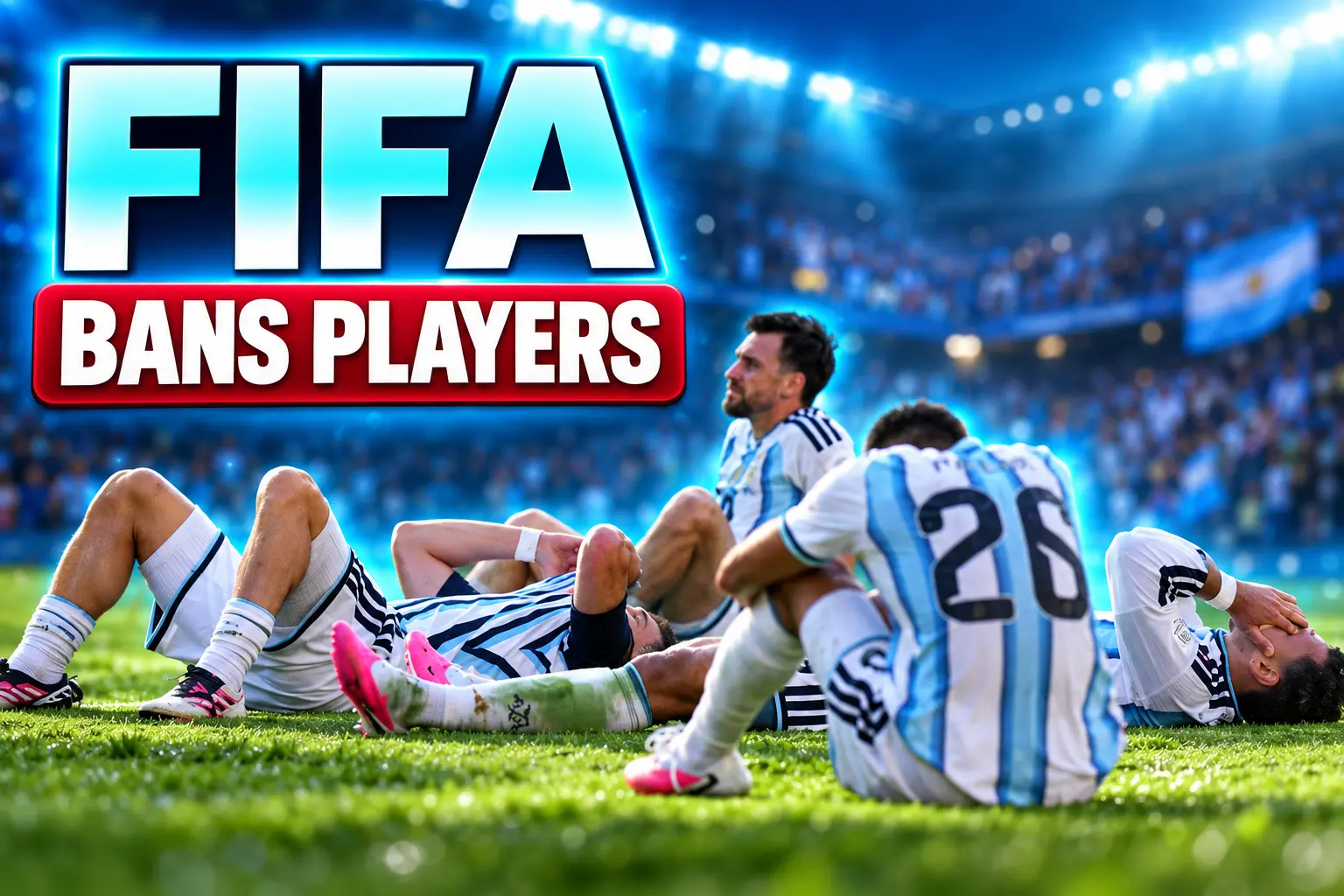
Argentina Went 90 Minutes Without a Shot
The petition describes a result twisted by the officials. The match sheet describes a team that barely attacked. Opta records show Argentina became the first side since data began in 1966 to go through the 90 minutes of a World Cup final without attempting a shot. Their first try was a Lionel Messi volley in the 117th minute that hit Mikel Merino in the face.
MATCH SHEET, JULY 19
| Stat | Spain | Argentina |
|---|---|---|
| Goals | 1 | 0 |
| Total shots | 20 | 2 |
| Shots on target | 12 | 0 |
| Fouls committed | 21 | 25 |
| Yellow cards | 0 | 6 |
| Red cards | 0 | 1 |
| Corners | 9 | 4 |
FIFA’s match centre logged 20 attempts at goal to Argentina’s two, with 12 of Spain’s on target and none of Argentina’s. The first half produced three shots, all Spanish, the lowest opening 45 in a final on record. Emiliano Martínez made 11 saves, a World Cup final record, which is why the score stayed blank into extra time rather than because Spain were denied a fair game.
Giuliano Simeone later blazed over from a half-cleared corner, the only clear look Argentina had at a penalty shoot-out. The night was ugly because Argentina fouled to slow Spain, then because Martínez had to keep doing the rest.
Enzo Fernandez, a Second Yellow, and VAR
Enzo Fernández was booked in the 82nd minute for dissent after Vincic refused him a free kick, then sent off at 90+3 for a late challenge on Pau Cubarsí. VAR checked the second yellow and backed the on-field call. Fernández is the sixth player shown a red card in a World Cup final, and the third Argentine after Pedro Monzón and Gustavo Dezotti in 1990, which means half of those six dismissals belong to one country.
Gary Neville, working the final for television, did not describe a robbery. “It’s a disgrace,” he said. “I love the competitiveness of the Argentines, fighting and scrapping for their lives, Messi has propped them up, but it’s been a disgrace the last few games.”
Messi, 39 years and 25 days old, was playing a third World Cup final, a list that until now had only Brazil’s Cafu on it besides him. He had called England a powerhouse before the semifinal. In New Jersey he was a passenger until that 117th-minute volley, and Argentina had reached the stadium only after England needed extra time to see off Norway and then fell in the last four.
The Referee They Named Left With an Award
Vincic, 46, from Maribor, was the first Slovenian to referee a World Cup final. FIFA had already trusted him with the 2024 Champions League final and the 2022 Europa League final. He took four matches at this tournament, then walked away.
The Football Association of Slovenia said on July 26, one week after the final, that he had “officially concluded his historic refereeing career.” The same statement said the International Federation of Football History and Statistics named him the World Cup’s best referee. That is not the exit of an official FIFA was preparing to charge.
I think our refereeing strategy was the right one; the fact that we were not a topic of conversation after the match is the greatest satisfaction.
Slavko Vincic, match referee, after announcing his retirement
He was a topic in Argentina, which is the point of the petition. He was also a topic among Spain supporters, who spent parts of the night accusing FIFA president Gianni Infantino of protecting Argentina, not harming it, because Vincic had let hard challenges go. He disallowed a Nico Williams finish into an empty net for a Mikel Merino foul on Nicolás Otamendi, a call that went against the new champions. If the argument is that every major decision flowed one way, that goal did not.
Who Did FIFA Charge After the Whistle?
FIFA appointed a disciplinary and ethics prosecutor for the scenes after full time, not for Vincic’s file. Proceedings opened on July 29 for assault and unsporting behaviour. The August 21 ruling is the document that now sits on the match.
FIFA SANCTIONS, AUGUST 21
| Name | Role | Ban | Fine |
|---|---|---|---|
| Leandro Paredes | Argentina midfielder | 10 matches | $90,000 |
| Nahuel Molina | Argentina defender | 7 matches | $90,000 |
| Roberto Ayala | Argentina staff | 3 matches | $30,000 |
| Thiago Almada | Argentina attacker | 1 match | $30,000 |
| Gavi | Spain midfielder | 1 match | $30,000 |
Paredes received a ten-match suspension and a $90,000 fine after three assault counts. Footage showed him grabbing Eric García by the throat and throwing Gavi to the ground. Molina drew two assault counts, one completed and one attempted, after appearing to punch Rodri in the stomach as Spain’s players ran on to celebrate. Ayala, Scaloni’s assistant, was charged with striking Dani Olmo. Almada and Gavi were charged with unsporting behaviour. Gavi said he did not think Paredes should be punished; FIFA still gave him one match.
The Argentine Football Association was fined $321,000 for a separate tournament file: using a match for a non-sporting demonstration, team misconduct, discriminatory chants and gestures, and order-and-security failures. FIFA ordered $100,000 of that sum into an anti-discrimination plan and told Argentina to play its next two home games at 50 percent capacity, with one of those gates and $100,000 of the fine suspended on probation. The demonstration charge covers the banner players displayed after the England semifinal, “Las Malvinas son Argentinas.”
Argentina’s player and staff bans add up to 21 international matches. They do not touch club football, and they do not touch Spain’s title.
Change.org Hosted Both Grudges at Once
Replay petitions are now a post-final habit, and they do not move FIFA. The Sánchez campaign sat in a pile of lookalike pages, most of them with a few dozen names. The ones that did travel still ran into the same wall.
THE PETITIONS AROUND THIS FINAL
- Argentina replay, 2026: Sánchez’s Change.org page passed six figures in late July and asked FIFA to throw out Vincic’s final.
- France replay, 2026 semi: A separate campaign gathered more than 82,000 names after Spain’s penalty against France and also changed nothing.
- France replay, 2022 final: More than 200,000 French supporters asked for a replay of Argentina’s win in Qatar; Argentina’s reply at the time was to tell critics to stop crying.
- Kick Argentina Out: A rival drive claimed 23,316,108 names demanding a World Cup ban, a figure later disputed as an unverified counter rather than checked signatures.
The larger noise around Argentina this summer was not that Vincic sold a final. It was that a chunk of the global audience was tired of the fouling, the dissent, and then the shoving at full time. The petition to replay the match treats a game Argentina did not shoot in for 90 minutes as a crime scene. The file FIFA actually built is the brawl.
Bans Shifted Onto Friendly Dates
FROM THE WHISTLE TO THE RULING
- July 19, 2026: Spain beat Argentina 1-0 after extra time in East Rutherford; Fernández is sent off at 90+3; tempers go at the whistle.
- July 23, 2026: Sánchez’s petition is already in the tens of thousands and climbing toward six figures.
- July 26, 2026: Vincic retires, with the Slovenian FA calling the final the close of his career.
- July 29, 2026: FIFA opens assault and unsporting-behaviour proceedings against Paredes, Molina, Almada, Ayala, and Gavi, plus a wider AFA case.
- August 21, 2026: The disciplinary committee issues the bans and the $321,000 association fine.
- August 28, 2026: FIFA allows the player bans, and the association sanctions, to be served in Class A friendlies or official matches, whichever comes first.
The AFA said it still wants written grounds so it can appeal to FIFA’s appeals committee and, if needed, the Court of Arbitration for Sport. Serving the bans in friendlies would keep Paredes and Molina available for the 2028 Copa América if the dates can be packed in. None of that path leads back to a second final.
Spain remain world champions. Vincic remains the man FIFA picked for the biggest match, then let walk away with a tournament award. The petition is still online, and the result is still 1-0.

Kily Gonzalez Has the Inter Miami Job Without Papers

Chelsea Puts USDC on the Shirt for One Year

Esther González Joins Al Qadsiah After Gotham’s Free Exit

Chelsea Stay on Adam Wharton After Palace Hold Firm

Fiorentina Pays for Pellegrino After Juve’s Loan Fails

Only One of Villa’s Five Winger Targets Actually Signed

SoFi Workers Won Pay and an ICE Walk-Off Clause

Hughes Hired Iraola Twice, Then Left for Al-Hilal

Sunderland’s 53-Year European Wait Ends Against AZ

SNRT Put Morocco’s World Cup Matches on Free TV
-
 NEWS3 months ago
Only One of Villa’s Five Winger Targets Actually Signed
-
 NEWS3 months ago
SoFi Workers Won Pay and an ICE Walk-Off Clause
-
 NEWS3 months ago
Hughes Hired Iraola Twice, Then Left for Al-Hilal
-
 EUROPA LEAGUE3 months ago
Sunderland’s 53-Year European Wait Ends Against AZ
-
 NEWS3 months ago
SNRT Put Morocco’s World Cup Matches on Free TV
-

 NEWS3 months ago
Summerville Turned a Shock Call-Up Into Two World Cup Goals
-

 CHAMPIONS LEAGUE3 months ago
Jordan Brand’s 2018 Football Bet Pays on PSG’s Repeat
-

 EUROPA LEAGUE3 months ago
Rangers Never Played the Sparta Prague Sharpener