
NEWS
Three Opening Nights Left Mexico With the Ritual
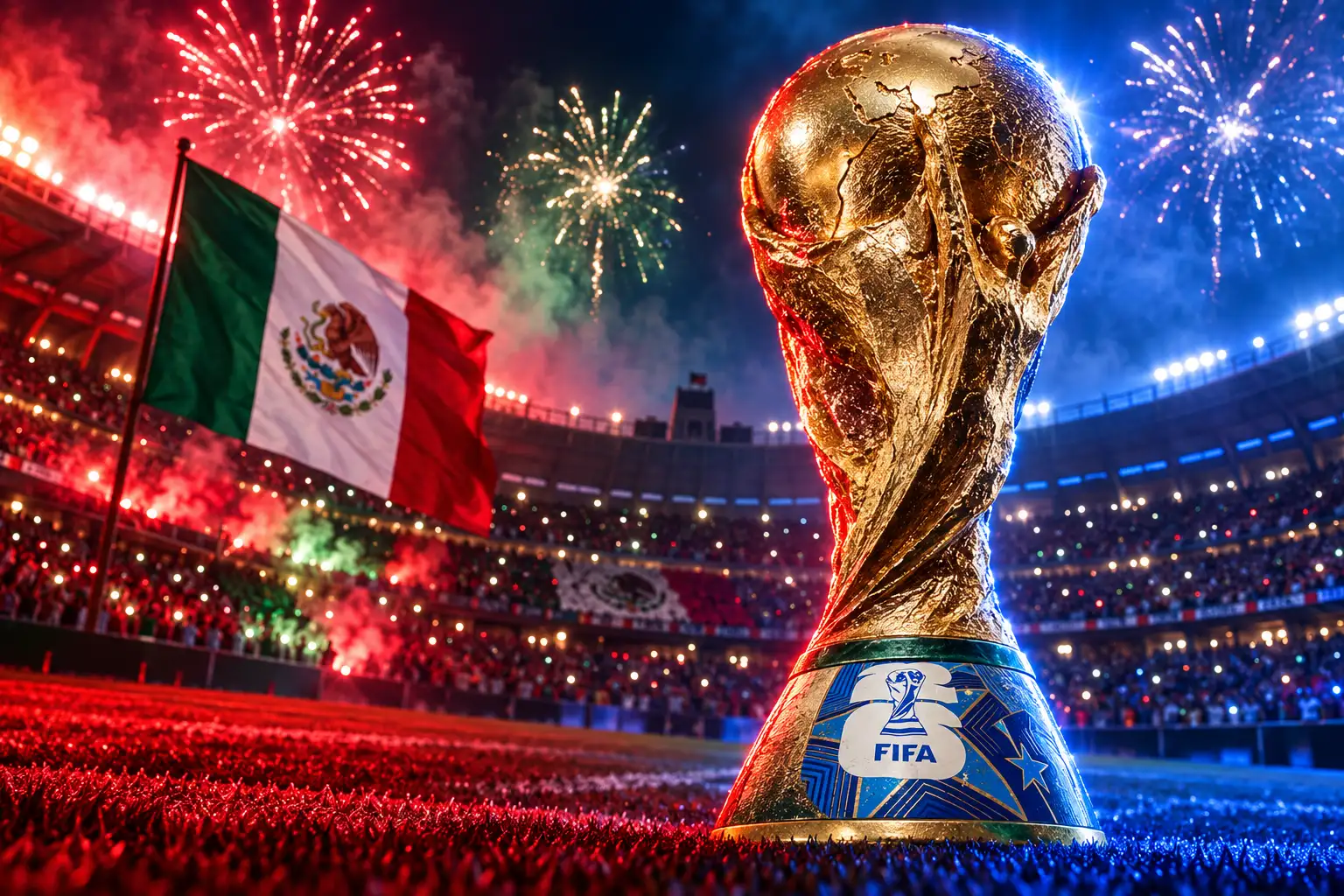
Three 2026 World Cup opening ceremonies split the kickoff across Mexico, Canada and the United States, and only Mexico kept the flags.

Mexico kept the flags, the official song and an 80,824 crowd at Mexico City Stadium. Canada and the United States still got their own opening nights the next day.
The 2026 World Cup opening ceremonies were the first split across three hosts, on Thursday, June 11 and Friday, June 12. Each show ran about 15 minutes and started 90 minutes before kickoff. They did not carry the same weight.
Mexico Staged the Ceremony the World Still Plays
Italian creative director Marco Balich produced all three nights, each built around an inflated trophy dressed in local motifs. Only Mexico City got the job of actually opening the tournament.
The Mexican show began with indigenous dancers around that trophy while unity lines were read out. Maná then hit “Oye Mi Amor,” Danny Ocean sang “Partidazo” among dancers in china poblana dresses, and Los Ángeles Azules brought Belinda out for “Por Ella” with charro outfits and a stylized jarabe. J Balvin and Ryan Castro ran a medley of “Qué Calor,” “Una a la Vez” and “I Like It.”
MEXICO CITY SET LIST
- Oye Mi Amor: Maná opened with indigenous dancers still on the grass.
- Partidazo: Venezuelan singer Danny Ocean took the next slot.
- Por Ella: Los Ángeles Azules and Belinda turned the stage into a jarabe.
- Qué Calor / I Like It: J Balvin and Ryan Castro closed the local block.
- Dai Dai: Shakira and Burna Boy debuted the official song live.
- DNA (More Than a Game): Andrea Bocelli and EJAE sang the official anthem at the flag parade.
Shakira, in yellow and white, and Burna Boy shut the concert portion with “Dai Dai,” then Mexican-flag flares and fireworks. After that came the 48-team flag parade, names read in English and Spanish, which is the rite a World Cup used to give one stadium, one time. Tyla sang South Africa’s anthem. Alejandro Fernández sang Mexico’s. Mexico then beat South Africa 2-0, the first match of a 48-team, 104-game tournament.
Actress Salma Hayek, a 2026 World Cup ambassador from Veracruz, spoke during that flag protocol. Mexican President Claudia Sheinbaum was not in the building. She had given her ticket to a fan.
Mexicans are very honored that this is where the first match of this wonderful soccer tradition that unites us all begins. Long live Mexico and long live soccer!
Salma Hayek, 2026 World Cup ambassador, Mexico City Stadium
That was the night FIFA treated as the main ceremony. The other two hosts still had to wait until Friday.
Bublé, Snowbirds and Canada’s First Point
Canada’s show at Toronto Stadium, the World Cup name for BMO Field, also ran about 15 minutes, and it was the first men’s World Cup match ever played in the country. Folk singer William Prince opened with a land acknowledgement. Alessia Cara sang a medley of “Wild Things” and “Fire” while dancers built maple-leaf mosaics around a moose, a polar bear and a humpback whale.
Nora Fatehi, French singer Vegedream and DJ Sanjoy performed “Siir Siir.” Jessie Reyez and Palestinian singer Elyanna sang “Illuminate” as the Canadian trophy prop went up and started coming apart. The 48 flags came out again, this time with names in English and French. Michael Bublé and the Sole Power Choir covered Sam Cooke’s “Bring It On Home to Me” among those flags.
Alanis Morissette sang “O Canada.” Bosnian-Canadian violinist Aleksandar Gajić played Bosnia and Herzegovina’s anthem. The Canadian Forces Snowbirds then flew over a crowd of 43,002.
Prime Minister Mark Carney was not there. He was bound for the G7 in France. Former prime minister Justin Trudeau later sat at the United States show in an unofficial capacity, a choice some Canadian fans read as a snub of the home night.
On the pitch, Jovo Lukić headed Bosnia in front in the 21st minute. Substitute Cyle Larin equalized in the 78th, 121 seconds after he came on, and Canada left with a 1-1 draw. It was the first World Cup point in Canadian men’s history, after winless trips in 1986 and 2022.
A California Night Built Like a Halftime Show
Los Angeles Stadium, SoFi Stadium in Inglewood for every other week of the year, started at 7:30 p.m. ET with a costumed George Washington, a red-white-and-blue drumline, and a speech that nodded at the U.S. Semiquincentennial. Future and Tyla, on her second opening night in 24 hours, performed “Game Time” while another inflated trophy went up in American motifs.
LISA, Anitta and Rema followed with “Goals,” dancers working Los Angeles landmarks around them. Katy Perry then came out with 10-year-old Norwegian singer Tius Luka for “Wonder,” from Perry’s 2024 album 143, among the 48 flags. Dan + Shay sang the U.S. anthem. Paraguayan folk-pop group Purahéi Soul sang Paraguay’s. Actor Jason Sudeikis, a tournament ambassador, was part of the welcome.
President Donald Trump did not attend. He was tied to UFC Freedom 250 in Washington. FIFA president Gianni Infantino was in the building. A sellout of 70,492 then watched the United States beat Paraguay 4-1.
The Los Angeles bill was the one sold as the star night: Perry, LISA, Future, Anitta, Rema, Tyla. It was also the one that behaved like a Super Bowl pregame, a short pop set dropped onto a prime-time match, not a ceremony that had to carry 48 flags for the whole tournament. Mexico had already done that job.
The TV Numbers Did Not Split Three Ways
Balich gave each host a similar clock. Broadcasters and living rooms did not. FIFA said more than 54 million viewers across the three host countries watched those opening matches, and the split inside that figure is the ranking.
OPENING NIGHT, BY HOST
| Host | Match | Attendance | Audience FIFA cited |
|---|---|---|---|
| Mexico | Mexico 2-0 South Africa | 80,824 | 23.4 million in Mexico |
| Canada | Canada 1-1 Bosnia and Herzegovina | 43,002 | 3.1 million in Canada |
| United States | United States 4-1 Paraguay | 70,492 | 27.5 million in the U.S. |
Mexico’s 23.4 million made the South Africa game the country’s most-watched World Cup match of the 21st century, with a 72.1% share, about three in four people watching television in Mexico at that hour. Canada’s 3.1 million across English and French was the third-best Canadian men’s World Cup audience of this century, on the night the men’s team finally played at home.
The United States number is the one FIFA waved around. Infantino called the Paraguay match the most-watched World Cup game ever broadcast in the country.
The United States’ opening match against Paraguay was the most-watched FIFA World Cup match ever broadcast in the United States, while more than 54 million people across Canada, Mexico and the United States watched their respective nations opening matches.
Gianni Infantino, FIFA president, June 17, 2026 media release
Equal nights on the production board. On television, Los Angeles took the pile, Mexico took a national shutdown, and Toronto took a respectable Canadian sports audience that did not travel.
Why 2002 Kept One Opening Night
Two-host World Cups are not new. Three opening shows are. South Korea and Japan in 2002 were the first joint hosts, and they still opened the tournament once, then played the final in the other country. FIFA even cooled on co-hosting after that tournament. 2026 is the first World Cup staged by three nations, and the first to give each host a ceremony tied to its own first match.
HOW THE OPENING WAS SPLIT
- 1966 onward: One first match and a ceremonial prelude, after earlier tournaments had staged several games at once on day one.
- 1974 to 2002: The defending champion often played that first match.
- 2006 onward: The host opens. Germany, South Africa, Brazil, Russia and Qatar each got one night.
- June 11, 2026: Mexico opens the 48-team tournament at Mexico City Stadium, with the flag parade and the official song.
- June 12, 2026: Canada at 1:30 p.m. ET, then the United States at 7:30 p.m. ET, each with its own 15-minute show.
The 2002 compromise kept a single global kickoff even while two football associations shared a tournament. 2026 did the opposite. Each federation got a stage, a broadcast window and a pop bill, which is how you end up with three winners of three different prizes instead of one opening the world actually shares.
FOX Put the U.S. Opener in Prime Time
U.S. rights made that hierarchy visible. English-language coverage sat on FOX and FS1, with every ceremony and match on FOX One, and Tubi simulcast the Mexico and United States shows for free across the FOX family broadcast windows. The schedule did the rest. Mexico and Canada went in the afternoon. The United States went at 9:00 p.m. ET.
FOX’S ENGLISH OPENING WINDOW
- Mexico-South Africa: 7,186,000 English-language viewers across FOX, FOX One and Tubi, the most-watched men’s World Cup opening match on U.S. English-language TV.
- The jump from Qatar: That audience was up 150% from the 2,877,000 who watched Qatar-Ecuador on FS1 on November 20, 2022.
- Peak in Mexico’s slot: 9,410,000 from 4:45 to 5:00 p.m. ET.
- United States-Paraguay: FOX later put the English-language audience at 18,039,000, peaking at 21,526,000 from 10:45 to 11:00 p.m. ET.
Those FOX figures sit beside FIFA’s combined 27.5 million for the U.S. opener across FOX and Telemundo. They describe the same Friday night from two desks. Afternoon Mexico was a record for a non-U.S. group game in English. Prime-time Los Angeles was the football audience the U.S. rights deal was built to catch. Canada, in the same afternoon clock as Mexico a day later, never entered that English-language record sheet.
Dai Dai Outlived the Three Shows
The clip that still functions as the start of the tournament is not Perry in Inglewood. It is Shakira and Burna Boy in Mexico City, on the official World Cup song Dai Dai, the track FIFA had already been arguing about in public as part of the World Cup song plan.
FIFA posted the live performance the night Mexico opened. That upload has 81,874,739 views.
World Music Awards, tracking the streaming aftershock two days later, had Dai Dai up to No. 11 on global Spotify with 4.125 million streams after the Azteca set. FIFA’s own opening-ceremony playlist is built around that Mexico City performance, then the Bocelli anthem, then Canada’s “Siir Siir.” The Los Angeles night lives in photo galleries of Perry, LISA and Future. It does not have a FIFA clip in that view range.
People treated Shakira’s first note as the moment the World Cup began, the same way they treated “Waka Waka” in 2010, because Mexico was given the song, the flags and the first match. Canada got a choir, a flyover and a 1-1. The United States got prime time and 27.5 million viewers. Three hosts asked for a night each. Only one of those nights still plays like an opening ceremony.
Frequently Asked Questions
Why Did the 2026 World Cup Have Three Opening Ceremonies?
It was the first World Cup hosted by three countries, so FIFA tied a ceremony to each host’s first match instead of asking two federations to sit in the stands for a third. The 2002 tournament, the first with two hosts, still opened once: France lost 0-1 to Senegal in front of 62,561 at Seoul World Cup Stadium, and Japan staged the final later. After 2002, FIFA even said co-hosting was unlikely to return. 2026 brought it back at triple scale and paid for that with three short shows instead of one shared kickoff.
When Was Dai Dai Released, and Where Does the Money Go?
FIFA and Sony Music Latin put Dai Dai out on May 14, 2026, a month before Mexico’s ceremony. Royalties support the FIFA Global Citizen Education Fund, which FIFA said was aiming to raise USD 100 million by the end of the tournament for education and football programs, with Sony matching the first USD 250,000. Shakira’s royalties from the song were pledged to that fund.
What Is the Difference Between Dai Dai and DNA?
Dai Dai is the official song, the one Shakira and Burna Boy debuted at the end of the Mexico concert block. DNA (More Than a Game) is the official anthem, performed by Andrea Bocelli and EJAE during Mexico’s flag parade, with David Guetta on the same number. One is the pop single. The other is the ceremonial piece that walked 48 teams onto the grass.
Had Estadio Azteca Opened a World Cup Before 2026?
Yes, and 2026 made it the first stadium to stage three men’s World Cups, after 1970 and 1986. Mexico City Stadium was the tournament name on the 2026 broadcast, but the building is still the Azteca. The 80,824 who watched Mexico-South Africa were sitting in a ground that had already opened the tournament twice before any Canadian or U.S. venue existed on the World Cup map.

Kily Gonzalez Has the Inter Miami Job Without Papers

Chelsea Puts USDC on the Shirt for One Year

Esther González Joins Al Qadsiah After Gotham’s Free Exit

Chelsea Stay on Adam Wharton After Palace Hold Firm

Fiorentina Pays for Pellegrino After Juve’s Loan Fails

Only One of Villa’s Five Winger Targets Actually Signed

SoFi Workers Won Pay and an ICE Walk-Off Clause

Hughes Hired Iraola Twice, Then Left for Al-Hilal

Sunderland’s 53-Year European Wait Ends Against AZ

FIFA Took IShowSpeed’s World Cup Bet to the Final
-
 NEWS5 months ago
Only One of Villa’s Five Winger Targets Actually Signed
-
 NEWS5 months ago
SoFi Workers Won Pay and an ICE Walk-Off Clause
-
 NEWS5 months ago
Hughes Hired Iraola Twice, Then Left for Al-Hilal
-
 EUROPA LEAGUE5 months ago
Sunderland’s 53-Year European Wait Ends Against AZ
-
 NEWS5 months ago
FIFA Took IShowSpeed’s World Cup Bet to the Final
-
 NEWS5 months ago
Summerville Turned a Shock Call-Up Into Two World Cup Goals
-

 NEWS5 months ago
SNRT Put Morocco’s World Cup Matches on Free TV
-
 CHAMPIONS LEAGUE5 months ago
Jordan Brand’s 2018 Football Bet Pays on PSG’s Repeat