
EUROPA LEAGUE
Beitar and AEK Turned a Qualifier Into a Street Fight
Beitar Jerusalem and AEK Larnaca fans fought in Larnaca, then met again in Romania, as a ministry warning and a police file described the same Conference.

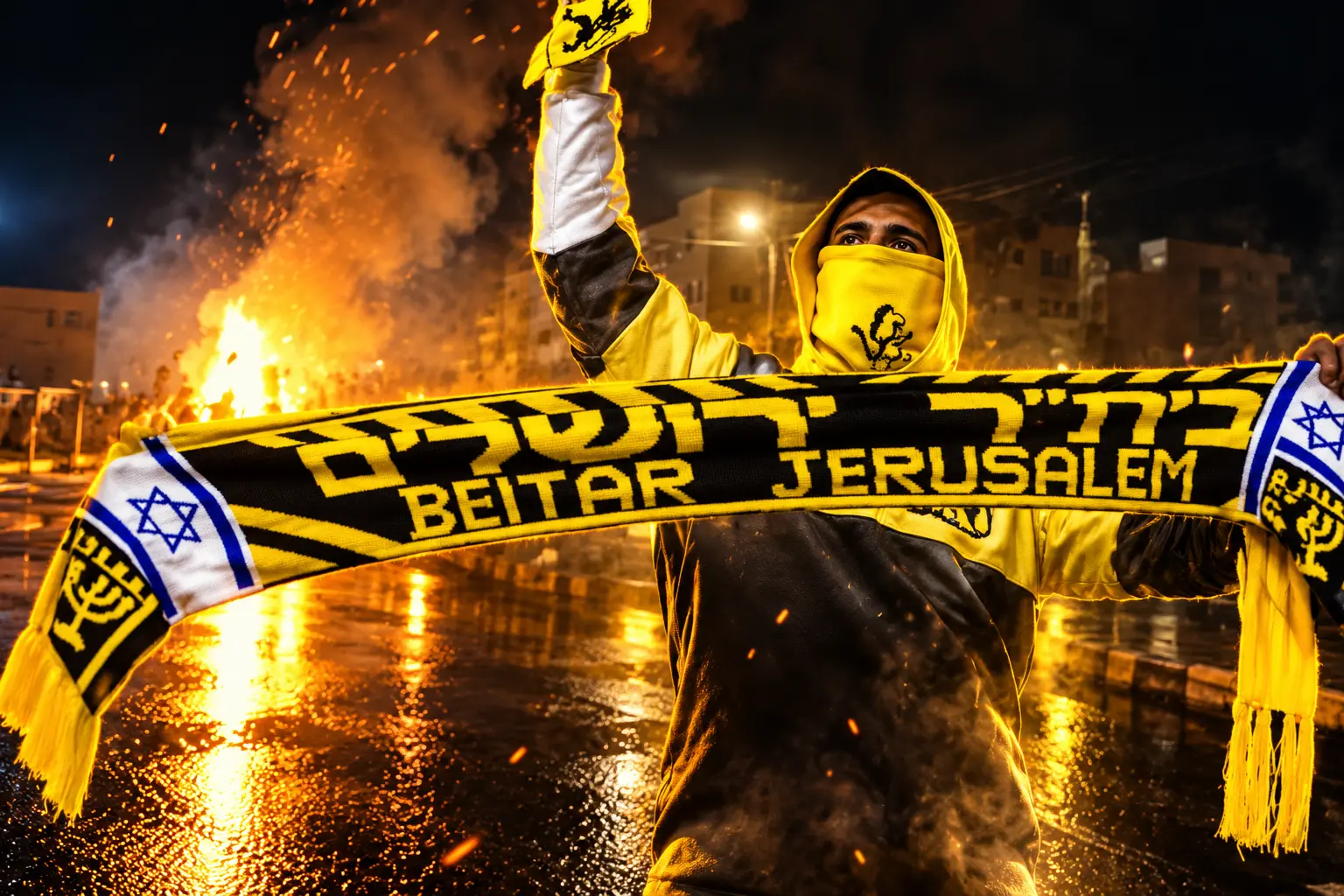
Beitar Jerusalem and AEK Larnaca fans fought in Larnaca on July 23, hours before their UEFA Conference League qualifier. Israel’s Diaspora and Combating Antisemitism Ministry warned that evening that the clashes may escalate.
They did, across two cities and two police files, while the football still finished on a penalty spot in Romania.
Police Rolled a Water Cannon Outside AEK Arena
The trouble started a day before kick-off. Beitar supporters gathered at the Larnaca port roundabout on July 22, and police moved them on with tear gas and smoke bombs. Hotel complaints about the visiting group followed the same night.
On matchday the heat did some of the damage. Problems at the AEK Arena gates pushed Israeli fans toward a parking area in search of shade, Larnaca police later said, and that movement put them onto AEK supporters. Fighting broke out before the second qualifying round first leg.
Officers brought in the anti-riot water cannon vehicle Aiantas, known as Ajax, and thickened the ring around the ground. The game still kicked off. A video that moved through Israeli channels showed a Beitar supporter on the ground being kicked and dragged. One fan account, carried in local police coverage, described an ambush of around 70 AEK supporters throwing stones, and said some of the injured were children because most of La Familia, Beitar’s organised ultras group, were already inside.
THE LARNACA WEEK
- July 22, 2026: Police disperse Beitar fans at the Larnaca port roundabout with tear gas and smoke bombs.
- July 23, 2026: Clashes outside AEK Arena before kick-off; the water cannon is deployed; Beitar wins 1-0; the ministry issues its escalation warning.
- July 24, 2026: A 24-year-old Israeli fan is fined €1,200 at Larnaca District Court and pays at once.
- July 28, 2026: Police release wanted photographs and ask the public to call Larnaca CID.
A South Korean tourist couple, with no tie to either club, found their parked rental car smashed in the riot and filed a report for the repair bill.
The Ministry File and the Larnaca CID
The ministry’s statement treated the night as a diaspora emergency. It said clashes between Beitar fans and Cypriot AEK fans may escalate after several violent altercations around the qualifier.
Larnaca police wrote a different document. “There was an incident between fans of the two teams before the beginning of the match outside the stadium,” the force said. Spokesman Spyros Chrysostomou said supporters from both clubs were being sought. Investigators pulled stadium CCTV rather than a political brief.
WHAT WE KNOW
- Both clubs: Police said AEK and Beitar supporters fought outside the stadium, not one group alone.
- The court file: The 24-year-old Israeli admitted taking part, was fined €1,200, and left for Israel the same day.
- The charges: Assaulting a police officer, resisting lawful arrest, and offences under sports-venue violence law.
- Injuries: Police coverage in Larnaca said no serious injuries were reported, even as a video showed a Beitar fan being beaten on the ground.
WHAT IS UNCONFIRMED
- Arrest tallies: Local counts of six or seven arrests, sometimes split as Cypriots and Israelis, were not confirmed by police on July 24.
- Weapons claims: Accounts of petrol bombs and machetes on the eve of the match did not appear in the police incident summary.
- Chants: Fan videos circulating after the game carried anti-Israel slogans; those lines sit in the footage, not in the CID statement.
By early September the same clips were still being recut as random attacks on Israeli tourists. The police file is narrower. It is a football crowd that spilled, a water cannon, a parking lot, and a court fine.
That split is old. Beitar’s La Familia has a long European trail of disorder, and AEK’s own support was already on UEFA’s books. The Control, Ethics and Disciplinary Body, in its €50,000 racist behaviour fine, also ordered a partial stadium closure after AEK’s Conference League night against Crystal Palace on March 19.
Carabali’s Free Kick Gives Beitar the First Leg
Inside the ground the tie followed a simpler script. Brayan Carabali, the Beitar defender, bent in a free kick in the 77th minute for a 1-0 away win. FBref’s AEK Larnaca 2026-27 match log lists 4,227 in the AEK Arena, which holds 8,058.
Almog Cohen’s side had a lead to take to Romania. AEK, with Hrvoje Milicevic as captain, had a deficit and a week to travel. Neither dressing room could put the street night back in the bottle.
Why Beitar Played Its Home Leg in Romania
Beitar cannot host UEFA matches in Jerusalem under the present security rules. The club parked its “home” European nights at Ilie Oana Stadium in Ploiesti, north of Bucharest, for a second year. In 2025 it beat Sutjeska 5-2 and Riga 3-1 there, then went out in the third qualifying round.
Romanian authorities treated the return as high risk after the Larnaca week. The Bucharest Gendarmerie posted public order measures in Bucharest for fans moving through the capital on July 30, including English-speaking dialogue teams in the Old City. In Ploiesti the mobile gendarmes shut roads around the ground from 17:00 and split the two supports onto different streets.
HOW PLOIESTI LOCKED THE GROUND
- Entry rule: Spectators needed a ticket or invite plus identity papers, from 17:30.
- Beitar access: Host fans were sent along Mihai Bravu toward Tribune II.
- AEK access: Away fans were sent along Strada Latina toward Peluza II.
- Legal tag: The fixture was listed as high risk under Romania’s Law 4/2008 on sports events.
Hundreds of Beitar fans, with La Familia at the front, marched in Bucharest before the match. Israeli supporters later said the chants were ugly. The street fighting of Larnaca did not repeat in the city centre.
2,651 in Ploiesti, Then Penalties
The return on July 30 still needed extra time. Transfermarkt’s sheet records 2,651 at Ilie Oana Stadium and Fábio Veríssimo as referee.
THE TIE IN TWO NIGHTS
| Leg | Date | Venue | Score | Attendance |
|---|---|---|---|---|
| First | July 23, 2026 | AEK Arena, Larnaca | AEK 0-1 Beitar | 4,227 |
| Second | July 30, 2026 | Ilie Oana, Ploiesti | Beitar 2-3 AEK, AET; Beitar 4-3 pens | 2,651 |
Milicevic scored a 26th-minute penalty after a Boris Enow handball, then a 52nd-minute free kick. Omer Atzili answered from the spot in first-half stoppage time and from distance in the 87th minute, which put Beitar 3-2 up on aggregate until Riad Bajic pounced on a Miguel Silva spill in the 90-plus-2nd minute. Extra time stayed 2-3. Silva then saved from Waldo Rubio and Charalambos Kyriakou. Timoti Muzie converted the last Beitar kick.
Around that night, ultras channels posted video of La Familia against AEK’s Larnaca Guardians and called it revenge for Cyprus. Independent confirmation of where that meeting happened is thin. The football, at least, had a result: 3-3 on aggregate, Beitar through 4-3 on penalties.
It’s a very important win. I think we played an excellent match against a team that today showed its experience in these competitions. It ended in the sweetest way possible.
Almog Cohen, Beitar Jerusalem head coach, after the Ploiesti match
Cohen also told his players the quality he wanted was courage, the nerve to ask for the ball again after losing it. That was a dressing-room speech. The CID file in Larnaca was still open.
Austria Wien End the Run From the Spot
The third qualifying round followed the same displaced map. On August 6 in Ploiesti, with 825 in the ground, Austria Wien won 2-1. On August 13 in Vienna, Beitar led 2-0 through Atzili and Johnbosco Samuel Kalu, then conceded to Kelvin Boateng and could not find a third in extra time. Austria went through 4-2 on penalties after another 3-3 aggregate.
Cohen’s team had more of the ball in Vienna and more shots. Eugene Ansah hit the bar from the spot and Muzie’s kick was saved. Two weeks after the water cannon in Larnaca, Beitar’s European season was over.
Larnaca CID had already asked the public to identify men from the night outside AEK Arena. The wanted photographs, the €1,200 fine, and the two penalty shootouts are what the warning on July 23 turned into once the football had to be played.
Frequently Asked Questions
What Was the Beitar Jerusalem vs AEK Larnaca Score?
Beitar won the first leg 1-0 in Larnaca through Carabali’s 77th-minute free kick, then lost the second leg 2-3 after extra time in Ploiesti, with Atzili scoring twice and Milicevic scoring twice before Bajic’s stoppage-time equalizer on aggregate. The shootout ran Beitar 4, AEK 3 after Silva’s two saves, with Muzie converting the decisive kick.
Why Did Beitar Jerusalem Play in Romania?
UEFA matches are not being staged in Israel under the current security rules, so Beitar rented Ilie Oana Stadium in Ploiesti for a second straight summer. Local reports said the ground was sealed and handed to the organisers the night before the AEK return, with even Petrolul Ploiesti locked out of its own dressing rooms while Israeli security details were on site.
How Much Was the Israeli Fan Fined in Larnaca?
Larnaca District Court fined the 24-year-old €1,200 on July 24 after he pleaded guilty to assaulting a police officer, resisting arrest, and sports-venue violence offences. He paid before leaving Cyprus. Police still sought other AEK and Beitar supporters through CCTV after he had gone.
Who Are La Familia and the Larnaca Guardians?
La Familia is Beitar’s organised ultras group, formed in 2005, with a record of racist chants and disorder that the club has publicly condemned. The Larnaca Guardians are AEK Larnaca’s ultras firm; ultras channels named that group in the video posted after the Ploiesti match and described the meeting as revenge for the first leg in Cyprus.

Kily Gonzalez Has the Inter Miami Job Without Papers

Chelsea Puts USDC on the Shirt for One Year

Esther González Joins Al Qadsiah After Gotham’s Free Exit

Chelsea Stay on Adam Wharton After Palace Hold Firm

Fiorentina Pays for Pellegrino After Juve’s Loan Fails

Only One of Villa’s Five Winger Targets Actually Signed

SoFi Workers Won Pay and an ICE Walk-Off Clause

Hughes Hired Iraola Twice, Then Left for Al-Hilal

Sunderland’s 53-Year European Wait Ends Against AZ

FIFA Took IShowSpeed’s World Cup Bet to the Final
-
 NEWS5 months ago
Only One of Villa’s Five Winger Targets Actually Signed
-
 NEWS5 months ago
SoFi Workers Won Pay and an ICE Walk-Off Clause
-
 NEWS5 months ago
Hughes Hired Iraola Twice, Then Left for Al-Hilal
-
 EUROPA LEAGUE5 months ago
Sunderland’s 53-Year European Wait Ends Against AZ
-
 NEWS5 months ago
FIFA Took IShowSpeed’s World Cup Bet to the Final
-
 NEWS5 months ago
Summerville Turned a Shock Call-Up Into Two World Cup Goals
-

 NEWS5 months ago
SNRT Put Morocco’s World Cup Matches on Free TV
-

 CHAMPIONS LEAGUE5 months ago
Jordan Brand’s 2018 Football Bet Pays on PSG’s Repeat