
NEWS
Barcelona’s Record 10 Recast the 2010 World Cup Core
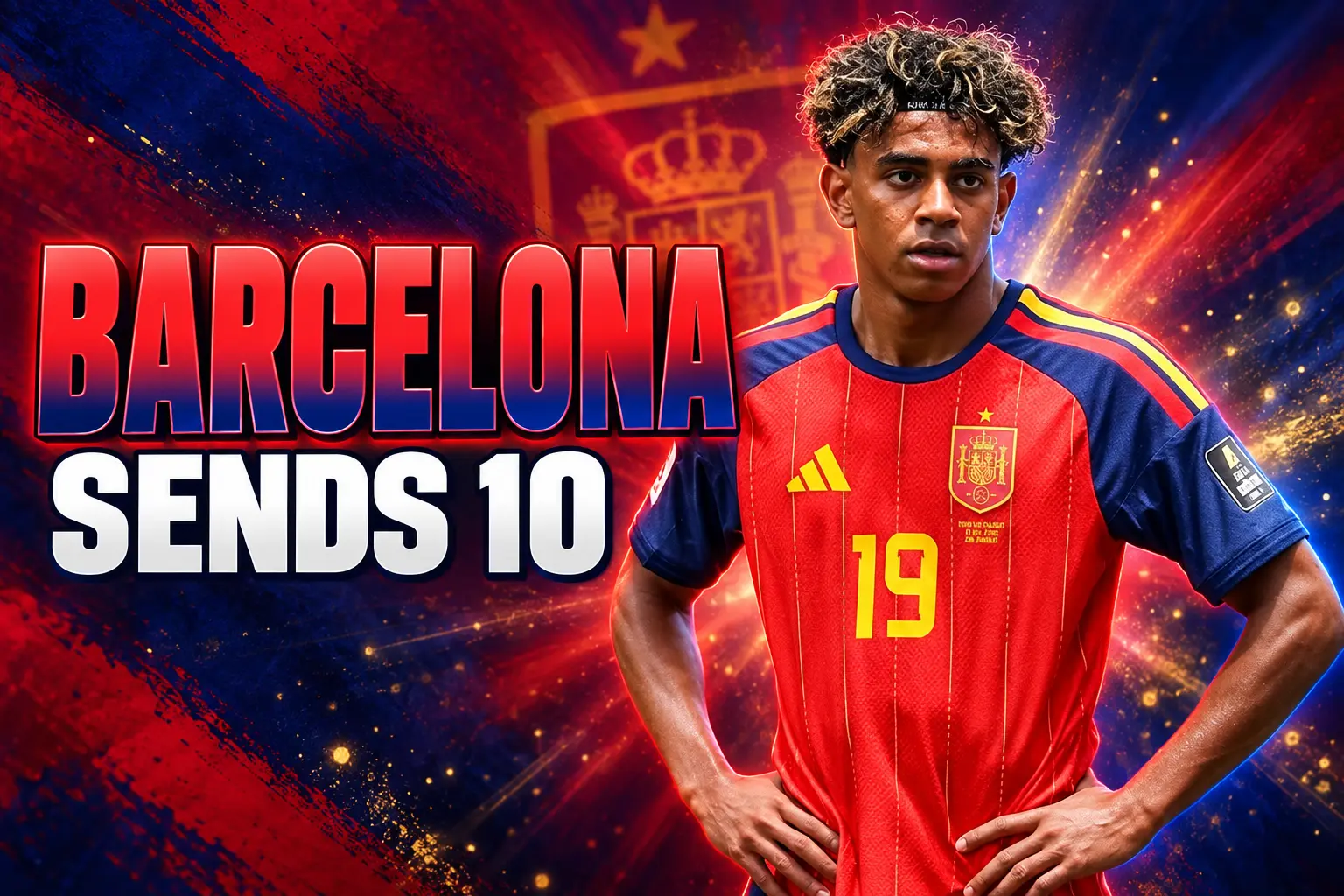
Barcelona sent a club-record 10 players into the 2026 World Cup semis, then watched eight of them win the trophy the 2010 way.

Barcelona sent a club-record 10 players into the 2026 World Cup semi-finals, two more than the eight who reached the last four with Spain in 2010. Eight of those 10 then stayed on the Spain side that beat Argentina in extra time on July 19.
The July count that put Hansi Flick’s club above Atlético Madrid and Arsenal was not a one-week novelty. It was the old factory, rebuilt, and it delivered the same ending.
Barcelona Put a Record 10 Players in the Semis
Stats Perform’s OptaJose account published the club table on July 12, counting each player by the team he belonged to when the tournament began on June 11. Barcelona sat alone at the top. Atlético Madrid had 9. Arsenal had 8.
The graphic used the squads as they stood at kickoff, which is why new signing Anthony Gordon counted and Marcus Rashford, whose loan had ended, did not.
https://x.com/OptaJose/status/2076266845422657683
FC Barcelona later posted the same 10 names and called them two records at this stage: the most the club had ever placed in a World Cup last four, and more than any other club still alive in 2026.
THE 10 WHO REACHED THE LAST FOUR
- Spain: Joan García, Pau Cubarsí, Eric García, Gavi, Pedri, Dani Olmo, Ferran Torres, Lamine Yamal.
- France: Jules Koundé.
- England: Anthony Gordon.
That Spain block of eight was the load-bearing piece. Koundé and Gordon were the two extras that broke the old club record of eight, set in 2010 and matched in 2018.
Sixteen Barcelona players had started the 48-team tournament. Fifteen reached the round of 32. Ronald Araujo was the only one out after Uruguay lost to Spain in the groups. Frenkie de Jong’s World Cup ended on penalties against Morocco on June 30, after 110 minutes. Raphinha, injured, went no further with Brazil. João Cancelo and Hamza Abdelkarim were gone before the last four. The 10 who remained were the ones the wire copy counted.
This Happened Once Before, in 2010
The club said so itself, the night Spain beat Belgium. It was only the second time Spain had reached a World Cup semi-final. The first was 2010, with eight Barcelona players in the squad, and they lifted the trophy.
This is only the second time Spain have qualified for a World Cup semi-final. The only previous occasion came in 2010, when there were also eight Barça players in the squad and they went on to lift the trophy.
FC Barcelona, club statement, July 10, 2026
The 2010 eight were Víctor Valdés, Carles Puyol, Gerard Piqué, Sergio Busquets, Xavi Hernández, Andrés Iniesta, David Villa and Pedro. Seven of them started the final in Johannesburg. Iniesta scored the winner in the 116th minute against the Netherlands on July 11, 2010.
Sixteen years later Luis de la Fuente took the same number of culés to a last four. Joan García, Cubarsí, Eric García, Gavi, Pedri, Olmo, Torres and Yamal filled the Spain list. The names had changed. The shape had not: a Barcelona keeper, two centre-backs, a midfield, and the wide attackers, all under one club badge.
The 2018 last four had also featured eight Barcelona players, but they were split across France, Belgium and Croatia, with Samuel Umtiti and Ousmane Dembélé, Thomas Vermaelen and Ivan Rakitić among them. That group did not sit inside one national team. The 2010 and 2026 versions did.
Yamal turned 19 the day before Spain played France. Cubarsí, still a teenager, had already played every minute of Spain’s three group games, the only Barcelona player to log the full 270-plus. Koundé was next among the club’s starters, on 260 minutes for France. Pedri had 221 for Spain before de la Fuente began to manage his load.
Who Else Made the Last-Four Club Table?
Atlético Madrid’s nine were not a near-miss footnote. All nine belonged to Spain or Argentina, the two sides that would meet in the final a week later. Arsenal’s eight were spread across three of the four semi-finalists, which is why the Gunners sat so high without putting a core into one dressing room.
CLUBS IN THE 2026 WORLD CUP SEMI-FINALS
| Club | Players | How they split |
|---|---|---|
| Barcelona | 10 | Spain 8, France 1, England 1 |
| Atlético Madrid | 9 | Argentina 5, Spain 4 |
| Arsenal | 8 | England 4, Spain 3, France 1 |
Atlético’s five Argentines were Nahuel Molina, Julián Álvarez, Thiago Almada, Giuliano Simeone and Juan Musso. The four Spaniards were Marc Pubill, Alejandro Grimaldo, Álex Baena and Marcos Llorente. Giuliano is the son of Diego Simeone, which gave the list a family stamp the Barcelona column did not need.
Arsenal’s eight were Declan Rice, Bukayo Saka, Eberechi Eze and Noni Madueke for England, David Raya, Martín Zubimendi and Mikel Merino for Spain, and William Saliba for France. Merino, not a Barcelona player, scored the 88th-minute winner against Belgium and had already scored the late winner against Portugal. The knockout hero of Spain’s path sat on Arsenal’s books.
Real Madrid never entered that top three. Marc Cucurella, signed from Chelsea during the tournament, was the Madrid player who went all the way with Spain. Kylian Mbappé and Aurélien Tchouaméni went out with France. Jude Bellingham went out with England. The club that usually owns this kind of census did not own this one.
Gordon Scored in Atlanta and Still Went Home
Gordon had completed his move from Newcastle United on May 29, on a contract through 2031 in a deal worth €80 million including add-ons. He was already a Barcelona player when Thomas Tuchel named him in England’s squad, which is the only reason the club-record 10 exists.
He was not a tourist in the last four. Against DR Congo he came off the bench and assisted both of Harry Kane’s goals in a 2-1 comeback. Against Norway in Miami he played 70 minutes of extra time in a 2-1 win and assisted the first of Jude Bellingham’s two goals, the result that put Barcelona on 10 semi-finalists.
In Atlanta on July 15 he did more than assist. The club diary logged Gordon’s superb finish on 55 minutes that put England in front against Argentina. England then sat on the lead. Argentina scored twice late. Gordon’s World Cup ended in the last four, on the wrong side of the bracket from his new teammates.
Koundé’s run had already stopped the night before. France lost 2-0 to Spain in Arlington on July 14. Yamal won a penalty. Olmo set up the second goal. Cubarsí played the full match again. Koundé, who had gone 87 minutes in France’s 2-0 quarter-final win over Morocco on July 9, was done. He came off the bench in the third-place match, a 6-4 loss to England on July 18, while Gordon watched that one from the bench.
The split inside the 10 is the detail the raw table hides. Eight men were playing for the trophy. Two were playing for third. Only the Spain eight could finish the 2010 copy.
Nine Atlético Shirts Reached the New Jersey Final
Once France and England were out, the club census flipped. Barcelona dropped from 10 to 8. Atlético Madrid’s nine all stayed, because their players were in Spain and Argentina. For a third straight World Cup, the final photograph had more Atlético shirts in it than anyone else’s. They had taken 4 into the 2018 final and 4 into 2022. In 2026 the number was 9.
Arsenal fell to three, all with Spain: Raya, Zubimendi and Merino. Raya did not play a minute behind Unai Simón. The Premier League champions’ last-four spread had been real. Their final-week spread was a Spain footnote.
THE WEEK THE 10 BECAME EIGHT
- July 9, 2026: Koundé becomes Barcelona’s first semi-finalist as France beat Morocco 2-0.
- July 10, 2026: Spain beat Belgium 2-1 in Los Angeles. Fabián Ruiz scores on 30 minutes, Charles De Ketelaere equalises, Mikel Merino wins it on 88. The Spain eight are through. Cubarsí, Olmo and Yamal start; Torres and Pedri come off the bench. Yamal is named player of the match.
- July 11, 2026: Gordon’s England beat Norway 2-1 after extra time. Barcelona reach 10.
- July 14, 2026: Spain beat France 2-0 in Arlington. The eight Spain culés are in the final. Koundé is out.
- July 15, 2026: Gordon scores on 55 minutes in Atlanta. Argentina come back. Gordon is out.
- July 19, 2026: Spain beat Argentina 1-0 after extra time in New Jersey. Torres scores the only goal.
La Liga had already written the rest rule before any of those dates. On June 9, clubs with at least one player in the semi-finals received opening fixtures postponed for rest. World Cup players were owed 21 days off. Barcelona’s Spain group was due back around August 12. The original home date with Athletic Club moved, and the title defence opened later, at Elche on August 23.
Ferran Torres Hit the Roof in Extra Time
Cubarsí, Yamal and Olmo started the final. Torres came off the bench. Pedri came on too. Eric García followed in extra time. Joan García and Gavi stayed in the group that never left the sideline, the same unused pair who had logged zero minutes in the group stage and still counted in the 10.
FIFA’s match centre records the finish as Spain 1-0 after extra time, Ferran Torres in the 106th minute, Enzo Fernández sent off at 90+3. Spain had 20 attempts at goal, Argentina 2. Possession sat at 60 percent to 32, with 8 percent in contest. Cubarsí completed 124 passes, the most on the pitch.
Pedro Porro’s cross was kept alive by Nico Williams. Torres, on as a 62nd-minute substitute in one account of the night and a second-half change in the club diary, hit the roof of the net with his left foot. Opta Analyst logged him as only the second substitute to score a World Cup final winner, after Germany’s Mario Götze in 2014, also against Argentina. Argentina did not register a shot in the 90 minutes, a first in a World Cup final.
It was a goal scored by 47 million people.
Ferran Torres, Spain forward, July 19, 2026
Iniesta had been the Barcelona man in the 116th minute in 2010. Torres was the Barcelona man in the 106th in 2026. Both winners came in extra time. Both came against a side that had made the final a scrap. Spain’s second star went on the shirt with the same club core that had sewn on the first.
The objection that followed the trophy was about club football, not the census. Spain could run a World Cup with eight Barcelona players and still watch that same group fall short of a Champions League last four. The national run does not fill that gap. It does fix the 2010 rhyme the July table only hinted at: eight culés in a Spain semi-final, a Barcelona extra-time winner, a World Cup.
Frequently Asked Questions
How Were Barcelona’s 10 World Cup Semi-Finalists Counted?
OptaJose counted each player by the club he belonged to when the World Cup kicked off on June 11, not by the club he might join later. Gordon had already signed on May 29, so he counted. Rashford’s loan had expired, so he did not, even though he played for England in the groups. Cucurella’s switch to Real Madrid during the tournament is why Madrid’s final-week presence is a separate, messier ledger than the July 12 table.
How Many Barcelona Players Started the 2010 World Cup Final?
Seven of the eight started against the Netherlands in Johannesburg: Puyol, Piqué, Busquets, Xavi, Iniesta, Pedro and Villa. Valdés was the unused goalkeeper behind Iker Casillas. Cesc Fàbregas, then at Arsenal, came off the bench. Villa had only just joined Barcelona that summer, a new-signing echo Gordon would repeat in 2026.
Which Barcelona Players Started the 2026 World Cup Final?
Pau Cubarsí, Lamine Yamal and Dani Olmo started in New Jersey. Ferran Torres and Pedri were introduced in the second half, and Eric García appeared in extra time. Joan García and Gavi remained unused. Jules Koundé and Anthony Gordon were already out after the semi-finals, which is why the final list is eight, not 10.
What Rest Rule Delayed Barcelona’s La Liga Start After the World Cup?
A June 9 agreement gave any club with a player in the World Cup semi-finals a postponed opening fixture, and every World Cup player was owed a 21-day break. Barcelona’s Spain group was due back around August 12. The Athletic Club home match moved, and the league season began for Flick’s side at Elche on August 23 rather than on the original mid-August weekend.

Kily Gonzalez Has the Inter Miami Job Without Papers

Chelsea Puts USDC on the Shirt for One Year

Esther González Joins Al Qadsiah After Gotham’s Free Exit

Chelsea Stay on Adam Wharton After Palace Hold Firm

Fiorentina Pays for Pellegrino After Juve’s Loan Fails

Only One of Villa’s Five Winger Targets Actually Signed

SoFi Workers Won Pay and an ICE Walk-Off Clause

Hughes Hired Iraola Twice, Then Left for Al-Hilal

Sunderland’s 53-Year European Wait Ends Against AZ

Summerville Turned a Shock Call-Up Into Two World Cup Goals
-
 NEWS4 months ago
Only One of Villa’s Five Winger Targets Actually Signed
-
 NEWS4 months ago
SoFi Workers Won Pay and an ICE Walk-Off Clause
-
 NEWS4 months ago
Hughes Hired Iraola Twice, Then Left for Al-Hilal
-
 EUROPA LEAGUE4 months ago
Sunderland’s 53-Year European Wait Ends Against AZ
-
 NEWS4 months ago
Summerville Turned a Shock Call-Up Into Two World Cup Goals
-

 CHAMPIONS LEAGUE4 months ago
Jordan Brand’s 2018 Football Bet Pays on PSG’s Repeat
-

 NEWS4 months ago
SNRT Put Morocco’s World Cup Matches on Free TV
-

 EUROPA LEAGUE4 months ago
Rangers Never Played the Sparta Prague Sharpener