
NEWS
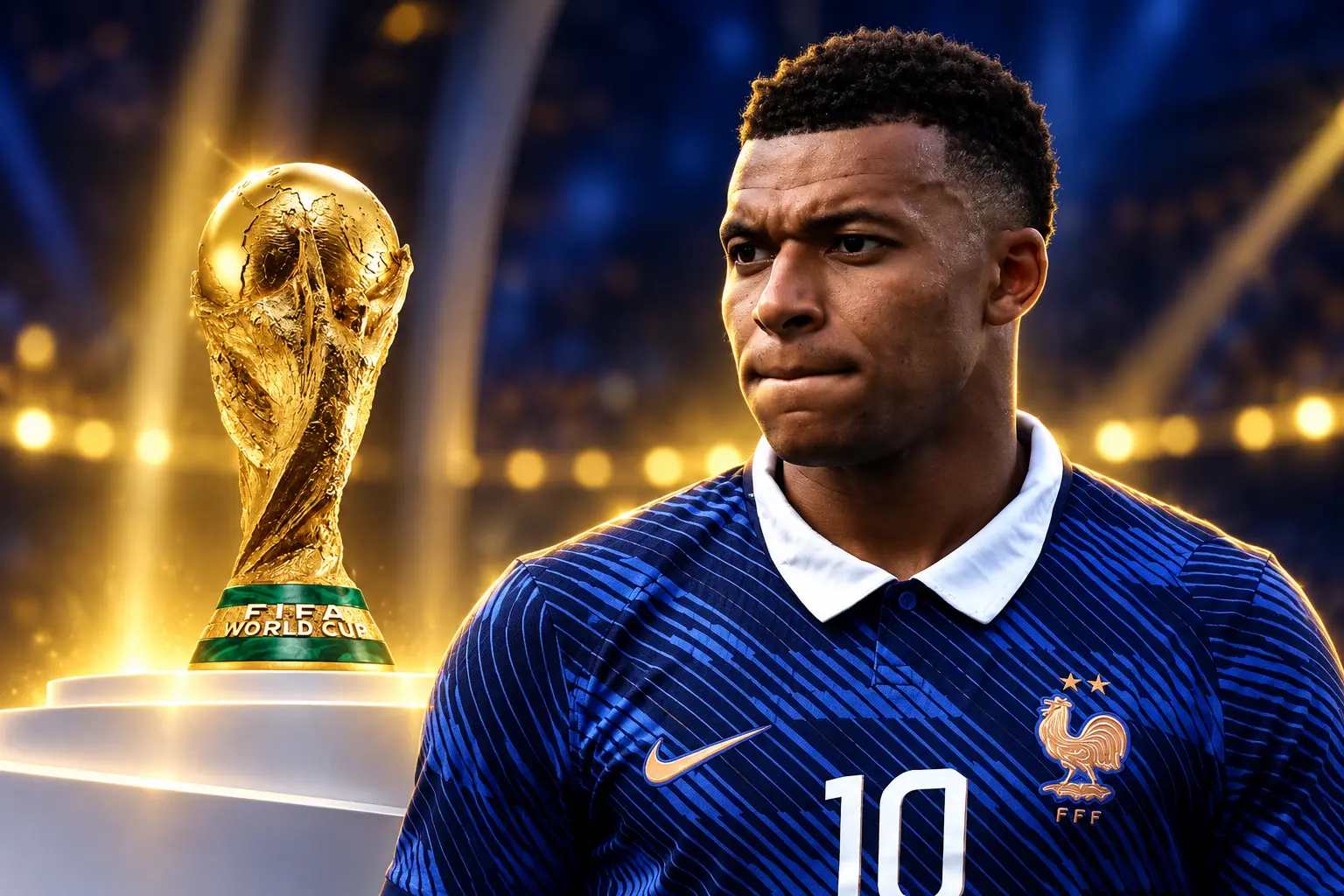
Real Madrid Scored 22 World Cup Goals Without the Trophy
Real Madrid’s players scored 22 goals at the 2026 World Cup, yet Spain won the cup while Palace and Sunderland matched Messi on eight.

Real Madrid’s players scored 22 goals at the 2026 World Cup, more than any other club in the 48-team field. Spain still lifted the trophy on July 19, winning 1-0 after extra time against Argentina at MetLife Stadium.
Kylian Mbappe took 10 of those 22 and a second Golden Boot. Crystal Palace and Sunderland finished on eight goals, level with Lionel Messi’s Inter Miami, while Arsenal won the Premier League club race with 13.
Real Madrid’s 22 Came From Four Names
The Madrid total was a four-man job. Mbappe scored 10 for France, Jude Bellingham scored seven for England, Vinicius Junior scored four for Brazil, and Arda Guler scored one for Turkey. Add them up and the club sits seven clear of Paris Saint-Germain.
Mbappe’s ten-goal Golden Boot haul was the first double-figure World Cup campaign since Gerd Muller in 1970, and it made him the first player to win the award twice. He now has 22 World Cup goals across three tournaments, one more than Messi. FIFA also gave him four assists and the Bronze Ball behind Rodri and Messi.
France lost the semi-final 0-2 to Spain on July 14, then lost the third-place match 4-6 to England in Miami. Mbappe still scored twice in that bronze game, which is how Madrid’s club line moved from a knockout-stage lead to 22. His eight-game World Cup match log shows braces against Senegal, Iraq, Sweden and England, a penalty against Paraguay, and a goal against Morocco. The blank was the semi-final.
Bellingham’s seven made him England’s highest scorer at a single World Cup and earned the Bronze Boot, ahead of Erling Haaland on assists. Vinicius scored in all three of Brazil’s group games, twice against Scotland, before Brazil went out. Guler’s goal, Turkey’s first shot after a long drought, was the leftover in a dead rubber against the United States.
2026 WORLD CUP GOALS BY CLUB
| Club | Goals | Lead scorers |
|---|---|---|
| Real Madrid | 22 | Mbappe 10, Bellingham 7, Vinicius 4, Guler 1 |
| Paris Saint-Germain | 15 | Dembele 6, Barcola 3, six others on 1 |
| Arsenal | 13 | Havertz 3, Saka 3, Merino 2, Trossard 2 |
| Bayern Munich | 12 | Kane 6, Saibari 3 |
| Crystal Palace | 8 | Sarr 4, Kamada 2, Munoz 2 |
| Inter Miami | 8 | Messi 8 |
| Manchester United | 8 | Cunha 3, Amad 2 |
| Sunderland | 8 | Brobbey 3, Diarra 2 |
PSG needed eight different scorers to reach 15. Ousmane Dembele struck six, including a hat-trick against Norway, and Bradley Barcola added three. Desire Doue, Ibrahim Mbaye, Joao Neves, Nuno Mendes, Achraf Hakimi and Fabian Ruiz took one each. Ruiz was the only PSG player who then lifted the trophy with Spain.
Arsenal Took the Premier League Club Race in Miami
Arsenal’s 13 came from seven players, and four of those goals arrived in one match England had already lost. Bukayo Saka, limited for most of the tournament, scored a hat-trick in the 6-4 bronze win over France. Declan Rice scored the opener that night. Before Miami, Kai Havertz had three for Germany, Mikel Merino had two late winners for Spain against Portugal and Belgium, Leandro Trossard had a brace for Belgium against New Zealand, and Viktor Gyokeres and Gabriel Martinelli had one each.
That bronze burst is why Arsenal finished third among all clubs and first among Premier League sides. The Gunners had sent 15 players, including William Saliba, whose Saliba’s World Cup back injury became a separate problem once the club season restarted. Saka’s hat-trick did the scoring work the rest of the squad had spread across a month.
England took third, their best World Cup finish since 1966. Harry Kane scored six and then sat out the bronze match, so Bayern got nothing from that night. Bellingham scored the sixth England goal in the 90th minute plus eight. Madrid and Arsenal both moved on the same Miami scoreboard, in opposite shirts.
Palace, Sunderland and the Eight-Goal Pack
Four clubs stopped on eight, and only one of them is a European giant. Inter Miami’s eight were all Messi, the highest scoring World Cup of his career, as Argentina reached another final and lost it. Manchester United’s eight were a mixed bag of current and departing names. Palace and Sunderland did it with squad players from an expanded Premier League, not a galactico front line.
THE FOUR CLUBS ON EIGHT
- Crystal Palace: Ismaila Sarr scored four for Senegal, Daichi Kamada scored two for Japan, and Daniel Munoz scored two for Colombia.
- Inter Miami: Messi scored eight for Argentina and nobody else on the MLS roster added a World Cup goal.
- Manchester United: Matheus Cunha scored three for Brazil, Amad Diallo scored two for Ivory Coast, and Lisandro Martinez, Casemiro and Marcus Rashford scored one each.
- Sunderland: Brian Brobbey scored three for the Netherlands, Habib Diarra scored two for Senegal, and Nilson Angulo, Wilson Isidor and Granit Xhaka scored one each.
Palace had been among the first English clubs to put a dent in the table, with Sarr scoring in three straight Senegal games. Kamada’s late header earned Japan a point against the Netherlands. Munoz’s volley against Uzbekistan was the sort of strike that usually gets credited to a bigger shirt. The south London club sent 12 players, and only five clubs in the world sent more.
Sunderland’s eight came from five countries. Brobbey, a backup at the start, scored a brace against Sweden and another against Tunisia. Diarra opened against Iraq and scored again against Belgium. Angulo’s goal against Germany, Isidor’s strike against Morocco, and Xhaka’s goal for Switzerland in a 4-1 win over Bosnia filled the rest. The club had listed Sunderland’s 12 World Cup call-ups before a ball was kicked, after a first season back in the Premier League.
United’s total needs a footnote. Casemiro and Rashford were still on the books when the tournament started, even as both headed for the exit, and each scored once. Cunha’s three came in easy Brazil group games. Amad’s two were the grown-up version of his club form, including a winner against Ecuador. Without the two departing names, United would have sat on six.
How the 48-Team Draw Spread the Goals
The first 48-team World Cup ran from June 11 to July 19, with a new round of 32, 104 matches, and a record 308 goals across 104 matches. That is 2.96 goals per game, the highest average since 1970. More teams, and one extra knockout round, meant more minutes for players from clubs that never used to appear on this kind of list.
The Premier League sent 182 Premier League players, 169 from the 2025/26 season and 13 already registered for 2026/27. Manchester City led that count with 19 players across 12 nations. Every Premier League club had someone at the tournament. City’s captain Rodri won the Golden Ball with Spain. Haaland scored seven for Norway, joint third in the scoring race, and City still did not join the clubs on eight or more.
THE SCORING CALENDAR
- June 11, 2026: The tournament opens in Mexico City as the 48-team format begins.
- June 16, 2026: Mbappe scores twice against Senegal at MetLife Stadium and France’s club factory starts filling.
- June 28 to July 3, 2026: The new round of 32 begins, and the scoring table stretches beyond the usual last-16 clubs.
- July 18, 2026: England beat France 6-4 in Miami. Saka’s hat-trick, Rice’s goal, Bellingham’s seventh and Mbappe’s ninth and tenth all land on one night.
- July 19, 2026: Ferran Torres scores in the 106th minute. Spain win 1-0 after extra time. The club table is frozen on Madrid 22.
Lower down the list, the expanded field did what it was built to do. Julian Quinones scored four for Mexico while on Al-Qadsiah’s books, after holding off Ivan Toney and Cristiano Ronaldo in the Saudi scoring race. Elijah Just scored three for New Zealand from Motherwell. Emam Ashour scored for Egypt from Al-Ahly, including Egypt’s first knockout goal in 92 years. Mikel Oyarzabal scored five for Spain from Real Sociedad, one of the hidden tallies behind the champions.
CLUBS THE OLD FORMAT WOULD HAVE HIDDEN
- Al-Qadsiah: Quinones scored the opening goal of the tournament for Mexico and finished with four.
- Motherwell: Just scored a brace against Iran and one against Belgium.
- Al-Ahly: Ashour, Trezeguet and Yasser Ibrahim scored four between them for Egypt.
- Pyramids: Fiston Mayele helped put DR Congo on a last-32 path toward England.
Ronaldo, at Al-Nassr, scored at a sixth World Cup, including a double against Uzbekistan and a first knockout goal against Croatia. That still left Al-Nassr well behind the European clubs whose players lived in the last eight.
Spain’s Winners Barely Showed on the Club Chart
Spain won a second World Cup, 16 years after the first, and conceded one goal in eight games. Rodri took the Golden Ball, Unai Simon the Golden Glove, and Pau Cubarsi the Young Player award. Ferran Torres, the extra-time scorer in the final, was named man of the match in front of 80,663 at MetLife Stadium. Lamine Yamal started the final as a teenager. None of that moved Barcelona into the eight-goal group.
Yamal had to wait for Spain’s second game to get Barcelona on the scorers’ sheet at all. Torres’s winner on July 19 was a Barcelona goal in the only match that will be remembered. Pedro Porro’s goal for Spain was Tottenham’s. Oyarzabal’s five were Sociedad’s. The champions spread their goals across Spanish clubs and still kept a clean enough sheet that Simon set a tournament mark with seven shutouts.
Chelsea’s World Cup scoring story was thinner still. Enzo Fernandez finally put the club on the board for Argentina, and Marc Cucurella started a final, and the Blues, with 12 players at the tournament, never joined the clubs that filled this table. Liverpool’s group-stage work from Cody Gakpo, Virgil van Dijk, Alexander Isak and Alexis Mac Allister had them in the conversation in June. They were not among the eight-goal clubs in July.
That is the split this ranking keeps producing. Madrid’s players scored at a rate no other club matched. Spain’s players won the matches that hand out medals. Two months later, Mbappe’s 10 goals are the figure attached to a Ballon d’Or case, which is another way of saying the club table is being asked to do individual work it cannot finish.
Kane, Saibari and a Bayern Total of 12
Bayern Munich finished fourth among clubs with 12 goals and did it without a deep French or Spanish run from their own attackers. Kane scored six, with a brace against Croatia, another against Panama, two against DR Congo, and a penalty winner at the Estadio Azteca against Mexico. Then the goals stopped. He did not play a minute of the bronze match.
Ismael Saibari scored in each of Morocco’s three group games against Brazil, Scotland and Haiti, then a hamstring injury ended his tournament in the round of 16. Luis Diaz, Nathaniel Brown and Jamal Musiala scored one each. Michael Olise did not score for France and still ran their chance creation, including the two assists on Mbappe’s bronze-match goals.
TOURNAMENT SNAPSHOT
- The field: 48 teams played 104 matches from June 11 to July 19.
- The goals: 308, a record, at 2.96 per match.
- The boot: Mbappe 10, Messi 8, Bellingham 7, Haaland 7, Kane 6, Dembele 6.
- The medals: Spain champions, Argentina runners-up, England third, France fourth.
Haaland’s seven, in his first World Cup, included the two that beat Brazil in the round of 16. Norway then lost the quarter-final 1-2 after extra time to England, with Andreas Schjelderup scoring the Norway goal and Bellingham scoring both for England. City sent the most Premier League players and still watched the club scoring list close without them in the top bracket.
Frequently Asked Questions
How is the Golden Boot decided if two players finish level?
FIFA awards it first on goals, then on assists, then on fewest minutes played. Mbappe’s 10 goals meant he never needed the tiebreakers, but they split Bellingham and Haaland on seven: Bellingham had one assist to Haaland’s none, so the Bronze Boot went to the England midfielder.
When did FIFA switch the World Cup to 48 teams?
The FIFA Council approved the 12 groups of four, with a round of 32, on March 14, 2023, after dropping an earlier plan for 16 groups of three. The 2026 tournament was the first to use the new size, adding 16 teams and 40 matches compared with the 32-team, 64-match format used from 1998 through 2022.
Have any players scored more than 10 goals in one World Cup?
Two have. Just Fontaine scored 13 for France in 1958, and Sandor Kocsis scored 11 for Hungary in 1954. Mbappe’s 10 in 2026 is level with Muller’s 10 for West Germany in 1970, and it is the first time a player has reached double figures in a single World Cup since that tournament.
Did Spain become the first country to hold both World Cup titles at once?
Yes. FIFA noted after the final that Spain were the first nation to hold the men’s and women’s World Cup titles at the same time. The men’s side also won seven matches in a row on the way to the title and conceded one goal in eight games, against Belgium in the quarter-finals.
Ferran Torres scored in the 106th minute at MetLife Stadium on July 19. Madrid’s 22 goals were already in the book. Spain went home with the cup.

Kily Gonzalez Has the Inter Miami Job Without Papers

Chelsea Puts USDC on the Shirt for One Year

Esther González Joins Al Qadsiah After Gotham’s Free Exit

Chelsea Stay on Adam Wharton After Palace Hold Firm

Fiorentina Pays for Pellegrino After Juve’s Loan Fails

Only One of Villa’s Five Winger Targets Actually Signed

SoFi Workers Won Pay and an ICE Walk-Off Clause

Hughes Hired Iraola Twice, Then Left for Al-Hilal

Sunderland’s 53-Year European Wait Ends Against AZ

Summerville Turned a Shock Call-Up Into Two World Cup Goals
-
 NEWS5 months ago
Only One of Villa’s Five Winger Targets Actually Signed
-
 NEWS5 months ago
SoFi Workers Won Pay and an ICE Walk-Off Clause
-
 NEWS5 months ago
Hughes Hired Iraola Twice, Then Left for Al-Hilal
-
 EUROPA LEAGUE5 months ago
Sunderland’s 53-Year European Wait Ends Against AZ
-
 NEWS5 months ago
Summerville Turned a Shock Call-Up Into Two World Cup Goals
-
 NEWS5 months ago
SNRT Put Morocco’s World Cup Matches on Free TV
-
 NEWS5 months ago
FIFA Took IShowSpeed’s World Cup Bet to the Final
-
 CHAMPIONS LEAGUE5 months ago
Jordan Brand’s 2018 Football Bet Pays on PSG’s Repeat